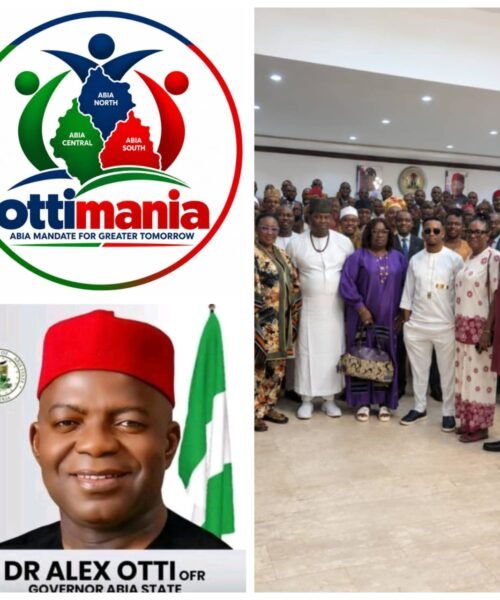

The Reckoning in God’s Own State: Why Alex Otti Deserves a Second Term and Why His Reformative Innovations Must Continue
Three years in, the results are measurable, the opposition is exposed, and the stakes for Abia’s future have never been clearer
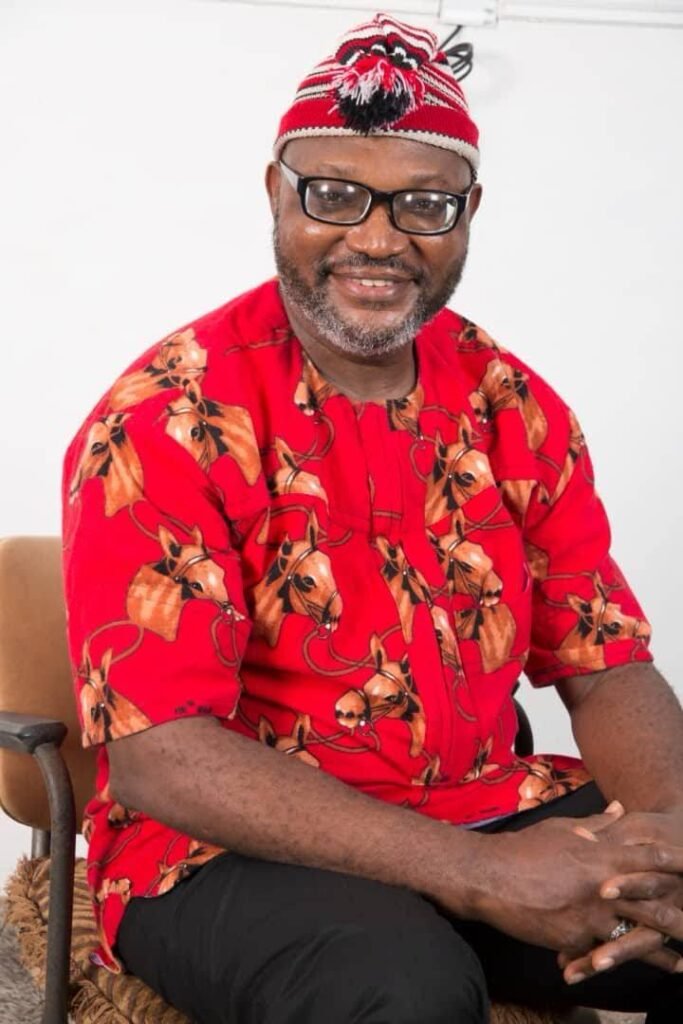
Agbeze Ireke Kalu Onuma, AI-KO
aiko.writes2424@gmail.com
In February 2027, I and my family will vote for Alex Otti.
Below are my reasons. I hope by the time you read to the end, you will make the same decision.
But before I give you the reasons, I need to give you the baseline. No honest argument for a second term can skip the full weight of what preceded the first. Without the darkness behind it, the light ahead cannot be properly measured.
I. Before Otti: What God’s Own State Actually Was
For twenty-four unbroken years — from May 29, 1999, when the first governor was sworn in under the Fourth Republic, to May 29, 2023, when Alex Otti raised his right hand and took the oath of office — Abia State was governed with a consistency of failure so thorough, so comprehensive, so apparently deliberate in its refusal to develop the people it was mandated to serve, that a reasonable observer could only conclude one of two things: either the state’s rulers were spectacularly incompetent, or they were extraordinarily successful at a different objective than the one advertised. The evidence suggests it was the second. The objective was private enrichment. The advertisement was public service. And for twenty-four years, Abia’s people paid the full price of the gap between those two things.
Orji Uzor Kalu governed from 1999 to 2007. He arrived as a businessman, departed as a man who had used the apparatus of the state to build his business while the state’s infrastructure collapsed around the people he governed. Theodore Orji followed from 2007 to 2015 — Kalu’s former Chief of Staff, a man whose entire political identity was constructed on the foundation of his predecessor’s patronage network, and who governed with the creative autonomy of a caretaker maintaining someone else’s house. Okezie Ikpeazu took the reins in 2015 and held them until 2023. Under Ikpeazu, the salaries of civil servants were owed for months that stretched into years. Roads that had been promised for decades were announced with fresh fanfare and then abandoned halfway through, their half-dug trenches left to fill with rainwater and the frustrated expectations of the communities they were supposed to connect. Aba, the commercial nerve center of the state and the self-styled “Japan of Nigeria” for its extraordinary manufacturing culture and the entrepreneurial genius of its artisans, was left to manage a waste crisis so severe that, by Otti’s own account in his inauguration speech, the city was generating 270 truckloads of refuse daily with virtually no functioning evacuation infrastructure. The state that had been tagged “God’s Own State” in the optimism of the early republic years had, by 2023, become a standing rebuke to that designation. God, the observation made itself, had apparently taken His name back.
Into that ruin walked a man who quoted Charles de Gaulle to explain why he had abandoned the peak of a banking career to enter Nigerian politics. “Politics is too serious a matter to be left to the politicians,” de Gaulle had said. Alex Otti, formerly Managing Director and CEO of Diamond Bank, a man who had hit every conventional marker of professional success that Nigerian society has to offer, decided he agreed. He had tried before: in 2015 on the APGA platform, and again in 2019, and both times the electoral machinery of the PDP had processed his victories into their defeats with the creative accounting that Nigerian election administration had perfected across multiple cycles. In 2022 he joined the Labour Party, won the 2023 gubernatorial election in a contest so decisive that the opposition could not find enough credible irregularities to sustain a court challenge, and took office. Three years later, the results are in, and I am going to lay them out without diplomatic hedging, because the case for his second term is not a matter of political preference. It is a matter of documented, measurable, independently verified fact.
But first, let me tell you what I saw when I went back.
In April 2025, I returned to Abia State for a sad reason — to bury my sister in Abiriba. What began as a journey of grief became something I had not fully anticipated: a ground-level investigation of whether the claims I had been reading about Otti’s administration could survive contact with reality. I drove the roads. I walked the markets. I spoke to the mechanic and the plantain seller and the retired midwife and the man who had not been paid his pension for fifty-six months. I was not looking for evidence to support a conclusion I had already reached. I was looking for the truth, whatever it was.
My brother-in-law OJ, a lifelong Aba resident and a skeptic of the persuasion that is actually useful rather than merely fashionable, offered to drive me around. “Let’s see if this YouTube Governor has done more than just act for cameras,” he said, rolling his eyes as we left the hotel. Our first stop was Udeagbala Road, a stretch my uncle had once cursed as “Aba’s open stomach.” I had braced myself for the usual obstacles. But as we turned off Osisioma Junction, the chaos gave way to order. The road was finished. Smooth asphalt, clear markings, functioning drains. A woman sold roasted plantains where knee-deep floods had once stranded buses. “Otti’s men worked like ants in the rainy season!” she shouted, fanning smoke from her grill. “Now my customers don’t run from rain anymore.” OJ muttered, “Hmm. Maybe one road isn’t a miracle,” but his grip on the steering wheel loosened.
At Umule Road, where I had attended a funeral five years earlier and watched mourners wade through sludge with their black attire spattered in mud, children were now playing football on the same stretch. A mechanic named Nnamdi waved us down. “Before, I repaired bent axles every week,” he grinned. “Now? My apprentices are bored! Tell the governor to send us more cars — the road too sweet, nobody’s motor breaks down anymore!” This is the kind of testimony that does not appear in BudgIT reports. It is the testimony of lived reality, and it is more reliable than any press release.
But I also saw the ghosts. To walk Port Harcourt Road in Aba is to walk through the graveyard of unrealized potential. I have known this road since childhood. In the 1980s, the Crystal Park Hotel glowed with neon-lit promise, its conference halls hosting deal-making tycoons from Lagos to Douala, its kitchens employing local farmers, its laundry services keeping women in the Eziukwu Market in income. Over three hundred families depended on it. Today, the hotel’s lobby is a Pentecostal church, its conference hall a school, its once-grand rooms repurposed by necessity because the state abandoned its duty and citizens had no choice but to fill the vacuum. A stone’s throw away, the Nigerian Bottling Company plant — Coca-Cola — stands as a monument to institutional betrayal. At its peak, over a thousand workers fed entire neighborhoods with their wages. The plant’s trucks were the soundtrack of Aba’s ambition. Now the gates hang askew, the warehouses hollow, the air smelling of rust and regret. An economist friend estimates the region has lost N200 billion in cumulative GDP over twenty-five years from those twin collapses alone. Not from war. From bad roads and worse governance.
The economics of this loss is what the opposition never accounts for. The conversion of Crystal Park into a church is not a neutral outcome. It exposes what happens when the state abandons its duty: citizens repurpose ruins out of necessity. Churches offer solace where jobs once provided dignity. Schools sprout in carcasses of commerce because formal institutions have crumbled. Even the gaudy beer parlors that dot Port Harcourt Road — with names like “Dubai VIP” — are monuments to a generation’s lowered expectations: if you cannot build factories, build fantasies. Twenty-four years of the PDP produced this. A culture where projects are trophies, not blueprints. Where contractors vanish after ribbon-cuttings. Where the road you are supposed to fix becomes your political prop. Governor Otti’s task, when he arrived in May 2023, was not merely to govern Abia. It was to reverse the physics of a state that had been run in the wrong direction for longer than some of his ministers had been alive.
The Fiscal Revolution: From Debtor State to Accountability Model
The first thing an honest governor inherits is the true state of the accounts. Not the accounts the outgoing administration shows in its final press conferences, cheerfully announcing achievements that do not exist, but the real accounts — the actual debt, the actual obligations, the actual financial position of the entity they are taking over. In Abia’s case, the shock of that real account was severe.
Otti inherited a state with a debt profile of approximately N191 billion. Twenty-four years of PDP governance had left Abia owing an amount so large relative to the state’s revenue base that debt servicing alone would have consumed a significant fraction of every monthly allocation from Abuja, leaving almost nothing for roads, schools, hospitals, or the salaries that had been owed to civil servants for months. The challenge was not merely administrative. It was existential. How does a government with that level of inherited liability begin to function, let alone reform?
The Otti administration’s answer has been among the most remarkable fiscal stories in the current dispensation of Nigerian state governance. By the end of 2025, the state’s debt had been cut to below N50 billion — a reduction of approximately N141 billion, representing a 60 percent contraction in the debt burden in less than three years. That is not a rounding error or a statistical sleight of hand. It is the measurable consequence of a government that decided to live within its means, collect its revenues honestly, and resist the temptation to spend money that did not exist on projects designed more for ribbon-cutting optics than genuine development. The fiscal discipline required to achieve this outcome, in a state where the political culture had spent twenty-four years normalizing unlimited spending on leadership and minimal delivery to citizens, was itself a form of structural reform, as significant in its own domain as any road built or school renovated.
The independent validation of this transformation is not Otti’s own press office. It is BudgIT, one of Nigeria’s most respected civic accountability organizations, whose annual State of States report moved Abia from 17th position in 2023 to 4th in 2025 in fiscal sustainability, transparency, and accountability rankings. Two years. Thirteen positions up the table. In a country where fiscal transparency at the state level is the exception rather than the rule, that movement is not an administrative footnote. It is a governance statement. And the 2026 Philips Consulting State Performance Momentum Index, the most comprehensive independent assessment of the current period, has provided what its authors call compelling validation of the transformation taking place in Abia. These are not institutions that issue partisan endorsements. They assess what is measurable. And what is measurable, in Abia’s fiscal story, is a transformation.
Among the specific legislative acts that anchored this fiscal discipline was one that deserves special mention for both its substance and its symbolism. Otti signed into law the Abia State Governors and Deputy Governors Pensions Repeal Law 2024 — abolishing the payment of pensions to former governors and deputy governors. This is not a small thing. In a political culture where former chief executives treat their post-gubernatorial income from the state treasury as a permanent entitlement — consuming public funds that might otherwise pay the salaries of teachers or nurses — the decision to legislate this practice out of existence is an act of structural reform with ongoing fiscal dividends. It is also a signal: this government is not managing the state for the benefit of those who governed it before. It is managing it for the people who live in it now.
864 Kilometres of Evidence: The Infrastructure Argument That Cannot Be Dismissed
When political opponents argue against a government’s infrastructure record, the most powerful rebuttal is the simplest one: go and look. Not at a press release. At the road. At the streetlight. At the drainage channel that did not exist three years ago and now channels the rainwater away from the market rather than through it. At the 864.12 kilometres of road surface that the Otti administration has completed across Abia State in thirty-six months.
To understand what that number means, you need the context of what came before it. Twenty-four years of PDP governance in Abia did not produce anything approaching a consistent, state-wide programme of road construction and maintenance. What it produced was the announcement of road projects — press releases, sod-turnings, ceremonial launches with dignitaries and cameras — followed by whatever portion of the allocated funds survived the journey from the state’s appropriation bill to the contractor’s account, which was typically a fraction, and whatever portion of that fraction survived the contractor’s own profit and loss assessment, which was often very little. The result was a state latticed with failed road projects: half-completed dualizations, asphalted surfaces that lasted one rainy season before dissolving back into the red laterite and the mud that the asphalt had briefly covered, bridges that were announced as completed and then washed away in the next flood because the drainage work had not been done.
Otti’s approach is different in kind, not just in degree. The 414 completed road projects covering 864.12 kilometres include drainage systems and streetlights as standard components, not optional extras. This matters because a road without drainage is not a completed road in the South-East of Nigeria, where the annual rainfall can measure over 2,000 millimetres and where every undraining road surface becomes a channel for floodwater that erodes the very investment made in the surface above. A road with street lighting is a different kind of civic infrastructure from a road without — it is accessible after dark, it is safer, it communicates a message about the state’s relationship to its citizens that a dark road, however freshly asphalted, does not. And the additional 82 roads measuring 212 kilometres currently under construction represent not the end of the programme but its continuation — a pipeline of delivery rather than a claim of completion.
The rehabilitation of roads to agrarian communities in Bende, Ikwuano, Ohafia, Abam, Isiala Ngwa North and South, and the opening of feeder roads to rural communities — these are not prestige projects. They are economic infrastructure. A farmer who cannot get his produce to market because the road to his community is impassable does not just lose revenue for that season. He recalibrates his assessment of what farming in that community is worth, and if the road remains impassable long enough, he stops farming or stops living there. The rural-to-urban migration that has hollowed out many South-Eastern communities over the past two decades is partly a story about terrible roads. Repairing those roads is, in the long term, as much a population policy as an infrastructure one.
The State of Emergency in Education: From Collapse to Transformation
One of the most significant and least-commented-upon decisions of Otti’s early months in office was to declare a state of emergency in education. Not as a metaphor. As a governing posture — a formal acknowledgment that the sector had deteriorated so severely that ordinary administrative responses were insufficient and that an emergency-level mobilization of attention and resources was the minimum adequate response to what had been allowed to happen.
“When we came in, education was in a very terrible state,” Otti told the West African Examinations Council delegation in 2025. “Collapsed infrastructure, poor teacher quality, and low enrolment. We rolled up our sleeves and went to work immediately.” What followed was one of the most comprehensive education reform programmes in the current cycle of Nigerian state governance. Two thousand master trainers were developed under a train-the-trainer scheme before any other intervention began — a decision that reveals something about how this administration thinks: you do not build a house without first training the builders. You do not reform a school system without first building the capacity of the people who will operate it.
In January 2025, free and compulsory basic education was introduced statewide. The enrollment response was immediate: over 300,000 pupils enrolled within months, against a target of 500,000 that is being actively pursued. Five thousand two hundred and ninety-four teachers were recruited in 2025 alone, with a further recruitment of 4,000 additional teachers in progress. Two smart schools, equipped with the technology infrastructure that distinguishes a twenty-first-century learning environment from the crumbling, under-resourced classrooms that Abia’s students had inherited from twenty-four years of PDP educational neglect, were completed and ready for commissioning. More are under construction.
The tertiary education picture has also been substantially reorganized. Abia State University, which had been in a condition that could charitably be described as managed decline, has seen major improvements in the Otti period. Ogbonnaya Onu Polytechnic and the Abia State College of Education have received institutional attention that they had not seen for years. The government has consistently committed 20 percent of its budget to education — the highest proportion in the state’s history, and a number that deserves to be read against the context of what 20 percent of an Abia State budget represents: a deliberate prioritization of the future over the present, of the child in the classroom over the contractor at the podium.
Health: From Abandonment to Active Investment
The state of Abia’s health system when Otti took office was, like the education system, the direct consequence of two and a half decades of systematic neglect. Primary Health Care Centres across the state’s 184 wards had fallen into varying degrees of disrepair. Healthcare professionals, like their counterparts across Nigeria, were subject to the national pattern of delayed or unpaid salaries, inadequate equipment, and working conditions that accelerated the decision to emigrate. The health insurance system, which would give ordinary Abians financial access to healthcare rather than simply geographic proximity to facilities that might or might not have drugs and doctors, did not exist in any functional form.
Three years later: 821 healthcare professionals have been recruited, with 771 already on duty. 277 Primary Healthcare Centres have been retrofitted across all 184 wards, with funding supported by the World Bank — a partnership that itself speaks to the improved governance credibility of the current administration, since international development institutions conduct their own due diligence on the governments they partner with. And over 193,000 persons have enrolled in the Abia State Health Insurance Scheme, and are already accessing healthcare services under its provisions. That number — 193,000 — represents 193,000 people who previously had to choose between seeking care and affording it, who now have a mechanism for accessing the first without the full burden of the second. In a country where the healthcare cost is the most common reason for deferring medical attention until a manageable condition becomes a crisis, a functioning health insurance scheme is not a policy ambition. It is a life-saving intervention.
Nigeria’s First State-Led Electric Bus Fleet: The Abia Green Shuttle
On December 23, 2025, Alex Otti launched Nigeria’s first state-led electric public transit system: the Abia Green Shuttle. On August 7, 2026, he commissioned the second batch of twenty additional electric buses at the Nnenna Otti Bus Terminal in Umuahia, bringing the operational fleet to forty and fulfilling a specific commitment made at the first launch. A further thirty buses are scheduled for delivery, with a total fleet target of one hundred zero-emission vehicles serving Aba, Umuahia, and — in the most recent expansion — Umunneochi and the route linking Umuahia through Okigwe to Uturu and Abia State University.
The scale of what this represents, both practically and symbolically, requires some elaboration for those not deeply embedded in the Nigerian transportation context. While Lagos and Ogun have explored Compressed Natural Gas and hybrid buses, Abia is the first Nigerian state to commit to a fully electric public transit fleet, backed by solar-powered charging infrastructure. The Umuahia Multi-Modal Transport System has been completed. The Aba Terminal is under construction, expected by 2027. As of April 2026, the Green Shuttle had already transported over 226,000 passengers — real people making real journeys at affordable fares, accessing economic activity that the absence of reliable public transport had previously constrained.
The Greater Aba Development Authority, established by law and now operational, is working in partnership with UN-Habitat on a new Master Plan for Aba — the first comprehensive urban development plan the city has had. A new Aba Master Plan, in collaboration with one of the world’s foremost urban development agencies, positioning what has long been described as Africa’s most underrated industrial city for the kind of planned, organized, infrastructure-supported growth that its manufacturing talent has always deserved but never been given the institutional backing to sustain. Four million land documents have been digitized, transforming land administration from an opaque, corruption-susceptible manual system into a verifiable digital record. These are not marginal improvements. They are the institutional foundations of a functioning city.
From the Dirtiest to the Cleanest: Environmental Governance Reversed
This is one of the least celebrated and most significant transformations in the Otti record, and I want to give it the space it deserves. Abia State, at the time Otti took office, was widely regarded as one of the dirtiest states in Nigeria. Aba, in particular, had a refuse management crisis of such severity that it had become both a public health emergency and a civic embarrassment — the city whose artisans could replicate any product from anywhere in the world, leaving its own streets buried in the waste that no governance structure was organized to remove. Otti himself flagged it in his inauguration speech: 270 truckloads of refuse generated daily, with virtually no functional system for managing the accumulation.
By 2026, Otti is reporting that Abia has moved “from what was once regarded as one of the dirtiest in the country to one of the cleanest”. The environmental transformation programme has created over 2,000 jobs through the Abia State Environmental Agency. Thirteen tonnes of refuse are now evacuated weekly — a different number from the inauguration-day baseline, and moving in the right direction as the infrastructure and logistics of waste management are rebuilt from near-zero. This is the kind of governance work that generates no viral moments, produces no shareable photographs of solemn-faced officials cutting ribbons, but whose absence or presence determines the daily quality of life for everyone who lives in the state more directly than most headline-generating policy announcements.
The Reforms That Will Outlast the Term: Institutional and Legislative Changes
The infrastructure and sector-specific achievements are visible and measurable. The institutional reforms are less visible but potentially more durable, because institutions, once built or rebuilt with genuine structural integrity, have a tendency to persist across administrations in ways that roads — which can be un-maintained into dissolution — do not. The Otti administration has produced several institutional changes that deserve to be read as governance architecture rather than political achievements.
The Dig Once Policy, signed for immediate implementation, regulates the installation of underground broadband infrastructure in urban and semi-urban communities. This policy does not merely address the immediate question of telecommunications access. It addresses the governance question of how a state manages its right-of-way for future infrastructure deployment, preventing the wasteful pattern of roads being excavated, repaired, and re-excavated as different agencies lay different utilities at different times without coordination. The Dig Once principle is standard practice in advanced infrastructure management and has been adopted as policy in several European and North American jurisdictions. Its presence in Abia’s policy framework says something about the sophistication of the governance thinking operating in this administration.
The government has also moved to address the power crisis through the Geometric Power facility in Aba, the Abia State Electricity Regulation Agency, and negotiations to acquire the Umuahia business unit of the Enugu Electricity Distribution Company. Plans to revive moribund industries — Star Paper Mill, Modern Ceramics, Aba Textile — through partnerships with competent private operators represent a vision for industrialization that builds on Aba’s existing manufacturing base rather than trying to create industrial activity from scratch in a location with no industrial culture. This is a governance insight that most Nigerian governors miss: you develop what is already there; you create conditions for the talent that exists to flourish; you do not import a development model from somewhere else and wonder why it does not take root.
The Opposition: Who They Are, What They Have Done, and Why They Should Be Heard — With Context
Let us now turn to the opposition, because they deserve engagement rather than dismissal, and because the most powerful way to evaluate a critic is to examine their credentials alongside their criticism.
The two most prominent figures currently organizing against Otti’s re-election are Senator Orji Uzor Kalu, who governed Abia from 1999 to 2007, and Senator Theodore Orji, who governed from 2007 to 2015. They have formed an alliance they call “The Team,” with the stated objective of winning all elective positions in Abia for the APC in 2027 and unseating Governor Otti. They are entitled to pursue this objective. Nigeria is a democracy and political competition is its expression. But the credibility of any political argument is inseparable from the credibility of those making it, and that credibility, in this case, must be examined against the record.
Orji Uzor Kalu governed Abia for eight years. He was subsequently convicted by a Federal High Court in Lagos in 2019 on charges of fraud and money laundering, charges directly related to his conduct as governor — specifically, the diversion of N7.65 billion in Abia State funds for his personal enrichment. He was sentenced to twelve years in prison. The Supreme Court later quashed his conviction on procedural grounds related to the jurisdiction of the trial judge, resulting in his release, and a retrial has been ordered. The Supreme Court’s procedural ruling is not an acquittal on the merits. It is a finding about which court should have tried the case. The underlying allegations, and the lower court’s findings on them, have not been overturned by any finding of fact. When this man stands up to argue that Alex Otti has failed Abia, the appropriate response is not political outrage but historical literacy: tell us your own record first. Tell us about the N7.65 billion. Then we can have a conversation about governance.
Theodore Orji governed for eight years as Kalu’s political successor, installed with Kalu’s political machinery and governing in the orbit of that machinery for much of his tenure, before eventually breaking with his patron and governing on his own recognizance for the remaining years. The state that he handed to Okezie Ikpeazu in 2015 was, by the assessment of virtually every stakeholder who commented on the transition at the time, in advanced disrepair: unkept salary obligations, abandoned road projects, institutional frameworks stripped of the operational capacity to deliver services. He now stands alongside the man who installed him to argue that Alex Otti is not fit for another term. Again: on what basis? On the basis of what alternative record? The opposition should, as Otti’s aide pointedly noted, “build arguments based on their own achievements, not by name-dropping President Bola Tinubu”. So far, the achievements they can cite are not available for public inspection without also citing the accountability deficit that accompanied them.
The Four Arguments the Opposition Makes, and Why Each of Them Fails
Let me now engage the specific criticisms that have been most publicly articulated by opposition figures, because they deserve proper responses rather than simple dismissal.
Argument One: The reforms are not people-friendly.
The PDP gubernatorial candidate for 2027, Anosike, has argued that Otti’s “heavy focus on infrastructure development has come at the expense of critical areas such as cottage industries, pension matters, and other essential sectors.” This is the most substantively serious of the opposition arguments and the one that deserves the most careful response.
First: the premise is wrong. The Otti administration has not focused exclusively on infrastructure. The health insurance scheme now covers 193,000 Abians. 300,000 pupils have enrolled in free compulsory basic education. 821 healthcare professionals have been recruited. 5,294 teachers have been hired. These are not infrastructure projects. They are people-centred services, and they represent the direct delivery of the dividends of governance to citizens who had been systematically denied them for twenty-four years.
Second: infrastructure is not the opposite of people-friendliness. Infrastructure is the precondition of people-friendliness. A school with a roof and teachers is a people-friendly institution. A school with a collapsed roof and absent teachers, standing on a road that prevents parents from getting their children to it during rainy season, is not a people-friendly institution, however many times the government that left it in that condition describes itself as people-centred. Otti’s roads are reaching agrarian communities. Those roads are making markets accessible. Those markets are the livelihood of the petty traders and small manufacturers whose economic lives the opposition claims to care about. The road to economic participation is, in Abia, often a literal road.
Third: on pensions specifically. The previous administrations did not merely fail to pay pensions. They owed pensions for months that became years. The structural condition of fiscal insolvency that Otti inherited — with N191 billion in debt — was the direct consequence of that pattern of governance. You cannot pay pensions you have already spent on other things. Otti has been clearing those arrears while simultaneously managing the inherited debt, and the fiscal trajectory is pointing in the right direction. The BudgIT ranking from 17th to 4th says so. The debt reduction from N191 billion to N50 billion says so. The people who created the pension problem are not entitled to use that problem as an argument against the man trying to solve it.
Argument Two: The advertising charges are anti-democratic.
The PDP has objected to campaign advertising fees introduced by the Abia State Government, arguing that the charges for campaign signage effectively suppress political competition ahead of 2027. They calculate that if applied nationally, the fees would consume 74 percent of the legal campaign spending limit. This is a legitimate policy concern and deserves a straightforward response.
The regulation of outdoor advertising and political signage is a standard function of local and state government in most democracies. The question is not whether such regulation should exist — unregulated political advertising produces the visual pollution and environmental degradation that Nigerian cities are already struggling with — but whether the specific fees set are proportionate and non-discriminatory. If the fees apply equally to all parties, including the Labour Party, and are set by general regulation rather than targeted at specific actors, they are a policy question rather than a democratic violation. The PDP has not demonstrated, in its public statements, that the fees are selectively applied against opposition parties. If they can demonstrate that, the concern is serious. If they cannot, then what they are objecting to is the existence of regulation that applies to them as much as to everyone else. That is a different complaint entirely.
Argument Three: Otti cannot win without the support of the old political establishment.
This argument is implied rather than explicitly stated, but it runs through the opposition’s political positioning: the suggestion that Otti’s 2023 victory was an anomaly of unusual civic energy that cannot be replicated when the PDP machine is properly organized. They point to the regrouping of former governors, the APC’s broader national platform, and the suggestion that Tinubu’s influence will shift the political calculation in Abia.
The problem with this argument is that it does not account for what has changed in Abia since 2023. Otti won in 2023 on a wave of civic disgust with the PDP’s record and a genuine hope that something different was possible. Three years later, the people of Abia have not merely hoped. They have seen. The roads are real. The health insurance scheme is real. The teachers are in classrooms. The electric buses are on the streets. The debt is N141 billion lower than the figure the PDP left it at. And the governor’s approval, as measured by the steadily growing coalition of cross-party endorsements, including an APC chieftain who has publicly declared that he will support Otti regardless of party affiliation, suggests that governance quality has begun to supersede party loyalty as the primary electoral variable in Abia State. That is not an anomaly. That is a maturation of the democratic culture. And it is exactly what good governance is supposed to produce.
Moreover, the endorsements crossing party lines are not incidental. The Accord Party’s National Chairman has directed his state executives not to field a candidate against Otti in 2027, describing the governor’s record as one that transcends party politics. The argument that Otti is politically isolated is contradicted by the evidence of who is standing beside him.
Argument Four: This is too much too fast; sustainability is uncertain.
The most sophisticated version of the opposition critique is not about any specific policy failure but about systemic risk: that the pace of change, the ambition of the reform agenda, the multiple fronts on which the government is simultaneously working, creates a sustainability challenge that a second term might not be able to meet. What happens when the World Bank co-financing runs out? What happens when the global electric vehicle supply chain disrupts the bus programme? What happens when the fiscal pressures that are currently being managed well encounter an external shock?
These are real questions. Any competent analyst of governance must ask them. But they are arguments for careful management and strategic continuity, not arguments against re-election. The alternative — installing a new governor who must learn the systems from scratch, rebuild the institutional relationships, navigate the existing reform programmes without the knowledge of their design, and manage the same fiscal trajectory without the three-year context that Otti’s team has built — creates far greater sustainability risk than continuing with the administration that built the programmes in the first place. Reform is fragile in its middle stages. This is precisely when continuity matters most. This is precisely when the argument for a second term is most compelling.
WHAT I LIKE ABOUT OTTI
A Personal Reckoning with the Man Himself
I have been watching Alex Otti for over fifteen years. Not as a fan, not as a supporter, not as someone inside his political organization who might be expected to say useful things about him at useful moments. As an observer. The kind of observer who pays more attention to what a person does when no one is particularly watching than to what they do when the cameras are on, because that is where character lives — in the unscripted moments, in the decisions made without an audience, in the consistency between the private and public registers of a life. And I want to say something that I think the current political atmosphere around Otti makes more difficult to say clearly, but that honesty requires: I like this man. Not in the way that admirers like him — uncritically, reflexively, defensively. In the way that fifteen years of watching someone carefully produces a considered assessment. I like what I have been able to see of who he actually is, which is different from liking his politics or his policies or his press releases. Let me try to explain what I mean, and let me try to do it without flattery, because I think flattery is what Otti least needs and what understands him most poorly.
I went back to Abia in April 2025, as I have described elsewhere in this essay, to bury my sister in Abiriba. It became a field assignment. I drove the roads, walked the markets, ate pepper soup with skeptics, listened to the people that the press conference and the social media post and the governor’s monthly media chat never quite reach. And here is what struck me about the things I found: they were consistent with everything I had come to know about this man over fifteen years. The roads that were being built were being built to survive. The health facilities that were being repaired were being repaired to function. The approach to the work matched the approach of the man I had watched since before anyone outside banking circles had heard his name.
My brother-in-law OJ is a reliable skeptic, the kind that tests you rather than confirms you, and by the time he drove me past the Ngwa Road market and muttered, “Okay, this one… no be lie,” I understood something about what Otti had managed to do in three years. He had not merely built roads. He had broken through the practiced cynicism of people who had been disappointed by every previous administration, who had developed, as a survival mechanism, the instinct to disbelieve official claims before they were even made. When your cynicism cracks — when the man who said the governor was just acting for cameras calls you and admits “Maybe Otti isn’t just blowing grammar” — something structural has shifted.
The first thing I like about him is the thing he cannot help and does not perform: his relationship with numbers. I have watched many Nigerian politicians over many years attempt to engage with data — statistics invoked in speeches, figures cited to justify decisions, numerical claims deployed as political ammunition. Most of the time, the relationship between the politician and the number is entirely transactional. The number is a tool. It is selected because it supports the conclusion already reached, presented in the format most favorable to the desired impression, and discarded the moment a more convenient number becomes available. Otti is different, and the difference is structural. He is an economist by training — first-class honours from the University of Port Harcourt — and more importantly, he is a banker by vocation, a man who spent thirty years in institutions where the numbers either match or the institution fails. You cannot manage a bank the way you manage a Nigerian press conference. The numbers have consequences. The loan book you inflate with bad assets at the end of one quarter comes back as a liquidity crisis in the next. The risk you underprice today becomes the write-off you cannot hide tomorrow. Diamond Bank, when he arrived in 2011, had a loan book in exactly that condition: overleveraged, badly structured, requiring the kind of surgical intervention that most Nigerian executives in a similar situation would have concealed for another quarter and blamed on macroeconomic headwinds. Otti went straight for the bad loans. He cleaned house, rebuilt the risk function, rebuilt the capital position, and turned the institution into the fifth most profitable bank in Nigeria. The Obi of Onitsha, then Diamond Bank’s Board Chairman, called his tenure “the brightest years in Diamond Bank’s twenty-four-year history.” A royal father and corporate titan of that standing is not given to promotional hyperbole. That description is the assessment of a man who watched the operation from the inside.
What I like about Otti the governor, then, is that Otti the banker is still fully present in the office. When he says the debt has been reduced from N191 billion to below N50 billion, he is not deploying a political statistic. He is reporting a balance sheet movement in the way that a former CEO reports a balance sheet movement — with the specific knowledge of what that number represents, what it took to produce it, and what its implications are for every other number in the system. When he moves Abia from 17th to 4th in the BudgIT fiscal transparency rankings, he understands what those rankings measure and why the measurements matter, because he has spent thirty years in environments where the quality of your reporting is inseparable from the quality of your institutional management. This is a rare thing in Nigerian governorship. Most governors are trained politicians. Some are lawyers. Some are engineers. Alex Otti is a forensic accountant of the state’s condition, and that produces a different quality of governance attention.
The Obi of Onitsha — Igwe Nnaemeka Alfred Achebe, who served as Diamond Bank’s Chairman during Otti’s tenure and who speaks as a man who has seen things from the inside rather than from the press gallery — said something at a public event in 2026 that I have not seen given the attention it deserves: “In Nigeria, there is too much politics and less governance. Alex came to Diamond Bank, turned things around and got a second term as Managing Director.” Agbogidi spoke as a man who authorized that second term. His is not a ceremonial endorsement. It is the verdict of a board chairman who watched the work close up. That the same man who earned a second term from a discerning board through demonstrated performance is now asking for a second term from the people of Abia through demonstrated governance is not a coincidence. It is a pattern. And patterns, in my experience, are more reliable than promises.
I met Mazi Okoro at Umuahia’s secretariat during my April 2025 visit. He is seventy-eight years old. He clasped my hands. His eyes held tears he had probably been storing for a long time, the way old men store things that are too large for a single occasion. “They owed me fifty-six months,” he said. “Otti paid. Not all yet, but…” His voice cracked. “I buried my wife last year. At least she saw a bit of this hope.” Fifty-six months. Nearly five years of pension unpaid. This is not a statistic. It is a verdict on twenty-four years of governance — a verdict delivered in the voice of a man who watched his wife die before the back pay arrived. What I like about Otti is that this old man’s face is the face of a policy decision, and someone in Otti’s administration understood that. The payment is not complete. But it began. And beginning, in Abia, after twenty-four years of nothing, is itself a form of moral seriousness.
I also met Chioma. She is the nurse whose clinic was demolished to make way for the Ossah Road expansion in Umuahia, the six-lane artery that Otti is building to connect the state capital to the Enugu-Port Harcourt Expressway. She had worked at that clinic for twelve years. The government’s compensation process was real — town halls, valuators, checks — but Chioma felt her X-ray machine was priced like a roadside kiosk. “They priced my clinic like a roadside kiosk,” she said. “No one asked about the equipment.” She was not mollified. She was not grateful. And I think this is important to record, because the essay that only celebrates misses what governance actually costs — costs borne by specific people in specific places at specific moments. What I like about Otti is not that he is painless. It is that the pain he causes is in the service of something real, and that the Ossah Road, when it is done, will serve a city of hundreds of thousands rather than the twelve years of Chioma’s excellent, indispensable, irreplaceable clinic. That is a moral argument, not a comfortable one. But it is an honest one. And I believe Otti understands the weight of it, even if his administration’s compensation machinery does not always honor it at the individual level the way it should.
The second thing I like about him is his willingness to enter situations that are structurally disadvantaged and stay. Diamond Bank was not a prestigious appointment when he took it in 2011. People who knew him from First Bank questioned his judgment, because Diamond Bank was widely understood to be a struggling institution and the smart career move was upward and sideways, not sideways and down into a troubled lender. He took it anyway. He took it because he thought he could fix it. He took it, by his own account, because the challenge interested him more than the prestige of a safer position. And he did fix it. Then he voluntarily retired, before his renewed tenure expired, because he had decided that the next chapter of his life required something different. He did not leave because he was pushed. He chose the door. That pattern of behavior — entering difficult situations deliberately, staying the course while the situation is still difficult, leaving cleanly when the work is done or when the next thing calls — is consistent across his public life and is the behavior of a man who is not primarily motivated by the acquisition of position.
And then the politics. He ran for governor in 2015 and had his victory taken from him. This is not a contested claim: the Court of Appeal in Owerri, on December 31, 2015, removed Ikpeazu as governor and declared Otti the winner. The Supreme Court ultimately ruled differently on technical grounds about the process by which the matter came before the courts. But the foundational finding — that the election result had been manipulated — was not overturned. A man who had gone from a peak banking career to his first election, had that first election stolen from him through the machinery of a state apparatus that was both more resourced and more ruthless than his campaign, and had that theft ratified by the procedural complexity of the Nigerian court system, would have been entitled — most Nigerians would argue he would have been rational — to decide that the political system was not amenable to his participation. He went back. In 2019, he went back again, and was defeated again, in another exercise that observers of Abia State politics did not describe as clean. In 2022, he joined the Labour Party. In 2023, he won. What sustained him across three attempts and eight years of trying is not something he has ever fully explained in a press conference, because it is not the kind of thing that explains well in press conferences. It is the behavior of someone who has made a calculation about where their responsibility lies and has decided to honor that calculation regardless of the personal cost. That kind of persistence, in Nigeria’s political environment, is either stupidity or conviction. Watching him across fifteen years, I have concluded it is conviction.
The third thing I like about him is the specificity of his humility. I use the word specifically because I want to be clear about what I do not mean. I do not mean the performed humility of Nigerian politicians, which is one of the most refined arts in the country’s political theater: the bow of the head, the attribution of everything to God, the rhetorical self-deprecation that actually functions as a subtle assertion of virtue. Otti does some of that too — he is a Seventh-day Adventist and his faith is genuine and visibly part of his self-understanding, and he does not hide it. But what I mean by specific humility is something different: the willingness to say, in a public forum, what is not working. At his media chats, Otti has acknowledged challenges in school infrastructure rehabilitation. He has said specific things about what his administration has not yet managed to do. He has done this without the defensive reframing that most governors deploy when confronted with their failures — the recontextualization, the comparison to a worse baseline, the deflection to external factors. He says: we have not finished this. We are working on it. This is where we are. That quality — the ability to acknowledge the incomplete without being destroyed by it, to be honest about the gap between the plan and the execution without using that honesty as a reason to lower the ambition — is what he was describing when he said to Abians that even if the administration fails to do what it has promised, “they know that it is not a mistake of the heart.” That is not a press release line. That is a governing philosophy. And it is one that the people of Abia, who have spent twenty-four years listening to press release lines about achievements that did not exist, can feel the difference from.
The fourth thing I like about him, and the one I want to spend the most time on because it is the most counterintuitive, is his impatience. Alex Otti is not a patient man when it comes to the gap between what is possible and what is being done. He has been described by people who have worked with him as demanding, exacting, difficult to satisfy. The same Diamond Bank transformation that the Obi of Onitsha called the institution’s brightest years also involved, as Otti himself has described it, a “spring cleaning” of both non-performing loans and non-performing employees. He arrived at the bank, assessed the loan book as inadequate, told the Board he needed an independent executive director to run risk management, and restructured the institution from its foundations. He did not wait for consensus or gradual buy-in. He moved with the urgency of a man who understood that every quarter of delay in addressing a bad loan book is a quarter of compounding damage. That same impatience is now the governing engine of his administration in Abia. The education emergency was declared immediately. The first road contracts were signed quickly. The fiscal audit of what had been inherited began before the furniture in the governor’s office had been rearranged. This matters, because governance reform in Nigeria usually fails not because the reformer lacks will but because the reformer waits too long. The political moment that makes reform possible — the early period of a new government, when the inherited legitimacy of the electoral mandate is strongest and the opposition’s counter-mobilization is least organized — is precisely when most governors are still hiring their aides and arranging their calendars. Otti moved immediately. That impatience is not a personality flaw. In the context of what Abia needed and what the window for delivering it looked like, it was strategic wisdom.
Now let me say the things that I like less, because I said this essay would not flatter him, and I meant it.
There is the Enyimba Hotel. This hulking colonial-era relic by the Aba River — once Sam Mbakwe’s vision of a hospitality landmark that would draw tycoons from across the country — sits behind a rusted fence, its shattered windows staring like dead eyes. During my April visit, I stood at the Waterside and watched butchers working where fishermen once mended nets, and the Aba River behind the hotel moving like a wary spectator past all the promising conversations that have happened over the years about its revival. The Otti administration has signed a deal with Radisson Blu. Renderings have been released. But the lone excavator parked in the overgrown lot was sinking into mud on the day I visited, its tracks marking not progress but potential. A security guard chewing kolanuts at the gate: “Contractors came last month, snapped pictures, drove off.” I am not saying the project is not real. I am saying that in Abia, announcements travel faster than bulldozers, and Otti needs to be held to the same standard of completion on the Enyimba Hotel that he holds his predecessor to on the unfinished Government House. Asphalt and a Radisson deal are not the same thing. Until the cranes arrive, the ghost of Mbakwe’s vision remains exactly that: a ghost.
And there is the deeper issue of what I call the economics of existence. At an Easter homecoming gathering in Abiriba during my April visit, a teenager scrolled his phone past a video of Otti inspecting the Trunk B drainage, knee-deep in sludge, barking orders at engineers. “Wait, governors fit do manual labor?” he murmured — and in that moment, without knowing it, he illustrated both Otti’s achievement and its limitation. The achievement: that a governor’s physical presence in the work is extraordinary enough to be remarkable. The limitation: that in a state where the bar for governance has been set so catastrophically low by twenty-four years of PDP misrule, basic competence reads as messianic. As one woman put it, watching pupils march into a renovated school: “School free, but who’ll feed him if I don’t sell?” She was speaking about her child. She was also speaking about the gap between infrastructure and income, between the visible renovated school and the invisible household economy that determines whether the renovated school is actually accessible. Otti understands this conceptually — his production-over-consumption economic framework is philosophically correct — but the translation from philosophy to the woman selling sachet water with a toddler tied to her back is the work that the second term must do. The road is necessary. The road is not sufficient.
I think Otti has an underestimated communication deficit — not a failure of intelligence or articulation, but a failure of political translation. He speaks in the register of a man who has spent his life communicating with boards of directors and institutional investors, and there are moments when the governor’s press conference sounds more like a quarterly earnings call than a conversation with the people of Abia. The data is precise. The framework is coherent. But the emotional frequency sometimes does not match the room. The people who need to be moved by what he has built are not always people who will respond to a BudgIT ranking or a debt reduction percentage. They are people who need to see the face of the change, to hear the story of the family whose market road has finally been paved, to feel the connection between what the government has done and what their own lives feel like. Otti knows this intellectually — his monthly media chats are an attempt to build this connection — but the political art of translating data into felt reality is one that his banking background did not fully train for, and it is one that his opponents, who are worse governors but more experienced political communicators, are likely to exploit in 2027. He needs to learn faster to speak the language of lived experience with the same fluency he brings to the language of fiscal accountability.
I also think his instinct to “respond to opposition with more work” — his stated approach, and an admirable one in many respects — carries within it a potential miscalculation. More work is necessary. But it is not sufficient as a political strategy in a state where the opposition is not making governance arguments but power arguments. The former governors who are organizing against him are not primarily motivated by a different vision for Abia. They are motivated by the recovery of access. No amount of road-building discredits that motivation in the eyes of the networks that support it. What discredits it is a clear public account of what those former governors actually did and did not do — told directly, named specifically, without the diplomatic hedging that Nigerian political culture encourages as a substitute for accountability. Otti’s people have begun doing some of this, but he himself has been more restrained than the political situation requires. The record of his predecessors is his strongest political argument. He should use it more directly and more personally.
And there is the question of the North. I have observed, in Otti’s public communication, a tendency to anchor his political identity within the South-East in ways that are sometimes necessary and sometimes limiting. His appeal, at its widest, is not merely a South-Eastern story. It is a Nigerian story — the story of what happens when a state government is run with the discipline and the honesty that the people have always deserved and rarely received. That story has potential resonance far beyond Abia, and far beyond the South-East. But to realize that resonance requires Otti to speak, consistently and specifically, to the national imagination rather than primarily to the regional one. His growing presence on the national political stage — the cross-party endorsements, the Labour Party’s decision to present him with a free nomination form as their gubernatorial candidate — suggests that this is beginning to happen. It needs to accelerate.
But here is what I keep coming back to, after fifteen years of watching: the qualities that I have described as limitations are all correctable. The communication deficit can be addressed. The political strategy can be sharpened. The national narrative can be built. None of the things I have identified as weaknesses are structural. They are learned behaviors, and the same man who learned to transform Diamond Bank from a struggling mid-tier lender into one of Nigeria’s most profitable financial institutions can learn to tell the story of what he has built in a language that moves people who do not read BudgIT reports.
What I cannot say — and this is the nub of my personal reckoning with this man — is that I have found in fifteen years a gap between his stated values and his behavior. That gap exists in almost every public figure I have watched for that long. It is the standard product of sustained observation. In Otti, I have not found it. The man who sat quietly in a corner at a meeting in Lagos in the early 2010s, with no entourage and no performative display of importance, is the same man who voluntarily retired from Diamond Bank rather than stay beyond his natural purpose, the same man who returned to politics twice after having his victory taken from him, the same man who, as governor, looks directly at the camera on his monthly media chats and says what is not yet done. He is consistent in the way that people who are telling the truth tend to be consistent, because people who are telling the truth do not have to maintain the cognitive overhead of remembering which version of reality they presented to which audience. There is only one version. And over fifteen years, through the banking career and the political defeats and the three years of governance, I have watched him maintain it.
That is not a small thing in Nigerian public life. It is, in fact, the thing that is most scarce and therefore most valuable. Character, sustained consistently across time and circumstance, is the only currency in politics that cannot be inflated or devalued. And it is what I like most about Alex Otti, having had fifteen years to form the opinion.
I want to be direct about something that the purely administrative case for continuity does not fully capture: what is at stake in the 2027 Abia gubernatorial election is larger than one man’s political future or even one state’s governance trajectory. It is a question about whether reformative governance in the South-East is possible and sustainable, or whether the twenty-four-year model of extraction and mismanagement is the permanent default that reasserts itself every time the momentary energy of a genuine reform attempt runs out.
Alex Otti entered politics because he believed the decay in his state was not inevitable. He quoted de Gaulle because he believed that the people with the capability to govern had a responsibility to try, even when the system was designed to resist them. He ran three times before he won, and the two times he lost, the evidence suggests he had actually won and been robbed. He has governed with the discipline of a banker — the discipline of a man who has spent a career understanding that the numbers do not lie, that you cannot manage what you cannot measure, that the difference between a solvent institution and an insolvent one is not vision but execution, not ambition but accountability. And the numbers, across three years, do not lie. The debt is down. The roads are up. The schools are filling. The buses are running on electricity. The fiscal ranking is fourth in the country.
The people who want to reverse this — the former governors whose tenures produced the N191 billion debt and the unpaid salaries and the 270 truckloads of daily refuse and the schools without roofs and the roads without drainage — have not offered a competing vision. They have offered a competing machine. They are not saying: we have learned from our failures and here is what we would do differently. They are saying: we had power before and we want it back. That is not a governance argument. That is a power argument. And Abia’s people, who have spent twenty-four years being governed by machines, deserve to understand the difference.
The Larger Argument: Abia as a Model for the South-East’s Democratic Future
I have been writing, in various forms, about Nigeria’s democratic challenges for many years. I have written about the collapse of civic participation, about the cynicism that drives turnout to historic lows, about the educated class that complains about governance from a distance while declining to participate in the system that produces it. In those essays, my argument has always been that good governance, where it exists, must be protected and extended, because it is the only counter-argument available to the cynics — the only evidence against the position that the system is irredeemable and that participation is futile.
Alex Otti is that counter-argument, made in concrete and asphalt and electric buses and health insurance cards. He is the evidence that Abia, with a governor who governs it honestly, produces different outcomes from those it produced for twenty-four years under governors who did not. That evidence does not merely matter for Abia. It matters for every voter in Anambra, in Imo, in Enugu, in Ebonyi, who is trying to decide whether the political class can be trusted to do the one thing it is supposed to do — govern — and who is looking for proof that the answer is sometimes yes. Otti’s second term is Abia’s argument to the South-East, and the South-East’s argument to Nigeria, that good governance is possible and that it is worth protecting when it arrives.
The 2027 election in Abia is therefore not merely a gubernatorial contest. It is a referendum on that proposition. It is a question addressed to the 93.5 million registered voters of Nigeria, through the specific example of one state’s three-year transformation, about whether the work of governance reform can be sustained across two terms and built into something durable enough to outlast the reformer. The answer that Abia’s voters give in 2027 will be watched, and it will matter, far beyond the borders of what was once called God’s Own State.
The Reckoning, and the Ask
I began this essay with a declaration. Let me return to it now, not as a slogan, but as the distillation of everything that follows from everything I have written above.
In February 2027, I and my family will vote for Alex Otti.
Not because he is perfect. Not because Abia has arrived at some promised land. Not because the Enyimba Hotel has its cranes in the ground, or because Chioma’s clinic has been justly compensated, or because the woman selling sachet water with a toddler on her back has had her household economy transformed by the roads being laid at the far end of the state. Not because every argument in this essay has been conclusive and every criticism has been satisfactorily answered.