
Give Us the Real Picture: Otti’s Health-Sector Record Cannot Be Erased by an AI Impression
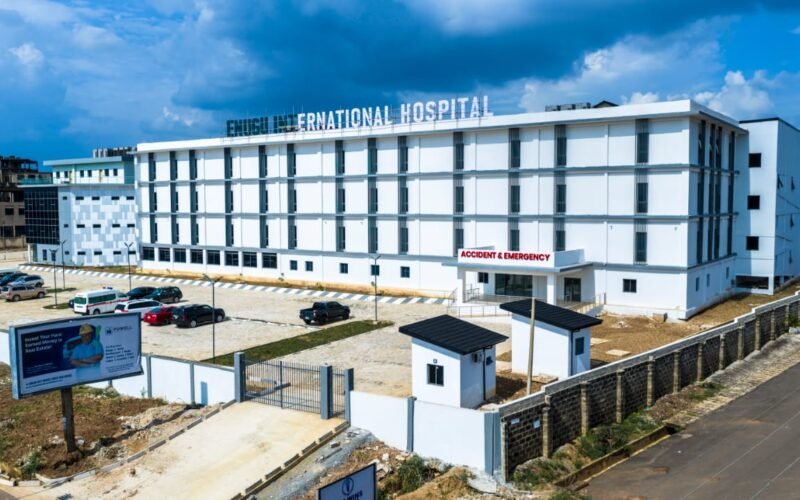
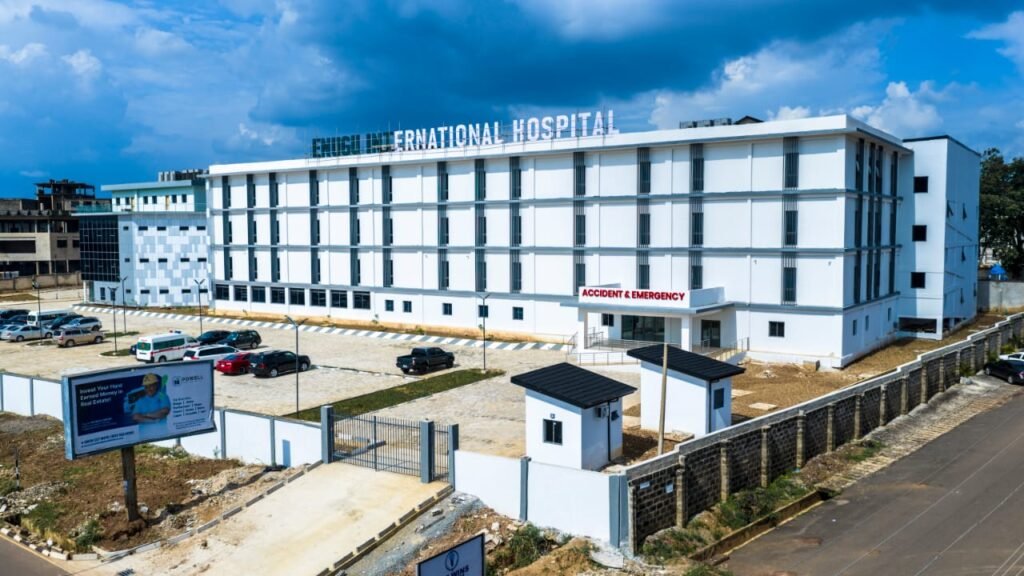
The first point that must be made to the writer is methodological. Where the picture being circulated is an AI impression or architectural visualisation, it should be clearly identified as such. An AI impression is not a photograph of a completed project. If the argument is that Enugu has built something impressive, then do us the favour of showing the real picture on the ground. Let us see the facility as it presently exists, its wards, equipment, theatres, laboratories, staffing, patients and operational status. That is the proper basis for serious comparison, not the visual seduction of a computer-generated impression.
This clarification is not an attack on Governor Peter Mbah. Far from it. Governor Peter Mbah of Enugu State is doing well within the confines, metrics and constraints of Enugu State—its leadership environment, finances, inherited institutions, revenue opportunities and developmental priorities. Governor Alex Otti is equally doing well within the confines, metrics and constraints of Abia State—its leadership environment, financial realities, inherited liabilities and peculiar developmental challenges. It is intellectually unnecessary to pull one governor down in order to celebrate the other.
Indeed, the South-East should be pleased to have states competing over who can build better hospitals, schools, roads and institutions. That is a far healthier competition than the old politics of abandoned projects, unpaid workers and decaying public infrastructure.
But if Alex Otti’s health-sector performance is to be discussed, then it should be discussed historically and fairly, beginning with what he inherited on 29 May 2023 and following the trajectory thereafter.
- Otti Did Not Inherit a Normal Health System in May 2023
Any assessment that begins with today’s photographs while pretending that May 2023 never happened is analytically defective.
On the eve of Otti’s inauguration, Abia’s organised labour was publicly documenting serious arrears across government institutions. The Guardian reported on 2 May 2023 that the state’s Hospital Management Board workers were owed about 16 months, while workers at the Abia State University Teaching Hospital, ABSUTH, were reportedly owed about 27 months. Other state institutions similarly carried substantial salary backlogs.
By June 2023, The Guardian was still reporting the legacy of unpaid salaries and industrial disputes, including medical doctors who had embarked on strike before the change of government. The same report repeated the figures of 16 months for the Hospital Management Board and 27 months for ABSUTH.
So Alex Otti was not handed a pristine healthcare system and asked merely to add a beautiful new building.
He inherited a system in which the human beings expected to operate the hospitals had themselves been financially destabilised.
That context matters.
A healthcare revolution cannot be measured only by concrete. Doctors, nurses, pharmacists, laboratory scientists, radiographers and other personnel constitute the living infrastructure of medicine. Before constructing futuristic institutions, government must first stabilise the workforce.
- ABSUTH Had Lost Accreditation — Restoring It Became an Early Priority
One of the most damaging conditions inherited by the new administration concerned the Abia State University Teaching Hospital and the College of Medicine.
In May 2024, when a presidential health delegation visited Abia, Otti explained that when his administration arrived, the state teaching hospital had been without accreditation for roughly three years. Punch Healthwise reported that his administration prioritised restoring accreditation, addressing salary disputes and rehabilitating the health system.
That restoration was not cosmetic.
A teaching hospital that loses the accreditation necessary for medical training does not simply have an architectural problem. It has an institutional crisis. Medical education, residency, clinical training, manpower succession and the reputation of the state university are all affected.
By December 2023, ABSUTH and the medical programme had regained crucial accreditation after interventions by the new government. The restoration subsequently became one of the achievements cited by the administration when federal health officials assessed developments in the state.
Therefore, before anyone produces an AI rendering and announces that one state has overtaken another in medicine, the serious analyst should ask a more fundamental question:
What was the condition of the healthcare system each governor inherited, and how far has each one moved it from that baseline?
That is what economists call comparing like with like.
- Within the First 100 Days, the Health Emergency Had Already Become Visible Policy
Otti did not wait until the approach of an election before discovering healthcare.
The Guardian’s assessment of his first 100 days, published on 10 September 2023, recorded that his administration had declared an emergency in health and that three general hospitals—one associated with each senatorial zone—had undergone renovation and were awaiting commissioning. The government was also running a statewide free medical programme.
That timeline is important.
The administration came into office on 29 May 2023.
Within roughly three months, health was already one of the explicitly declared emergency sectors and hospital rehabilitation was underway.
That is an antecedent.
It predates today’s political graphics, social-media comparisons and arguments over whose hospital photograph looks more beautiful.
- Otti Put the Abuja Health-Budget Benchmark Into Abia’s Budgets
Governments reveal their priorities not only through speeches but through budgets.
In presenting Abia’s ₦567.2 billion 2024 budget, Otti allocated around 15 per cent to healthcare, bringing the state broadly into the benchmark associated with the Abuja Declaration on health spending. Punch reported the budget presentation on 12 December 2023.
Federal information services subsequently reported that the administration maintained the 15 per cent health commitment in both the 2024 and 2025 budgets.
That deserves attention because health-sector transformation is impossible without sustained fiscal prioritisation.
A hospital photograph may trend for three days.
A health budget determines whether the system can recruit doctors, maintain facilities, procure drugs, finance emergency care, upgrade PHCs and sustain diagnostic services year after year.
The argument for Otti is therefore not built around one shiny structure. It concerns the attempt to rebuild the entire health pyramid—primary, secondary and tertiary.
- The Strategy Moved Down to the Ward Level: 200 Primary Healthcare Centres
Perhaps the most consequential part of Otti’s health policy is not the glamorous end of medicine at all.
It is primary healthcare.
In January 2025, the administration launched the rehabilitation, remodelling and retrofitting of 200 Primary Healthcare Centres across Abia’s 184 wards. Premium Times reported that the programme, known as Project Ekwueme, carried a stated cost of approximately ₦10.78 billion.
The Federal Ministry of Information similarly reported the flag-off of the 200-PHC programme on 20 January 2025, noting that the facilities were spread across the state’s wards.
This is where the health-sector conversation becomes more serious.
The average rural woman with pregnancy complications does not initially need a billion-dollar medical city.
She needs a functioning PHC within reasonable travelling distance.
The child with malaria needs diagnosis and treatment nearby.
The mother needs immunisation services.
The hypertensive farmer needs basic monitoring.
The elderly resident needs access before illness becomes catastrophic.
A rational health system therefore cannot concentrate all expenditure in a magnificent tertiary hospital in one urban centre while abandoning primary care across hundreds of communities.
Otti’s decision to work simultaneously on hundreds of PHCs is significant precisely because it attempts to build healthcare from the bottom upwards.
- From Construction to Functionalisation: The Important Difference
Another distinction needs to be made because Nigerian governments are very good at commissioning buildings.
A painted health centre is not automatically a functioning health centre.
It needs health workers, equipment, drugs, power, water, information systems and recurrent funding.
By September 2025, the Federal Ministry of Information reported that 140 PHCs had been completed under Project Ekwueme, with a number already moving through functionalisation and more scheduled to follow. The same report said two cottage hospitals at Abayi and Umuihe were ready for commissioning, while work was continuing at general hospitals including Okeikpe, Ikwuano and Obingwa.
By March 2026, Punch reported the formal functionalisation of Project Ekwueme facilities beginning with Alaukwu Ward Primary Health Centre in Isiala Ngwa South.
That is the proper sequence:
Rehabilitate. Equip. Staff. Functionalise. Treat patients.
Not:
Generate image. Post image. Declare revolution.
- Otti Has Also Been Rebuilding the Human Infrastructure
Buildings do not diagnose patients.
Doctors do.
Machines do not interpret themselves.
Health professionals do.
This is why the manpower component of the Otti reforms matters.
By November 2025, Premium Times reported that the Abia government was conducting recruitment for 771 health workers, with about 2,000 applications received and roughly 1,200 people shortlisted at one stage of the exercise.
By May 2026, as Otti marked his third year in office, TVC reported the government’s claim that nearly 1,000 healthcare workers, including consultants and technicians, had been recruited while improvements continued at general hospitals and PHCs.
This is important in the Nigerian context of medical brain drain.
You cannot build a sustainable healthcare system merely by importing sophisticated equipment. You need trained professionals who are adequately remunerated and willing to remain in the system.
There have also been legitimate labour demands. In March 2025, for example, the Abia branch of the Nigerian Medical Association publicly pressed the government to implement the newer Consolidated Medical Salary Scale, arguing that Abia doctors were still comparatively poorly paid. The Guardian reported the demand.
That criticism should not be hidden.
It should be included because serious assessment of Otti does not require pretending every problem has disappeared.
The more credible position is that the system is being rebuilt while important remuneration and manpower challenges remain.
That is what governing within constraints actually means.
- Health Insurance Has Moved the Conversation From Buildings to Access
Healthcare is not truly accessible simply because a hospital exists.
A hospital that the poor cannot afford might as well be twenty kilometres farther away.
This explains the significance of health insurance in the Otti strategy.
In November 2024, the Abia government approved a formal-sector health-insurance arrangement for civil servants and announced government counterpart funding for the programme.
In April 2025, Otti formally launched the Formal Sector Health Insurance Scheme for civil servants and their dependants, presenting it as part of the push toward affordable and accessible healthcare.
By 31 March 2026, The Guardian reported that 157,462 people had enrolled under the Abia State Health Insurance Scheme.
That is another metric by which healthcare reform should be measured.
Not only:
How tall is your hospital?
But:
How many ordinary citizens can actually afford to enter it?
- Secondary Hospitals Have Not Been Abandoned
Another reason the simplistic comparison is misleading is that the Otti health programme is not a single-project programme.
The administration has been rehabilitating general and cottage hospitals while simultaneously investing in PHCs and ABSUTH.
The first-100-days assessment already recorded renovation of general hospitals. By September 2025, federal reporting identified continued work at general hospitals in Okeikpe, Ikwuano and Obingwa, alongside cottage hospitals and the PHC programme.
By May 2026, the administration was also reporting substantial work on general hospitals serving Obingwa, Okeikpe, Ikwuano, Arochukwu and Ohafia.
This geographical spread is important.
Abia’s health challenge cannot be solved by building one impressive facility in Umuahia or Aba and declaring victory.
People live in Bende.
People live in Arochukwu.
People live in Ohafia.
People live in Ukwa.
People live in Umunneochi.
People live in Isiala Ngwa.
People live in Ikwuano.
The system must reach them too.
- The Medical City Represents the Tertiary End of the Vision
At the opposite end of the healthcare pyramid is Otti’s ambition to position Abia as a destination for advanced medical care.
In June 2025, the Federal Ministry of Information reported plans to launch the Abia Medical City, described by the government as a proposed $1.3 billion project aimed at building high-end medical capacity and reducing outward medical tourism.
This project should be judged by the same standard I am insisting upon for everybody else.
A proposal is not a completed hospital. A groundbreaking is not a functioning medical city.
Its progress should therefore be independently tracked against its promised financing, construction timetable, specialist facilities, ownership structure and commissioning targets.
That standard should apply to Alex Otti.
It should apply to Peter Mbah.
It should apply to every Nigerian governor.
That is precisely why AI impressions must not be confused with completed infrastructure.
- By 2026, the Strategy Was Expanding Beyond the Original PHC Programme
The government’s health programme has continued beyond the original batch of PHCs.
In January 2026, the Federal Ministry of Information reported that a visiting House of Representatives Committee on Health commended Abia’s healthcare interventions after inspecting developments in the sector.
In May 2026, Otti also flagged off construction of an Abia Specialist and Diagnostic Centre at Umunnato in Alayi, Bende LGA, another attempt to distribute specialist capacity geographically rather than centralise everything in Aba and Umuahia.
Again, one does not have to claim perfection.
One merely has to acknowledge the direction of travel.
- Peter Mbah Is Doing Well — And That Does Not Require Alex Otti to Be Doing Badly
This obsession with creating a Peter Mbah-versus-Alex Otti duel is unnecessary.
Peter Mbah has pursued substantial programmes in Enugu, including ambitious investments in primary healthcare and other social infrastructure. His government has publicised plans for hundreds of PHCs as part of a broader development programme.
Good.
Enugu should succeed.
I repeat the formulation deliberately:
Governor Peter Mbah of Enugu State is doing well within the confines, metrics and constraints of Enugu State—leadership, financial, institutional and developmental.
And:
Governor Alex Otti is doing well within the confines, metrics and constraints of Abia State—leadership, financial, institutional and developmental.
A sensible South-East should want both governors to succeed.
If Mbah builds a better hospital, Abia should study it.
If Otti develops a better primary healthcare system, Enugu should study it.
If Anambra develops a superior digital-health platform, the other states should copy it.
If Ebonyi produces better maternal-health outcomes, everyone should learn from Ebonyi.
That is how competitive federalism should work.
- Compare Outcomes, Not Renderings
So, to the writer, the request is straightforward.
Do not give us an AI impression and treat it as empirical evidence.
Give us the picture on the ground.
Give us the construction date.
Give us the completion percentage.
Give us the equipment inventory.
Give us the bed capacity.
Give us the number of doctors and nurses employed.
Give us the patient numbers.
Give us the cost.
Give us the source of funding.
Give us the recurrent expenditure required to keep the hospital running.
Give us maternal-mortality outcomes.
Give us infant-mortality outcomes.
Give us insurance coverage.
Give us doctor-to-patient ratios.
Give us accreditation status.
Then we can have a meaningful discussion.
The same measurements should be demanded from Abia.
Because development is not a beauty contest between computer-generated buildings.
It is about health outcomes and institutional capacity.
- The Historical Record Since 2023 Is Therefore Difficult to Wipe Away
The Alex Otti health-sector story did not begin with today’s photograph.
It began with an inherited system carrying enormous salary arrears, industrial disputes and a teaching hospital that had lost crucial accreditation.
It moved through the declaration of a health emergency and early rehabilitation of general hospitals in 2023.
It included restoration of ABSUTH’s accreditation and the deliberate commitment of around 15 per cent of state budgets to health.
It expanded into the rehabilitation of 200 PHCs across 184 wards, with a reported programme cost of about ₦10.78 billion.
It moved into health-insurance expansion, health-worker recruitment, general-hospital rehabilitation and the functionalisation of primary facilities.
And it is now extending toward specialist and tertiary infrastructure.
That record can certainly be criticised.
It can be audited.
It can be compared with Enugu.
It can be measured against international standards.
But it cannot honestly be reduced to the claim that Alex Otti has done nothing in health because Peter Mbah has presented an impressive hospital project.
That is not analysis.
That is social-media football.
Conclusion: Let the Two Governors Compete in Results
So let Peter Mbah build.
Let Alex Otti build.
Let Charles Soludo build.
Let Francis Nwifuru build.
Let Hope Uzodimma build.
The South-East benefits when its governors compete over who produces the strongest health system, the best schools, the safest roads, the most productive economy and the highest quality of life.
But let us maintain one standard.
An AI impression is an impression.
A building under construction is a building under construction.
A completed building is a completed building.
An equipped hospital is an equipped hospital.
And a functioning health system is demonstrated ultimately by the quality, accessibility and outcomes of care received by the people.
By that fuller standard, the Alex Otti administration has built a substantial healthcare antecedent since May 2023. It inherited deep dysfunction, restored key institutional capacity, rehabilitated hospitals, committed substantial budgetary resources, embarked on hundreds of primary-health interventions, expanded insurance, recruited personnel and initiated specialist projects.
There is still work to be done. Indeed, substantial work remains.
But fairness requires acknowledging the distance already travelled.
Peter Mbah is doing well within Enugu’s confines, metrics and constraints. Alex Otti is doing well within Abia’s confines, metrics and constraints. Let both records stand on the evidence—and please, give us the real pictures on the ground.