
ABIA: WHERE PUBLIC FUNDS ARE BECOMING VISIBLE PUBLIC VALUE
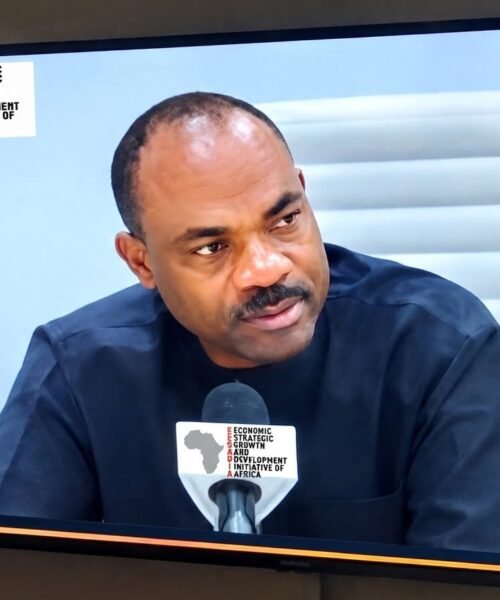
By Pastor Prof. Chukwuemeka Ifegwu Eke
The true measure of government is not merely how much money it receives, but how effectively public resources are converted into services that improve the lives of citizens.
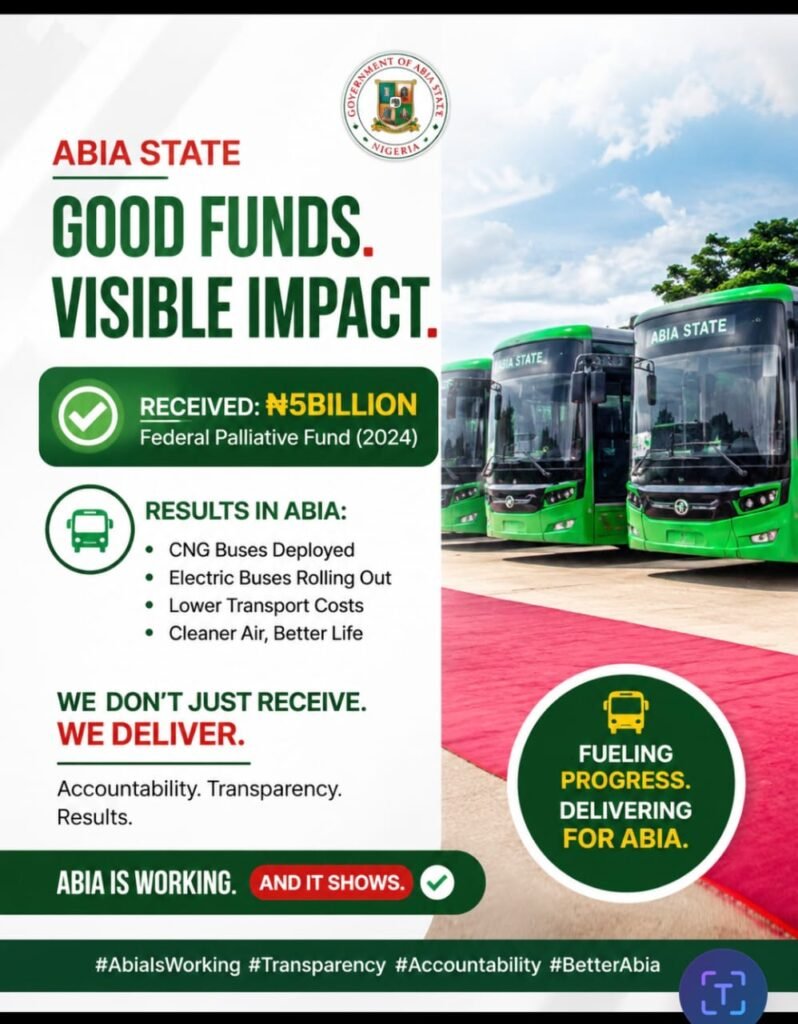
Following the removal of fuel subsidy, the Federal Government approved a ₦5 billion palliative package for each state and the Federal Capital Territory. The intervention was primarily intended to provide food and agricultural support to cushion the economic hardship. It was not announced as a dedicated fund for purchasing CNG or electric buses.
Public discussion must, therefore, be grounded in facts. It would be misleading to claim, without documentary evidence, that Abia State’s electric buses were purchased directly from that particular ₦5 billion allocation.
What cannot be disputed is that the administration of Governor Alex Otti, OFR, has translated its broader development programme into visible improvements in public transportation.
In December 2025, Abia State unveiled the first batch of 20 electric buses under the Abia Green Shuttle Service. The initiative was designed to modernise public transportation, reduce commuting costs and move the state towards cleaner and more sustainable urban mobility.
The programme has progressed beyond ceremonial unveiling to practical public service. The administration subsequently commenced subsidised electric-bus operations, demonstrating that the project was not introduced merely for photographs or political propaganda, but for the actual benefit of Abians.
This is the essential difference between receiving public funds and delivering public value.
Governor Otti’s approach is anchored on prudent planning, modern infrastructure, accountability and measurable results. The electric buses are part of a wider transportation vision that includes modern terminals, designated bus stops, charging infrastructure and the gradual expansion of the state-owned fleet.
At a time when rising fuel prices have increased transportation costs across Nigeria, investing in electric public transportation is both economically sensible and environmentally responsible. It offers the prospect of lower operating costs, cleaner cities and more predictable fares for commuters.
Abia welcomes legitimate questions about public finance. Accountability is not an attack on government; it is an indispensable component of democracy. However, accountability must also reject misinformation, partisan insults and the careless combination of unrelated government interventions.
The record must, therefore, be stated correctly:
The ₦5 billion palliative intervention was primarily announced for food and agricultural relief. Abia’s Green Shuttle programme is a separate and documented state transportation initiative whose first fleet of 20 electric buses was unveiled in December 2025.
The greater message remains unmistakable: under Governor Alex Otti, OFR, Abians are witnessing a government that plans, invests and delivers.
In the New Abia, progress is no longer hidden in government files.
It is moving visibly on our roads.
ABIA IS WORKING — AND THE EVIDENCE IS VISIBLE.