
The Professor‘s Prestige and the Political Wilderness: On Soludo’s Repeated Attacks on Obi and the Futility of Their Political Utility
By Charles Ude, Esq
Legal Practitioner and Author
charlesude2014@gmail.com
Abstract: More than a decade has passed since Peter Obi left the governorship of Anambra State, yet the incumbent governor, Charles Soludo, continues to launch debt accusations and personal attacks against him. This article argues that Soludo‘s repeated assaults on Obi lack a verifiable legal nexus at the level of debt liability, and at the political level expose a profound strategic miscalculation,the belief that by negating Obi he can establish his own relevance in the Igbo political landscape, when in fact the opposite is true. By analyzing the substance of the debt allegations, the historical pattern of Soludo’s attacks on Igbo leaders, and public evaluations of governance performance in the South-East, this article demonstrates that Soludo‘s conduct has produced a boomerang effect: it has failed to shake Obi’s standing among Nigerians and the Igbo people, and has instead reduced Soludo himself to a footnote illustrating the severe disconnect between academic capital and political wisdom.
Keywords: Soludo; Peter Obi; Anambra debt; Igbo politics; political relevance
I. Introduction: A “Professor Without Sense”?
Charles Soludo possesses a dazzling academic résumé—economist, former Central Bank Governor, professor. Yet academic capital and political judgment have never enjoyed an automatic exchange rate. Soludo‘s persistent attacks on Peter Obi in recent years are a mirror reflecting an uncomfortable truth: a man adorned with the title “professor” can simultaneously display a startling myopia in political judgment.
The core issue is not whether Soludo has the right to criticize a predecessor. Any incumbent governor has both the right and the responsibility to clarify the fiscal condition left behind by a predecessor. The issue is timing, target, and motive. Obi left the Anambra State government more than ten years ago. When a man must repeatedly “expose” a predecessor’s alleged sins more than a decade later, and when those “sins” do not withstand factual scrutiny and cannot be attributed to the individual in law, then in the rhetoric of politics this is no longer accountability, it is a public performance of obsession.
Soludo‘s conduct calls to mind an ancient metaphor: a man throwing punches at an opponent who left the ring long ago, each blow landing on empty air, yet he believes he has struck a vital spot.
II. The Legal Poverty of the Debt Allegations
The so-called “debt records” released by the Soludo government claim that eight external borrowings were left behind during Obi’s tenure, with an outstanding balance of approximately 127.4 billion naira as of June 2026 . This allegation suffers from fundamental defects in both law and fact.
First, sovereign loans cannot be attributed to an individual. The projects listed by Soludo—the Malaria Control Booster Project, Fadama III, the Health Systems Development Project II, the State Education Program Investment Project, the Community and Social Development Project, NEWMAP, and others , are all multilateral concessional loans extended by the World Bank/International Development Association (IDA) and the International Fund for Agricultural Development (IFAD) to the Federal Government of Nigeria, not commercial credits obtained by the Anambra State Government from commercial banks . The debtor in law is the Federal Government; the state government is merely an implementing entity. To affix the label “Obi‘s debt” to sovereign concessional credits is a category error in law.
Second, drawdowns on several loans occurred after Obi left office. Take NEWMAP as an example. Obi’s government successfully secured the project in 2013 and paid an initial counterpart fund of 500 million naira, but the project funds had not yet been drawn down when Obi left office in March 2014. The actual drawdown and project execution occurred largely during the tenures of Obiano and Soludo. More ironically still, Soludo himself recently approved and paid a 500 million naira counterpart fund for the NEWMAP-EIB phase, following precisely the benchmark set by Obi. To enjoy the dividends of a project secured by a predecessor while stigmatizing that same project as the predecessor‘s “debt” is a double standard that has crossed beyond the bounds of partisan attack into the ethical grey zone of political rhetoric.
Third, the alleged “unpaid pensions and gratuities” cannot be verified through public records. Obi has stated unequivocally that he left office owing no verified salaries, pensions, or supplier payments, and publicly disclosed First Bank account information said to hold a balance of over 75 billion naira, challenging the Soludo government to produce counter-evidence . To date, the Soludo government has not provided any independently verifiable bank transaction records to rebut this challenge. In the basic logic of the law of evidence, the party who asserts bears the burden of proof. Soludo made the assertion but did not complete the proof.
More noteworthy still is a temporal asymmetry. Nigeria’s federal public debt rose to approximately 166.79 trillion naira in the second quarter of 2026, with the Federal Government alone accounting for about 152.77 trillion. Faced with this genuinely macroeconomically significant debt expansion, Soludo has maintained conspicuous silence. Meanwhile, Soludo himself claims that since assuming office as governor in 2022 he has “not borrowed a single naira” . A governor who claims never to have borrowed, yet is so indignant about multilateral concessional loans from more than a decade ago, the very targeting of this selective indignation tells its own story.
III. The Historical Pattern of Attacking Igbo Leaders
Soludo‘s attacks on Obi are not isolated events. They are the continuation of a clear behavioral trajectory.
In 2015, Soludo, then Central Bank Governor, engaged in a public economic policy controversy with Finance Minister Ngozi Okonjo-Iweala. Soludo published a series of sharply worded articles accusing Okonjo-Iweala of “criminal negligence” in economic management, even issuing a public challenge to debate her . The controversy ended with Okonjo-Iweala declining to respond further, leaving behind a remark that now appears remarkably prescient: Nigeria should be wary of “intellectuals with intellect but without character and wisdom” .
From Okonjo-Iweala to Obi, Soludo displays an unsettling behavioral pattern: launching attacks on the most nationally prominent leaders of the Igbo ethnic group, often in a manner that transcends the boundaries of policy debate and enters the realm of personal accusation. The political psychology behind this pattern is not complex. When a political figure’s actual governance performance within his own ethnic group is insufficient to support his national ambitions, one available strategy is to attempt to “lower” the highest benchmark within the same ethnic group in order to shorten the distance between himself and that benchmark. This is a political “zero-sum illusion”, the belief that another‘s diminishment necessarily means one’s own elevation.
Yet Okonjo-Iweala is today Director-General of the World Trade Organization, her international standing enhanced rather than diminished. Soludo‘s attacks caused no substantive damage to her reputation. This precedent alone foretells the outcome of the current attacks on Obi.
IV. Public Evaluation of Governance Performance: An Unavoidable Comparison
If the debt allegations are Soludo’s “offensive” against Obi, then public evaluations of governance performance in the South-East constitute a “counter-interrogation” of Soludo himself.
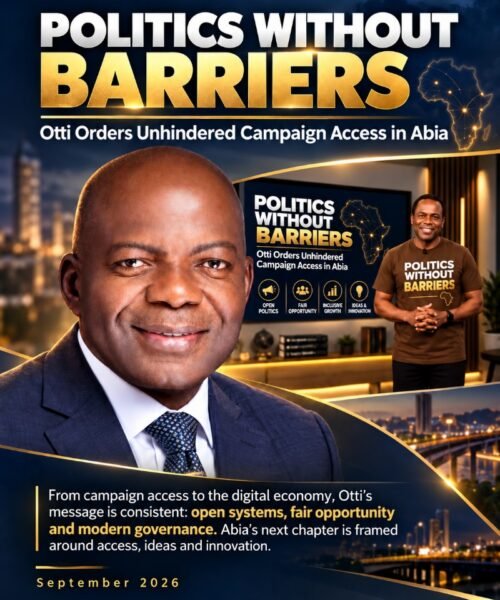
In late 2025, the Forum of Academic Doctors in the South-East (FOSAD) conducted a governance performance poll among academic professionals. Of 830 valid responses, Abia State Governor Alex Otti was rated the best-performing governor in the South-East with 55.5 percent, Enugu State Governor Peter Mbah came second with 35.2 percent, and Soludo placed third with 7.8 percent . This result deserves careful chewing.
FOSAD‘s assessment indicators covered security and rule of law, economic development and employment, infrastructure and urban development, governance transparency and accountability, and other dimensions . Soludo is a governor holding the title of professor of economics, yet his governance performance ranked only third in the evaluation of his academic peers, more than four times behind the second-place finisher. This fact alone constitutes a silent judgment: academic titles do not automatically translate into governance effectiveness. A man who can expound complex economic models from a lectern is not necessarily able to command respect from citizens and peers in the daily operations of a state government.
Of course, polls have their limitations. But Soludo’s reaction, or lack thereof, is itself informative. A governor confident in his governance performance ordinarily does not need to prove his worth by repeatedly attacking a predecessor who left office more than a decade ago. It is precisely the relative deficiency of legitimacy in the field of governance that gives rise to excessive activity in the field of attack.
V. The Lesson of Kenneth Okonkwo
Soludo might do well to draw some lessons from Kenneth Okonkwo‘s experience. Okonkwo was once one of Obi’s closest allies during the 2023 campaign, serving as Labour Party campaign spokesman. Yet since 2026, Okonkwo has shifted position, launching a series of fierce personal attacks on Obi, calling him a “classless, charisma-less politician” and accusing him of corruption and manipulating party primaries .
Obi‘s legal team ultimately responded to Okonkwo’s allegations with the threat of a 5 billion naira defamation suit . More instructive still was the public reaction. Nigerian social media users generally took a negative view of Okonkwo‘s attacks, with one commentator asking bluntly, “Why keep attacking Obi? Is he the only candidate?” . Okonkwo’s “turn” did not win him new political capital; instead, it positioned him in the public eye as a man who betrayed an ally for personal gain.
Soludo‘s situation bears a structural resemblance to Okonkwo’s: both sought to extract some political benefit by attacking Obi, both attacks failed the test of facts, and both produced a boomerang effect in public opinion. The difference is that Okonkwo‘s is a “traitor” narrative, while Soludo’s is an “envious man” narrative. In political communication studies, both narratives are more destructive than the object they seek to attack, except that what they destroy is the attacker‘s own credibility.
VI. Conclusion: Political Vanity and Historical Judgment
Soludo’s persistent attacks on Obi appear on the surface to be a dispute about debt and governance records. But at a deeper level, they reveal the fundamental disorientation of a scholarly political figure in the political field. Soludo appears to believe that by negating Obi he can carve out a unique position for himself in Igbo politics and even in Nigerian national politics. This is a profound miscalculation.
Obi‘s standing among the Nigerian people, especially among the Igbo, is not built on a flawless governance record (no politician’s record is flawless), but on the possibility he symbolizes: a different form of political leadership, a governance ethic that places fiscal prudence, personal integrity, and public accountability above the accumulation of personal power. This symbolic meaning cannot be dissolved by a dismantled list of debts.
Soludo‘s tragedy is that he possesses all the intellectual tools needed to become a great governor, yet has invested too much political energy in a war against a ghost. As Okonjo-Iweala warned years ago, intellect unconstrained by character and wisdom will ultimately lose itself in the labyrinth of vanity.
VII. The Question Soludo Has Not Answered
Finally, there is a question Soludo has never addressed, and it deserves to be put to him directly: if Peter Obi is as discredited as Soludo’s repeated attacks suggest, whom does Soludo propose in his place?
The Igbo political landscape is not so crowded with nationally credible figures that it can afford to have its most prominent son dismantled by one of its own sitting governors. Leadership within any ethnic bloc is a scarce resource. A politics that devotes its energy to pulling down the tallest tree does not produce a forest; it produces a clearing. Soludo should tell the Igbo people who his preferred standard-bearer is, and on what record that person stands. If he has no answer, then the attacks on Obi are not about offering an alternative, they are about removing one.
It is true that other regions have their internal rivalries. Tinubu has faced sharp criticism from within the South-West; Atiku has faced it from within the North . But there is a difference between contestation within a region and a sitting governor waging a decade-long campaign against a predecessor from his own state and his own ethnic group. The first is normal politics. The second is a habit of destruction that ultimately diminishes the destroyer along with the target.
Soludo holds a professorial chair and a governor‘s mansion. He does not need to borrow Obi’s shadow to stand in the sun. The Igbo people would be better served if he stopped trying.
For Soludo, what remains possible is this: to halt this futile pursuit and return to the governance problems in Anambra State that genuinely require professorial intellectual engagement. History will not record how many statements Soludo issued about Obi‘s debts, but it will remember whether he built schools, hospitals, and water systems for the people of Anambra. In the court of final appeal that is politics, the fruits of governance are always more powerful testimony than the noise of rhetoric.
As for Obi, his political fate will be written by his own campaign strategy and the decisions of Nigerian voters. Soludo’s attacks, judging by their effects so far, look more like free mobilization on Obi‘s behalf, each attack gives Obi an opportunity to restate his record with clear facts. A truly clever opponent would not be so generous in granting the other side opportunities to display these.
About the Author
Charles Ude, Esq. is a legal practitioner and author. He writes on law, politics, and governance in Nigeria. He can be reached at charlesude2014@gmail.com.