
CURBING IRAN’S HYDRA-HEADED REGIONAL NETWORK: EVIDENCE OF THE UNITED STATES’ STRATEGY
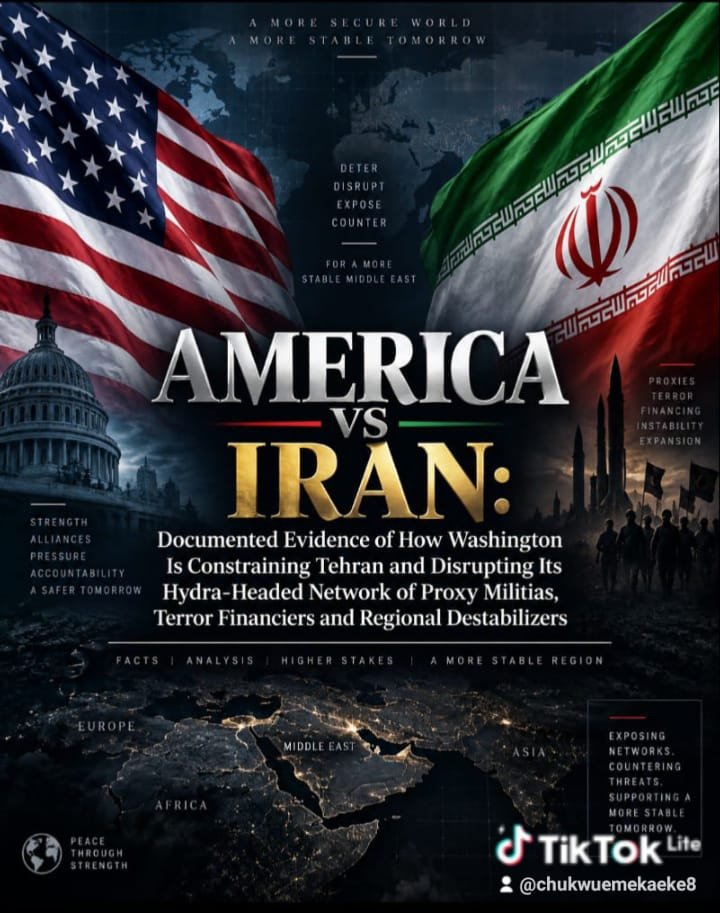
Iran has, over several decades, developed a regional network of armed partners stretching from Lebanon and Iraq to Yemen and the Palestinian territories. The principal organisations commonly associated with this network include Lebanese Hezbollah, the Houthis in Yemen, several Iran-aligned Iraqi militias, Palestinian Islamic Jihad and, to a more complicated degree, Hamas. Academic and policy literature cautions that these organisations should not all simply be labelled Iranian “proxies”: their dependence on Tehran and freedom of action vary considerably. Nevertheless, Iran supplies important elements of financing, weapons, training, technology and political support to the network.
The United States has responded through a combination of military pressure, economic sanctions, financial disruption, weapons interdiction, counterterrorism operations and support for regional state institutions.
- MILITARY DEGRADATION AND DETERRENCE
The United States has used military force against Iranian and Iran-aligned capabilities, particularly where attacks threaten American personnel, allies or international navigation. Michael Singh of the Washington Institute for Near East Policy, in his 2026 paper “Assessing U.S. Progress in the Iran War,” identifies major American objectives as destroying or degrading Iranian missile and naval capabilities, preventing nuclear weapons development and preventing Tehran from supporting organisations such as Hezbollah and the Houthis.
Similarly, Michael Eisenstadt’s Washington Institute analysis of earlier U.S.-Iran confrontations documents American interdiction of Iranian weapons shipments and operations against senior Quds Force operatives involved in supporting armed groups in Iraq. This demonstrates that disrupting the logistical connection between Tehran and its regional partners has been a longstanding component of American policy.
- FINANCIAL AND ECONOMIC STRANGULATION
American policy does not concentrate solely on fighters and missiles. It seeks to attack the financial networks through which the Islamic Revolutionary Guard Corps-Quds Force and affiliated organisations obtain, transfer and conceal resources.
Matthew Levitt and Michael Jacobson of the Washington Institute, in “Keeping Iran’s Proxies on Their Back Feet” (2026), argue that restricting Tehran’s financial assistance is insufficient by itself because Hezbollah, Hamas and the Houthis possess independent fundraising, procurement and logistical networks. Consequently, American counterterrorism policy increasingly seeks to identify financiers, front companies, procurement agents, shipping mechanisms and other channels that permit these organisations to regenerate.
- DISRUPTING THE ENTIRE NETWORK, NOT MERELY ONE ORGANISATION
Brian Katz of the Center for Strategic and International Studies (CSIS), in the influential study “Axis Rising: Iran’s Evolving Regional Strategy and Non-State Partnerships in the Middle East,” explains that Iran’s partners operate along a spectrum ranging from relatively dependent proxies to increasingly autonomous allies. Hezbollah remains exceptionally close to Tehran; some Iraqi militias have substantial IRGC-Quds Force links; while the Houthis have historically possessed considerably greater operational independence.
This distinction explains why American strategy increasingly targets the system rather than assuming that defeating one organisation will destroy the network.
The Washington Institute study “The Wartime Role of Iran’s ‘Axis’: Countering Proxy and Terrorist Threats,” by Assaf Orion, Hanin Ghaddar, Michael Knights, April Longley Alley, Michael Jacobson and Matthew Levitt, examines Hezbollah, the Houthis, Iraqi armed groups and other Iranian partners simultaneously. Its central implication is that countering Tehran requires coordinated military, intelligence, financial and diplomatic measures across several theatres.
- THE BROADER ACADEMIC INTERPRETATION
Suzanne Maloney of the Brookings Institution, in “The Path Forward on Iran and Its Proxy Forces,” describes militant partner organisations as a central component of Tehran’s asymmetric regional strategy. Iran uses financing, weapons, training, political relationships and increasingly the transfer of weapons-production capabilities to create resilient organisations capable of threatening stronger adversaries without requiring Iran itself to fight every confrontation directly.
The policy implication is important: America cannot effectively curb this structure merely by attacking Tehran. It must simultaneously constrain the centre, financing system, supply lines and individual regional nodes.
- WHAT THE EVIDENCE SHOWS
The accumulated evidence therefore reveals a multidimensional American containment strategy:
Military degradation: striking threatening Iranian and Iran-aligned military capabilities.
Financial warfare: sanctions against financiers, businesses, procurement networks and institutions supporting the IRGC and associated organisations.
Weapons interdiction: disrupting Iranian missiles, drones, components and other military supplies moving to regional partners.
Counterterrorism and intelligence: identifying operatives, commanders, facilitators and overseas networks.
Maritime security: protecting international shipping, particularly where Houthi attacks threaten the Red Sea and surrounding waterways.
Strengthening regional states: supporting legitimate security institutions capable of reducing the political and military space available to non-state armed organisations.
Pressure on Tehran itself: raising the direct economic, military and diplomatic cost to Iran of rebuilding and sustaining the network.
CONCLUSION
What is sometimes described as Iran’s “hydra-headed” regional architecture is therefore better understood academically as a network of differently constituted armed partners joined by Iranian finance, weapons, ideology, technology and strategic interests. The American response increasingly recognises this structure. Rather than concentrating exclusively on one organisation, Washington has developed a layered strategy intended to weaken Iran as the principal sponsor while simultaneously disrupting the military, financial and logistical capacity of the individual nodes.
The available evidence consequently supports the proposition that the United States is pursuing a strategy of systemic constriction: military degradation, economic pressure, counterterrorist disruption, interdiction and regional institution-building designed to make Iran’s network progressively more expensive to sustain, more difficult to replenish and less capable of coordinated regional action.
SELECTED DOCUMENTED SOURCES
- Katz, Brian. Axis Rising: Iran’s Evolving Regional Strategy and Non-State Partnerships in the Middle East. Center for Strategic and International Studies (CSIS), 2018.
- Maloney, Suzanne. The Path Forward on Iran and Its Proxy Forces. Brookings Institution.
- Singh, Michael. Assessing U.S. Progress in the Iran War. Washington Institute for Near East Policy, 6 March 2026.
- Orion, Assaf; Ghaddar, Hanin; Knights, Michael; Alley, April Longley; Jacobson, Michael; & Levitt, Matthew. The Wartime Role of Iran’s “Axis”: Countering Proxy and Terrorist Threats. Washington Institute for Near East Policy, 5 March 2026.
- Levitt, Matthew & Jacobson, Michael. Keeping Iran’s Proxies on Their Back Feet. Washington Institute for Near East Policy, 2026.
- Levy, Ido. The “Axis of Resistance” Strategy in the Israel-Hamas War. Washington Institute for Near East Policy, 9 January 2024.
- Center for Strategic and International Studies. The Regional Reverberations of the U.S. and Israeli Strikes on Iran. CSIS, 2026.