
GOV OTTI IS LISTENING, STUDYING AND STRATEGIZING
By AProf Chukwuemeka Ifegwu Eke
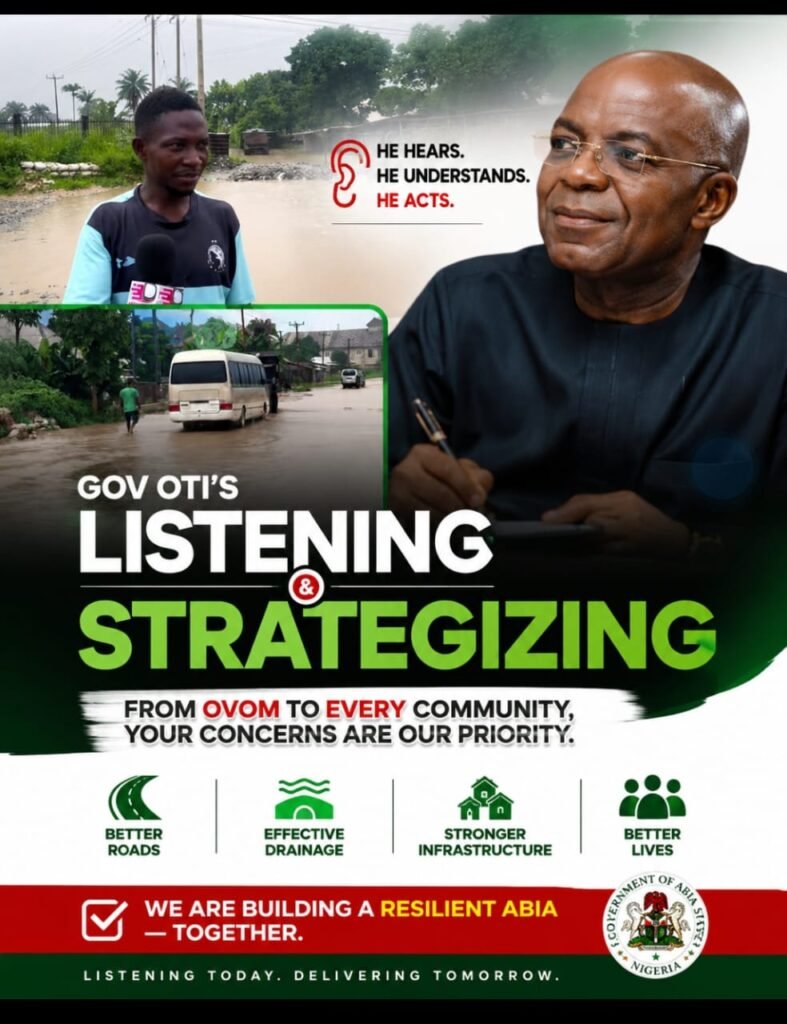
The images emerging from Ovom along Opobo Road are troubling. Floodwater has disrupted movement, threatened livelihoods and reminded everyone that some communities still carry the burden of years of neglected drainage and inadequate road infrastructure.
But this is not the time for empty political noise. It is the time for responsible leadership, proper assessment and lasting intervention.
Governor Alex Otti is listening.
He is listening to residents describing their daily struggles. He is paying attention to the videos, photographs and reports coming from the affected communities. More importantly, he is strategizing on solutions that will not merely provide temporary relief but address the underlying causes of the flooding.
Road construction without effective drainage is an invitation to disaster. Drainage without properly designed water channels merely transfers flooding from one community to another. That is why the government must study the terrain, identify the natural waterways, redesign failed drainage systems and deliver infrastructure capable of surviving future rainfall.
The situation in Ovom deserves urgent attention, but urgency must not become an excuse for another poorly executed project. The people need a durable road, functional drainage and a coordinated flood-control plan—not a cosmetic intervention designed only for cameras.
Governor Otti’s administration has repeatedly demonstrated that listening is part of governance. Every genuine complaint from the people should therefore be treated as useful feedback for better planning and service delivery.
The message from Ovom is clear: the people need help.
The response from the government should be equally clear: We have heard you, we understand the problem, and a sustainable solution is being developed.
From Ovom to every community across the 17 local government areas, no legitimate concern should be ignored and no community should be abandoned.
Governor Otti is listening today, strategizing carefully and preparing to deliver a more resilient Abia tomorrow.
He hears. He understands. He acts.