
EXTERNAL DEBT MISCHIEF EXPOSED: WHY ABIA IS NOT THE SCANDAL THEY WANT YOU TO BELIEVE
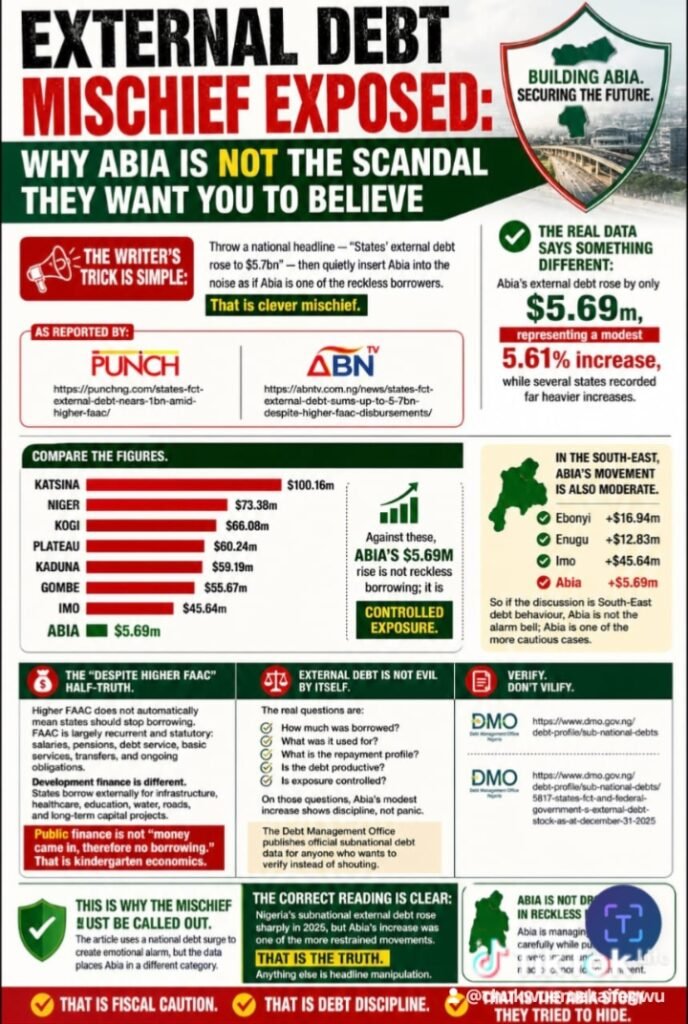
The Obinna Oriaku geng’s trick is simple: throw a national headline — “States’ external debt rose to $5.7bn” — then quietly insert Abia into the noise as if Abia is one of the reckless borrowers. That is clever mischief. The real data says something different: Abia’s external debt rose by only $5.69m, representing a modest 5.61% increase, while several states recorded far heavier increases. The PUNCH/ABN report itself admits this.
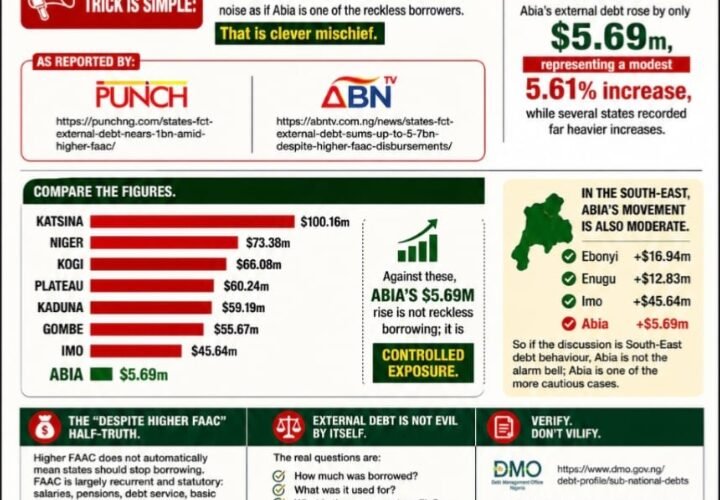
Compare the figures. Katsina rose by $100.16m. Niger rose by $73.38m. Kogi rose by $66.08m. Plateau rose by $60.24m. Kaduna rose by $59.19m. Gombe rose by $55.67m. Imo rose by $45.64m. Against these, Abia’s $5.69m rise is not reckless borrowing; it is controlled exposure. Any writer who buries that contrast is not analysing — he is shaping fear.
In the South-East, Abia’s movement is also moderate. Ebonyi increased by $16.94m, Enugu by $12.83m, Imo by $45.64m, while Abia rose by $5.69m. So if the discussion is South-East debt behaviour, Abia is not the alarm bell; Abia is one of the more cautious cases. That is the fact they do not want people to see.
The deeper half-truth is the phrase “despite higher FAAC.” Higher FAAC does not automatically mean states should stop borrowing. FAAC is largely recurrent and statutory: salaries, pensions, debt service, basic services, transfers, and ongoing obligations. Development finance is different. States borrow externally for infrastructure, healthcare, education, water, roads, and long-term capital projects. Public finance is not “money came in, therefore no borrowing.” That is kindergarten economics.
Even more importantly, external debt is not evil by itself. The real questions are: How much was borrowed? What was it used for? What is the repayment profile? Is the debt productive? Is exposure controlled? On those questions, Abia’s modest increase shows discipline, not panic. The Debt Management Office publishes official subnational debt data for anyone who wants to verify instead of shouting.
This is why the mischief must be called out. The article uses a national debt surge to create emotional alarm, but the data places Abia in a different category. Abia is not Katsina. Abia is not Niger. Abia is not Kogi. Abia is not Imo. Abia’s rise is modest, controlled, and comparatively low.
So the correct reading is clear: Nigeria’s subnational external debt rose sharply in 2025, but Abia’s increase was one of the more restrained movements. That is the truth. Anything else is headline manipulation.
Abia is not drowning in reckless foreign debt. Abia is managing its exposure carefully while pursuing development under a difficult macroeconomic environment.
That is fiscal caution.
That is debt discipline.
That is the Abia story they tried to hide.