
MY SWORN DECLARATION
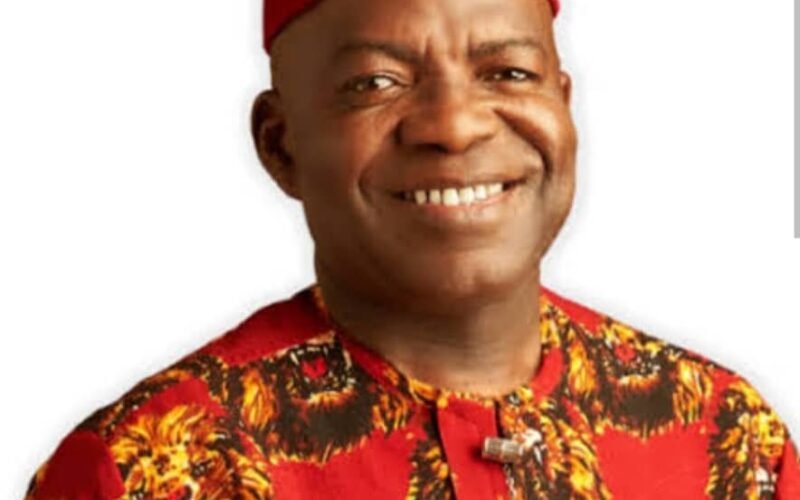
Dr. Alex Chioma Otti, OFR
A New Architecture for Abia: From Recovery to Power, From Order to Prosperity
Nde Abia,
I do not stand before you as a man of empty promises. I stand before you as a governor whose work already speaks in roads rebuilt, hospitals revived, schools restored, communities reconnected, and the dignity of governance recovered. When we came in 2023, we met a state wounded by neglect, diminished by low ambition, and weakened by years of drift. What we promised then was order. What we delivered first was credibility. And what now lies before us is the higher task: not merely to repair Abia, but to redesign it for power, prosperity, and permanence.
This is my sworn declaration: the transformation of Abia has begun, but it is not complete. Aba is rising. Umuahia is only at infant stages. Ohafia and the wider Abia North corridor are entering their strategic moment. The work before us is not patchwork. It is statecraft. It is methodical. It is phased. It is intentional. And it is aimed at one clear end: to build an Abia that can stand on its own feet as a self-sufficient economic ecosystem—productive, connected, investable, secure, and proud.
The first phase of our journey was the phase of rescue. A broken state cannot leap into greatness without first being stabilized. That is why we began with roads, basic urban order, healthcare retrofitting, school reconstruction, payroll stability, support for the elderly, transport infrastructure, and public confidence. We had to establish a simple truth in the minds of our people: government can work again. That was the first revolution. It was not glamorous to some, but it was necessary to all. We restored confidence to the idea of the state itself.
The second phase is the phase of redesign. This is where Abia moves from visible correction to irreversible transformation. It is not enough that roads are fixed; roads must now lead to productivity. It is not enough that hospitals are working; healthcare must now become a strategic asset. It is not enough that schools are rebuilt; education must now feed industry, technology, and innovation. It is not enough that our cities are cleaner; they must now become engines of commerce, tourism, and modern urban life. This is the stage we are entering. And this is where the future of Abia will be settled.
Umuahia: The Capital Must Reflect the Dignity of the State
Let me speak first about Umuahia. I have said it before and I say it again: the transformation of Umuahia is at infant stages. We are only just beginning. The capital of Abia must stop looking like a place waiting for purpose. It must become a place that announces purpose. It must become a seat of governance, enterprise, hospitality, medicine, culture, and conference life.
That is why the facelift of Umuahia is not cosmetic. It is strategic. The planned 200 to 250-room five-star hotel is not just a building. It is an economic statement. It means conventions. It means retreats. It means investors. It means conferences. It means jobs. It means hospitality value chains.
It means that Umuahia will no longer merely host government offices; it will host influence, commerce, and destination activity. A capital city that cannot receive the world cannot grow beyond its own shadow.
And we will not stop there. The vision for Umuahia is a full capital-city renewal architecture: a befitting stadium; upgraded road corridors; a re-ordered urban transport system; a revived water system; specialist healthcare anchored by Amachara; disciplined land use; smart lighting; stronger drainage; public spaces worthy of a state capital; and a built environment that says clearly to every visitor that Abia has recovered its self-respect. We are not trying to make Umuahia look like Dubai. We are making Umuahia look like the best version of itself—elegant, purposeful, ordered, and economically alive.
Aba: The Industrial Furnace of the New Abia
Aba remains central to our economic strategy because Aba is not merely a city; Aba is a force. Aba is the furnace in which enterprise is forged. But for too long, that furnace was buried under filth, broken roads, darkness, congestion, and administrative indifference. We chose to reverse that decline because any government that understands Abia must understand Aba.
What has already been done in Aba is the foundation of a larger industrial renaissance.
Roads, terminals, market access, power, urban sanitation, and transport discipline are not isolated achievements. They are the first components of a serious industrial ecosystem. With Geometric Power and our broader electricity agenda, Aba is being repositioned as the heartbeat of subnational industrial competitiveness. Reliable power is not just about light; it is about manufacturing hours, machine productivity, reduced diesel costs, competitive pricing, and investor confidence. It is about making it possible for Aba’s producers to produce more, faster, and cheaper.
The next phase for Aba is deeper and more intimidating in ambition. We are moving toward an integrated city-region model: industrial parks, logistics corridors, warehousing systems, export-oriented support, modernized market infrastructure, hospitality growth, improved housing clusters, technology-driven urban services, and a stronger connection between small enterprise and large capital. Aba will not merely be cleaned. Aba will be weaponized for productivity. It will become a city that competes not by noise, but by output.
Ohafia and Abia North: The Frontier of Strategic Expansion
Now let me turn to Ohafia and the wider Abia North axis. For too long, development conversations in Abia have been reduced to a false choice between Aba and Umuahia, as though the rest of the state must wait its turn forever. That era is over.
Ohafia, Arochukwu, Bende, Isuikwuato, Umunneochi, and the Abiriba axis are not peripheral territories in our vision; they are strategic growth zones.
The roads in that corridor are not merely transport projects. They are unblocking history. They are reopening agriculture, trade, tourism, security access, and regional movement. A road in Abia North is not just a road. It is access to markets. It is access to hospitals. It is access to schools. It is access to dignity. It is access to the state itself. That is why our work in those corridors matters so deeply.
But roads alone will not define our ambition there. Abia North must become a belt of agro-processing, tourism development, strategic rural urbanization, and secure mobility. The hills and heritage of Arochukwu and Ohafia cannot remain underleveraged. The agricultural potential of that region cannot remain subsistence-bound. The educational and health gaps cannot remain normalized. What we envision is a connected Abia North—one that is no longer treated as a distant constituency but as a strategic contributor to the Abia economy. Ohafia will not be remembered only for what it once was; it will be known for what it is becoming.
The Abia Economic Model: Toward a Self-Sufficient Ecosystem
The core of our agenda is larger than isolated projects. It is a model. And that model is simple: Abia must become a self-sufficient ecosystem. Not isolated from Nigeria, but no longer weak within it. No state truly prospers by surviving only on monthly allocations. A serious state builds internal economic strength. It grows productive sectors. It creates commercial energy. It connects education to enterprise. It aligns infrastructure with industry. It makes its cities useful. It makes its rural zones productive. It attracts capital because it is governable.
That is the Abia model we are constructing.
Aba as industrial engine. Umuahia as administrative, medical, conference, and service capital. Ohafia and Abia North as strategic corridors of access, agriculture, and regional expansion. Ukwa as energy, industrial, and resource frontier. The LGAs as nodes in a connected state economy rather than as neglected appendages. In this model, roads are arteries, power is oxygen, healthcare is confidence, education is workforce preparation, and governance is the discipline that holds the whole system together.
Self-sufficiency for us means several things at once. It means energy independence wherever possible. It means a water strategy that restores reliability. It means healthcare that reduces the need for people to flee the state for basic treatment. It means schools that produce more than certificates. It means transport systems that reduce waste and improve mobility. It means industrial land development that invites private investment. It means agriculture that moves beyond cultivation into processing and value capture. It means a tax and revenue philosophy built on productivity, not harassment. It means a government that spends with purpose and builds with completion in mind.
Phased Planning: Not Random Promises, But Sequenced Delivery
Everything we are doing follows a method. We are not governing by impulse.* We are governing by sequence.
The first sequence was stabilization: salaries, pensions, roads, urban cleanup, institutions, and confidence.
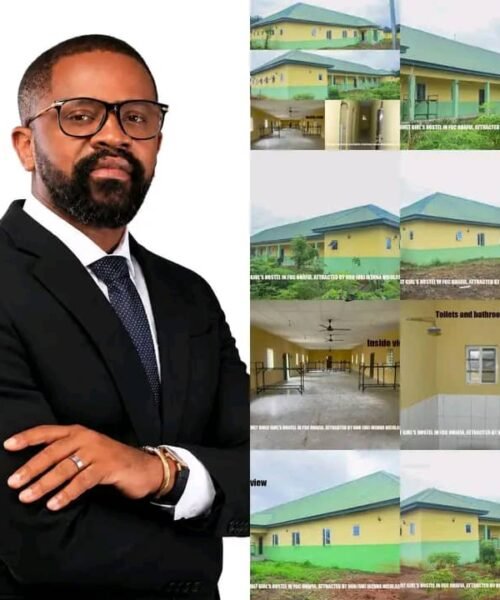
The second sequence is platform building: transport terminals, schools, health centres, courts, local government headquarters, social support, power restoration, and targeted road connectivity.
The third sequence—now underway—is catalytic infrastructure: five-star hospitality, specialist healthcare, industrial park support, airport groundwork, medical city preparation, university renewal, strategic roads, water revival, and urban redesign.
The fourth sequence will be economic multiplication: convention economy in Umuahia, industrial expansion in Aba, tourism and agro-processing corridors in Abia North, energy and logistics consolidation in Ukwa, and a more integrated statewide investment identity.
This is why we do not rush into projects we cannot complete. We do not build monuments to vanity. We build systems that multiply value. A road must lead to commerce. A hospital must lead to confidence. A school must lead to human capital. A hotel must lead to conventions, tourism, and investment. A stadium must lead to event economy, youth energy, and civic pride. In our philosophy, every project must sit inside a larger purpose.
Why a Second Term Matters
This is why I have said that we seek a second term because there is unfinished work to do. If all that had to be done was done already, then there would be no moral basis to ask again for time. But serious transformation does not happen in fragments. It requires continuity of thought, continuity of method, and continuity of discipline. What we have done so far proves capacity. What remains to be done demands continuity.
A second term is not being sought as an ornament of power. It is being sought as a constitutional instrument for completing a design. This design is already visible, but it is not yet complete. The roads are visible. The health retrofits are visible. The schools are visible. The terminals are visible. The urban reordering is visible. The power shift is visible. The confidence of the people is visible. But the full ecosystem—the fully integrated Abia of power, productivity, investment, and dignity—still requires time, persistence, and focus.
To the Opposition and to History
To those who deny what is before their eyes, I have little to say beyond this: history does not honor denial. It honors evidence. Roads are evidence. Hospitals are evidence. Schools are evidence. Power is evidence. Public confidence is evidence. Economic redirection is evidence. Governance itself, when done seriously, is evidence.
And to the people of Abia, I say this with all seriousness: our journey is no longer about hope without proof. It is now about proof demanding completion. In 2023, you believed in promises. Today, there are things to point at. Tomorrow, there will be systems too strong to reverse.
Conclusion: The Abia That Must Emerge
My sworn declaration is therefore not merely a promise. It is a statement of direction.
We will raise Umuahia into a capital worthy of the state.
We will consolidate Aba into a powerhouse of production and urban competitiveness.
We will unlock Ohafia and Abia North as strategic zones of growth, access, and dignity.
We will weave our roads, hospitals, schools, power systems, water systems, and economic assets into one coherent statewide engine.
We will build Abia not as a collection of projects, but as a living, self-sufficient ecosystem.
And when the story is finally told, it will not be said that we merely governed. It will be said that we rebuilt the idea of Abia, restored its confidence, and set it on a path where no child of this land would again have to apologize for the state from which he or she comes.
That is the work.
That is the method.
That is the mission.
And by the grace of God and the will of Ndi Abia, we will finish it.
Dr Alex Chioma Otti OFR
Executive Governor
Abia State