

Monday Energy Meets History-Making Urgency! Abia’s Time is Now – As Otti turns pledges into progress, One Bold Decision at a Time #NewAbiaRising
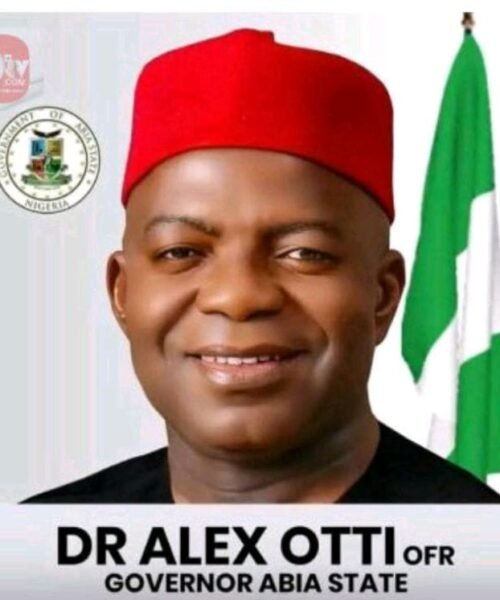
Abia State stands at a critical juncture in its governance trajectory, with socioeconomic indicators that were underscoring both the gravity of its challenges, (pre-Otti) and the promise of a once-in-a-generation opportunity for renewal. With an estimated population of 4.7 million people, the state contributes just 1.2% to Nigeria’s GDP despite its strategic location in the oil-rich Niger Delta and historical prominence in commerce and manufacturing. According to the National Bureau of Statistics (NBS), Abia’s unemployment rate surged to 33.8% in 2023, far exceeding the national average of 19.7%, while youth unemployment sits at a staggering 48.2%. Poverty remains pervasive, with 35.6% of residents were living below the poverty line (NBS, 2023), exacerbated by infrastructure deficits: only 18% of roads in the state were paved, and over 60% of rural communities lacked access to clean water (World Bank, 2022). These figures highlighted systemic governance failures in the past, as Dr Alex Chioma Otti strives to rewrite and change the narrative as we all join him to create a clarion call for Abians to sustain the rally and support the bold, data-driven reforms as the state enters a new fiscal and political cycle this March, 2025.
The state’s education and healthcare sectors revealed alarming gaps that the Otti team are driving immediate redress. Abia’s literacy rate of 72.5% (NBS, 2022) lags behind the national average of 77.3%, with gender disparities stark in rural areas where only 64% of girls complete secondary education. In healthcare, the state’s infant mortality rate of 58 per 1,000 live births (UNICEF, 2023) exceeds the national rate of 55, while just 32% of health facilities meet basic staffing and equipment standards. Despite allocating 15% of its 2024 budget to healthcare, Abia fell short of the Abuja Declaration’s 15% benchmark for health funding, a target it last met in 2012. Meanwhile, the state’s education sector that remained underfunded just years, with 22% of its 2024 budget allocated to education—below the UNESCO-recommended 26%—even as 18% of school-age children remain out of school (UBEC, 2023), is receiving robust attention. These statistics underscore the reason why Governor Otti calls for urgency managing resources and prioritizing human capital development to unlock long-term growth.
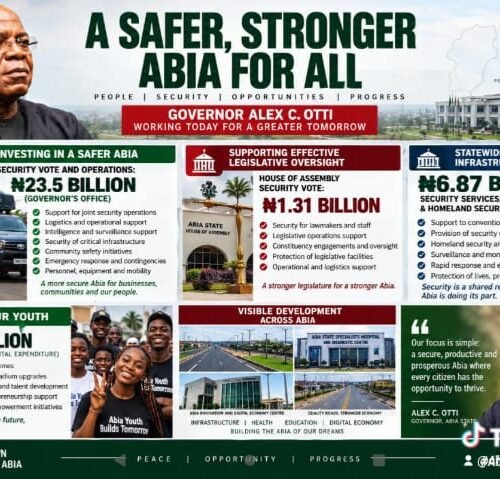
Economically, Abia’s potential as an industrial and agricultural hub remains untapped, but recent policy shifts signal hope. The state’s $4.3 billion GDP (2022) is anchored by small-scale trade and agriculture, yet its famed leather and garment industries—which once contributed 14% of Nigeria’s footwear production—had declined by 40% since 2015 due to insecurity and power shortages. However, the newly operational Geometric Power Plant in Aba, a $800 million investment, promises 24/7 electricity to 9 of the state’s 17 LGAs, potentially reviving moribund industries. Coupled with the planned acquisition of 60% stake in EEDC, will definitely signal a new future. Additionally, the state’s 2024 budget of N567.2 billion marks a 24% increase from 2023, with 30% earmarked for infrastructure—a nod to the N2.3 trillion needed to close its infrastructure gap (NIIA, 2023). Otti is a strategic implementor, as these investments will definitely catalyze job creation, boost Internally Generated Revenue (IGR)—which stood at a meager N14.7 billion in Q3 2023—and elevate Abia’s contribution to national GDP.

Public trust in governance institutions had soared sky high, demanding more transparency to cement this pivotal moment. A 2023 Afrobarometer survey revealed that 78% of Abia residents now trust local government officials, while 67% believe corruption is “reducing” in state agencies. This trust is compounded by strict fiscal management. In comparison, between 2015 and 2022, Abia received N280 billion in federal allocations but delivered fewer than 10 completed road projects annually. Yet, the recent launch of the Abia State Digital Economy Project, aiming to digitize 80% of government services by 2025, and the N10 billion SME development fund signal a shift toward more accountability. With the state’s debt profile at N137.3 billion (DMO, 2023), prudent fiscal management this March 2025 will further cement credibility and attract more private-sector partnerships, particularly in agriculture, where the state’s 1.2 million hectares of arable land remain 45% underutilized (FAO, 2022).

Conclusion:
Abia’s governance this March is not merely symbolic but statistically significant. With strategic reforms, the state is steadily reversinh decades of stagnation, leveraging its 5.3% GDP growth rate in 2023 (NBS) as a springboard. The convergence of new infrastructure, youth-driven innovation (evidenced by the 27% rise in tech startups since 2021), and renewed political will creates a once-in-a-generation window to redefine governance. The time for rhetoric has passed; the data demands more action.
Dr Chukwuemeka Ifegwu Eke writes from the University of Abuja Nigeria