
FROM HOUSTON TO UMUAHIA: WHEN THE DIASPORA STOOD UP FOR OTTI
Abia State Governor receives historic endorsement at the 35th Annual NNAUSA Convention in Houston, Texas, as diaspora community vows absolute backing
There are endorsements that are negotiated in political backrooms. There are endorsements announced by party officials before an audience already programmed to applaud. And then there are moments that develop almost organically—when a gathering meant for conversation suddenly assumes a political significance far beyond the walls of the hall.
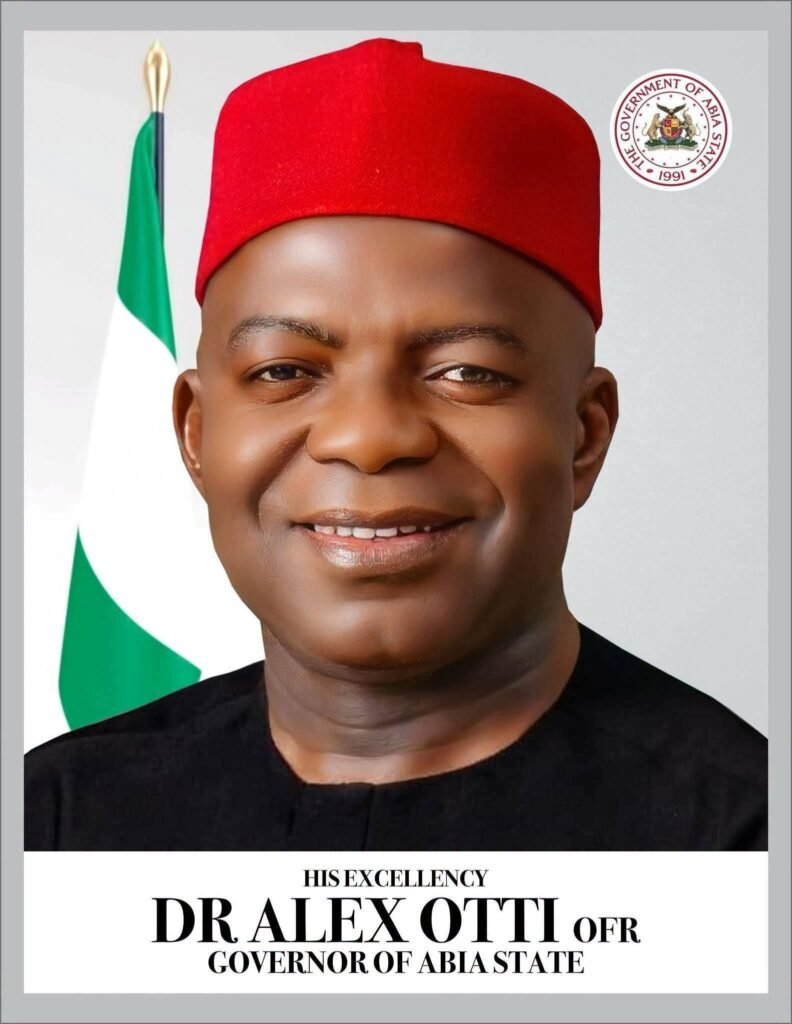
Houston appears to have produced one of those moments for Governor Alex C. Otti.
Thousands of kilometres away from Umuahia, in a city where nobody needed a government appointment, nobody depended on a local government chairman and nobody had to worry about offending a political godfather back home, something remarkable happened.
Ngwa sons and daughters in North America listened to their Governor.
They questioned him.
They challenged him.
They applauded him.
And, ultimately, they endorsed him.
That sequence is important.
Because the most interesting part of Houston was not simply that Governor Otti received an endorsement. It was where it happened, who gave it, and what happened before it came.
The 35th Annual Convention of the Ngwa National Association USA (NNAUSA), holding in Houston from September 4–7, brought together members of the Ngwa community from across North America under the theme, “Celebrating Our Culture, Inspiring Our Tomorrow.” The convention is being hosted by the Houston, Katy and Austin chapters.
But somewhere between celebrating yesterday and discussing tomorrow, the conversation inevitably returned home.
To Abia.
And to Alex Otti.
THE GOVERNOR WALKED INTO A DIFFERENT KIND OF ROOM
Diaspora audiences can be unforgiving.
They live in societies where they encounter functioning roads, hospitals, public transportation, accountable institutions and governments routinely subjected to public scrutiny. Many send money home, build houses at home, support relatives at home and therefore maintain a deeply personal interest in what happens in Abia.
They are also sufficiently removed from the local patronage system to say exactly what they think.
That made Houston potentially dangerous political territory.
Governor Otti nevertheless went before them with his record.
Accounts emerging from the engagement indicate that he traced the condition in which his administration met Abia, explained what had been done and outlined what remains unfinished. The discussion ranged across infrastructure, healthcare, pensions, roads and opportunities for diaspora professionals to participate in rebuilding the state.
Then came the questions.
And this was where the evening became particularly interesting.
Rather than treating the gathering as another ceremonial diaspora reception, Otti opened himself to interrogation.
Questions reportedly came from different directions.
A concern was raised about the Mgboko road leading towards Obingwa. The Governor responded with an update and commitment on the ongoing work. Health professionals in the diaspora expressed interest in contributing their expertise to Abia’s healthcare system. Otti welcomed the proposition and indicated that channels would be created for engagement with the state government.
There were questions about roads.
Questions about pensions.
Questions about development.
Questions about what comes next.
The Governor took notes.
He answered.
The conversation continued.
And something gradually changed in the room.
The interrogation was becoming affirmation.
THEN CAME THE TWIST
Otti had apparently gone to Houston to account for his stewardship.
Houston ended up making a political statement of its own.
At the conclusion of the engagement, reports from the convention described the support for the Governor’s continuation in office as unanimous, accompanied by an expressed willingness by members of the diaspora community to participate in the continuing development of Abia.
That changes the meaning of the evening.
This was no longer merely:
“Welcome, Your Excellency.”
It had become:
“Continue what you have started.”
And that is where Houston becomes politically intriguing.
Remember where this happened.
This was an Ngwa gathering.
For decades, Abia politics has frequently been interpreted through the prism of geography, clan, senatorial district and competing calculations of political entitlement.
Yet here was Alex Otti, an Arochukwu-born Governor, standing before a major gathering of Ngwa people thousands of kilometres from Nigeria and receiving an endorsement for another term.
That picture complicates the old political arithmetic.
It suggests that something potentially more powerful than geography may be emerging in Abia politics:
performance as identity.
When roads work, they do not ask the clan of the motorist.
When a hospital functions, the doctor does not first demand the senatorial district of the patient.
When pensioners receive what they are owed, relief has no ancestral boundary.
And when a city that once became shorthand for infrastructural decay begins attracting positive attention again, the psychological dividend belongs to Abians everywhere.
That may be the deeper message from Houston.
PERHAPS THE REAL ENDORSEMENT WAS NOT FOR OTTI
Here is another twist.
Perhaps Houston was not ultimately endorsing one man.
Perhaps it was endorsing an idea.
The idea that Abia should never return to the days when dysfunction became normal.
The idea that public money must produce visible public value.
The idea that Aba should compete again.
The idea that hospitals should heal, schools should educate, roads should connect communities and government should be able to explain what it does with the people’s resources.
Seen from that perspective, the Houston declaration becomes bigger than an electoral slogan.
It becomes a demand for continuity of standards.
And that distinction matters.
Because the greatest achievement of any reforming government is not merely persuading citizens to support the incumbent.
It is raising public expectations so dramatically that citizens become unwilling to accept anything less from whoever occupies Government House thereafter.
THE DIASPORA IS WATCHING
There was once a tendency in Nigerian politics to treat diaspora communities principally as sources of remittances.
That thinking is becoming obsolete.
The modern diaspora brings capital, expertise, professional networks, technology, international exposure and, perhaps most importantly, comparative experience.
NNAUSA itself describes homeland development, education, community advancement and preserving connections with Ngwa land as central elements of its mission.
Otti appears to understand the opportunity.
That explains why the most consequential part of the Houston conversation may eventually prove not to be the endorsement at all.
It may be the offer of partnership.
Imagine internationally trained Ngwa doctors periodically returning to strengthen specialist healthcare.
Imagine engineers, technology professionals, academics and entrepreneurs connecting Abia businesses to international markets.
Imagine diaspora capital flowing not merely into private mansions occupied for two weeks at Christmas but into productive enterprises creating jobs throughout the year.
Then Houston stops being an applause line.
It becomes an economic bridge.
AND NOW, THE ROAD LEADS BACK TO ABIA
Of course, endorsements do not repair roads.
Applause does not build hospitals.
Standing ovations cannot pay pensions.
And political goodwill is perhaps the most perishable commodity in democracy.
The Houston moment therefore imposes an even heavier obligation on Governor Otti.
Every promise made before that audience now travels home with him.
Every unfinished road mentioned remains a test.
Every hospital intervention must ultimately be judged by patients.
Every education reform must eventually show up in learning outcomes.
Every naira entrusted to government must continue to answer the simple question: what did it accomplish for Abians?
That is how Houston retains its meaning.
Not as another political trophy to be framed and displayed, but as additional pressure to perform.
The diaspora has apparently said: we are with you.
The appropriate response from Umuahia must therefore be: we shall give you even more reasons to remain with Abia.
Something happened in Houston.
A Governor arrived to explain his record.
A diaspora community arrived to celebrate its heritage.
Questions were asked.
Answers were given.
Applause followed.
And somewhere in that exchange, a cultural convention acquired an unmistakable political undertone.
From Houston to Aba.
From Texas to Umuahia.
From the diaspora to the homeland.
The message now travelling across the Atlantic is difficult to miss:
Abians abroad are watching what is happening at home.
They are comparing yesterday with today.
They are asking difficult questions about tomorrow.
And if the reception in Houston is any indication, a significant section of the Ngwa diaspora has reached its own conclusion about the direction in which it wants Abia to continue.
For Governor Alex Otti, that is undoubtedly a political victory.
But there is an even bigger victory available.
To make the transformation of Abia so deeply institutionalised that, years from now, nobody will remember the old dysfunction as something the state could ever tolerate again.
That would be the endorsement that truly matters.