

The Court of Public Opinion: Tinubu and Nigeria’s Democratic Crossroads
Introduction
Controversy may cast long shadows over a presidency, but the ultimate test of Nigeria’s democracy will not be decided in foreign courtrooms, it will unfold at the ballot box in 2027. This is the unshakeable reality that both critics and supporters of President Bola Ahmed Tinubu must confront.
That reality has grown more urgent. Tinubu has officially declared his intention to seek a second term, and the opposition has begun consolidating into a formal coalition. The shadows of his past, meanwhile, have resurfaced in a U.S. courtroom with new intensity. The battle lines are drawn not in Abuja’s legislative chambers alone, but in the court of public opinion at home and abroad.
The Fragile Nature of Power
Power often appears invincible until it isn’t. History offers sobering lessons: leaders who seemed unshakeable have crumbled when scandals, protests, or constitutional crises eroded their foundations.
Consider the recent cascade of leadership collapses across the globe:
· South Korea (2025): President Yoon Suk Yeol’s martial law declaration led to his impeachment and eventual life imprisonment, a stark reminder that even the most decisive actions can backfire catastrophically.
· Nepal: K.P. Sharma Oli resigned under the weight of youth-led protests against censorship, proving that young voices, when unified, can move mountains.
· Peru: Congress removed Dina Boluarte citing “moral incapacity,” showing that vague constitutional provisions can become sharp political weapons.
· Madagascar: Andry Rajoelina faced parliamentary impeachment amid protests and military mutiny, demonstrating that institutional and popular pressure often converge.
Looking further back, the downfalls of Park Geun-hye in South Korea and Jacob Zuma in South Africa share a common thread: institutions and citizens eventually concluded that the cost of keeping these leaders exceeded the cost of removing them.
Nigeria’s Constitutional Labyrinth
Nigeria’s Constitution, under Section 143, erects formidable barriers to presidential removal:
- Initiation: One-third of lawmakers must sign a motion alleging “gross misconduct.”
- Investigation: A two-thirds majority in both chambers must approve an inquiry.
- Panel Review: A seven-person panel, appointed by the Chief Justice, examines the charges.
- Final Vote: Another two-thirds majority in both chambers is required for removal.
No Nigerian president has ever traversed this treacherous path. When Obasanjo faced impeachment notice in 2002, party negotiations neutralized the threat. Talk of impeaching Goodluck Jonathan remained just that talk. The process is deliberately arduous, and with the ruling party commanding comfortable majorities, it becomes practically insurmountable.
Yet the pressure has not entirely disappeared. In September 2026, the Democratic Lawyers Alliance called on the National Assembly to commence impeachment proceedings against Tinubu. And in February 2025, Tinubu himself had to ask the Federal High Court in Abuja to dismiss a suit seeking to compel the legislature to initiate impeachment, an acknowledgment that the constitutional sword, though blunt, still hangs overhead.
Nigeria’s judiciary, bound by constitutional limits, cannot conjure the two-thirds majority that the law demands. Those who wait for courts to remove a president are waiting for a miracle that will never arrive.
Tinubu’s Lingering Controversies
President Tinubu carries two persistent burdens, burdens that have not faded with time, but have instead found new theaters of litigation.
The Drug Allegations
In 1993, a U.S. court ordered 460,000 forfeited from an account bearing his name, linked to a heroin investigation. Though he was never formally charged, the FBI confirmed in 2025 that records related to a drug-trafficking probe involving him still exist. The shadows of that history refuse to fade.
In fact, those shadows have lengthened. In April 2025, U.S. District Judge Beryl Howell ruled that the FBI and DEA could no longer hide behind “Glomar responses” the legal tactic of neither confirming nor denying the existence of records and ordered the agencies to process non-exempt documents for potential release. The judge found that privacy interests were outweighed by public interest.
By August 2026, the litigation had escalated dramatically. Tinubu’s legal team, Christopher W. Carmichael, Victor P. Henderson, and Oluwole O. Afolabi, filed a 16-page submission before the U.S. District Court for the District of Columbia, directly intervening to block the release of FBI and DEA records. They argued that disclosure would violate Tinubu’s privacy rights and that the 1993 civil forfeiture did not amount to public disclosure of any criminal investigation’s details.
The FBI, for its part, sought permission to submit sensitive documents privately to the court for in-camera review, citing the need⅚ to protect confidential sources and law-enforcement techniques. Judge Howell, displaying growing impatience, set a hard deadline of August 28, 2026, for all parties to file their opposition to release.
The case, brought by American transparency activist Aaron Greenspan, has acquired a sharp political dimension. Washington-based lobbying firm Von Batten Montague York publicly disclosed as hired by former Vice President Atiku Abubakar, has campaigned aggressively for the records’ release, even claiming to have provided documents to officials in the Trump administration and members of Congress.
Tinubu has consistently denied wrongdoing. No U.S. court has convicted him of drug trafficking. But the legal battle over what the American government knows, and what the public may eventually see, continues to churn, feeding the very controversy the presidency hoped would remain buried in the 1990s.
The Passport Controversy
When a Guinean diplomatic passport surfaced in 2023, critics pounced. His election form stated he had not acquired another citizenship. His camp argued that dual citizenship isn’t a disqualification. The debate raged, but Nigeria’s courts ultimately ruled that neither issue invalidated his candidacy.
What the article did not fully capture at the time was the tribunal admission. Before the Presidential Election Petition Tribunal, Tinubu’s lawyer, Wole Olanipekun (SAN), conceded that the Guinean passport had existed but noted it had expired as far back as 2020. The tribunal dismissed the dual citizenship and perjury evidence, and the Court of Appeal later upheld that dismissal. The legal chapter closed. The political chapter never did.
The Case for Resignation: A Matter of Trust
Supporters of resignation argue that the presidency demands more than legal technicalities, it requires moral authority. They believe unresolved controversies erode public trust and diminish the office. Resignation, they contend, would preserve the dignity of the institution and allow Nigeria to turn the page.
That argument has gained fresh oxygen from the U.S. courtroom. Even if no conviction exists, the spectacle of a sitting Nigerian president fighting to keep decades-old law-enforcement files sealed in a foreign court feeds a narrative of concealment. For those who believe leadership is as much about perception as it is about legal standing, the ongoing litigation is itself a wound that refuses to heal.
The Case Against Resignation: Stability Above All
Opponents counter with equally compelling arguments:
· There is no criminal conviction.
· Courts—both Nigerian and American—have dismissed or not ruled on the underlying criminality.
· Impeachment requires supermajorities that are politically unrealistic.
· Sudden resignation could destabilize government and send shockwaves through the economy.
In their view, removing a duly elected president over unproven allegations would set a dangerous precedent. They note that Tinubu has not been found guilty of drug trafficking by any U.S. court, and that the FOIA litigation is about transparency in record-keeping, not criminal culpability. The presidency, they argue, should not be surrendered to the rhythm of foreign court deadlines.
The Call for Foreign Intervention: A Fool’s Errand?
Some Nigerians, frustrated with domestic institutions, look abroad, particularly to the United States, hoping external pressure can force accountability. This longing for foreign saviors is understandable but ultimately misplaced.
Or is it? The irony of the current moment is striking: while the U.S. government cannot impeach a Nigerian president or rewrite Nigeria’s Constitution, American transparency laws have dragged a sitting Nigerian head of state into a Washington courtroom, forcing him to deploy a legal team to fight the release of his own alleged federal records. The United States cannot change Nigeria’s parliamentary arithmetic, but it can, and has illuminated the shadows that Nigerian institutions chose not to probe.
Still, the fundamental truth remains. The United States can issue strongly worded statements, impose targeted sanctions, or restrict visas. It can unseal documents that embarrass. But it cannot change Nigeria’s parliamentary arithmetic or rewrite its Constitution. Foreign interventions often produce the opposite effect, they allow leaders to rally nationalist sentiment, turning domestic criticism into perceived foreign meddling.
The decisive power rests where it has always rested: with Nigerians themselves, through their institutions and their votes.
What Happens If He Leaves?
Should President Tinubu resign or be removed, the Constitution provides clarity: the Vice President would immediately assume office. Investigations could continue, but fresh elections would not automatically follow. The ruling party would manage the transition, ensuring continuity, for better or worse.
The Real Battlefield: 2027
Impeachment is a mirage. Court petitions have been exhausted. Foreign intervention may generate headlines and unseal documents, but it cannot replace the machinery of Nigerian democracy.
The real opportunity for transformation lies in the 2027 general elections and, that battlefield is already taking shape.
In May 2026, Tinubu officially declared his intention to run for a second term under the All Progressives Congress, pledging to put Nigeria on “an irreversible path of economic growth and democratic consolidation.” The APC had already endorsed his re-election bid in May 2025. He is not going quietly.
But the opposition is mobilizing. In July 2025, the African Democratic Congress surrendered its leadership to a coalition that includes former Vice President Atiku Abubakar, former Senate President David Mark, former Internal Affairs Minister Rauf Aregbesola, and former Anambra Governor Peter Obi. The goal is singular: unseat Tinubu and the APC.
The challenges ahead are formidable. Security remains a pressing concern, jihadist attacks, kidnappings, and school closures have shaken confidence at home and abroad. The Arewa Consultative Forum has criticized Tinubu for prioritizing campaign politics over national issues. Yet women’s groups and regional blocs have begun endorsing his re-election bid.
Nigerians must prepare to wield their votes with purpose:
· Elect Governors who can deliver effective governance at the state level.
· Choose National Assembly Members who will hold the executive accountable, not rubber-stamp its excesses.
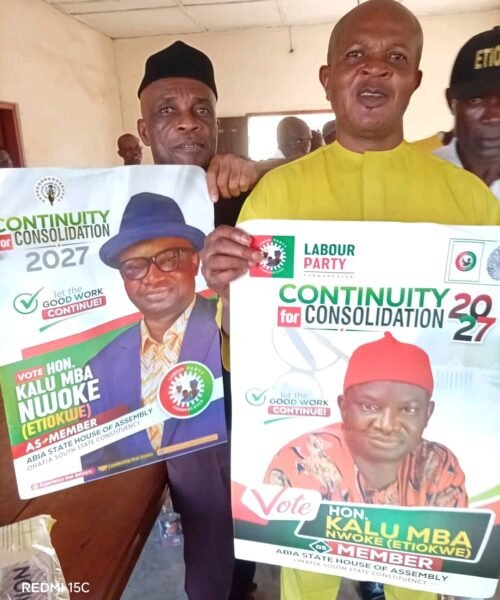
· Support State House Members who represent their communities, not their patrons.
The presidential contest is fixed for January 16, 2027. State elections follow on February 6. The clock is ticking.
Conclusion
President Tinubu’s controversies are undeniably real, but they have not crossed the threshold of legal disqualification. The U.S. court battle over his historical records adds pressure and spectacle, yet it remains a fight over disclosure, not conviction. Resignation would be a voluntary act,one unlikely to occur. Impeachment remains nearly impossible under current political dynamics. Foreign litigation may embarrass, but it cannot unseat.
The ultimate power lies where it belongs: with the people.
In 2027, Nigerians will hold the pen that writes the nation’s next chapter. By voting thoughtfully at every level, governors, senators, representatives, assembly members, citizens can shape a stronger, more accountable democracy. That is how Nigeria can remain steady, even when shadows fall upon its highest office.
Charles Ude, Esq.
Legal Practitioner and Author
Email: Charlesude2014@gmail.com