
GOVERNOR OTTI AND THE POLITICS OF MANUFACTURED CORRUPTION
Putting the Abia School Expenditure Controversy in Proper Perspective
By Pastor AProf. Chukwuemeka Ifegwu Eke
Public accountability is indispensable in a democracy. Every government must explain how public resources are budgeted, released and applied. However, accountability must not be reduced to sensational allegations, distorted figures or conclusions that are unsupported by documentary evidence.
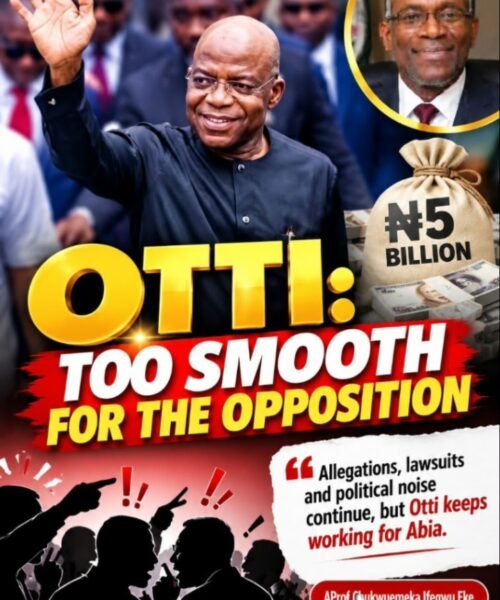
The allegation that Governor Alex Otti withdrew ₦54 billion to construct 51 Smart Schools—three in each of Abia State’s 17 local government areas—is not established by the evidence presented.
The fundamental error in the accusation is the deliberate conflation of three separate components of the Abia State Government’s education programme:
- the reconstruction, renovation, retrofitting and equipping of hundreds of existing public schools;
- the development of 17 Smart Schools across the local government areas; and
- the construction of three larger model or mega schools.
The government’s publicly stated Smart School programme is for 20 schools—17 Smart Schools and three mega schools—not 51 Smart Schools. A report on the programme states clearly that it consists of three mega schools and 17 Smart Schools distributed across the state.
The claim that ₦54 billion was specifically withdrawn in one instalment to build 51 Smart Schools is therefore based on a false premise.
A BUDGET PERFORMANCE REPORT IS NOT A CORRUPTION VERDICT
A budget performance report is an accounting and budget-monitoring document. It reports revenues and expenditures according to government programmes, economic classifications and administrative codes.
An entry under an “actual performance” or “expenditure” column does not, by itself, establish that:
- the entire amount was handed to one contractor;
- the money was paid in cash;
- the amount related only to Smart Schools;
- every contract was paid 100 per cent in advance;
- the projects had to be completed within that quarter; or
- any public official diverted the money.
Those conclusions require additional evidence, including contract award documents, payment certificates, procurement records, bank guarantees, project valuations, audit reports and evidence of the eventual destination of the funds.
No such evidence is supplied in the article accusing Governor Otti of corruption.
Instead, the writer takes an aggregated expenditure figure, attaches it exclusively to an invented programme of 51 Smart Schools and proceeds to pronounce the Governor guilty. That is neither forensic accounting nor responsible public commentary.
The government’s explanation is that the reported amount represented accrued expenditure connected with the reconstruction, renovation, retrofitting and equipping of 221 public schools across Abia State, rather than payment for 51 Smart Schools. The figure must therefore be examined within the broader school rehabilitation programme and not artificially restricted to Smart Schools.
Questions may legitimately be asked about project locations, contractors, completion percentages and procurement documentation. But questions are not evidence of theft, and suspicion is not proof of corruption.
“RENOVATION” DOES NOT MEAN DECEPTION
The argument that an existing school cannot become a Smart School because it was renovated rather than constructed on completely undeveloped land is also misleading.
A Smart School is defined by its learning infrastructure, technology, teaching methods, connectivity, equipment and educational environment—not merely by whether every foundation block was newly laid.
An existing school may be comprehensively reconstructed, expanded, rewired, furnished and equipped with:
- interactive smart boards;
- internet-enabled classrooms;
- tablets and digital learning devices;
- artificial intelligence-supported learning tools;
- modern laboratories;
- libraries;
- renewable-energy systems;
- trained teachers;
- improved sanitation; and
- inclusive learning facilities.
Such a facility does not become fraudulent merely because part of an earlier structure was retained.
Adaptive reuse and rehabilitation are recognised infrastructure strategies. They can reduce construction time, prevent waste and preserve public assets, provided that the completed facility meets the required standards.
Therefore, describing the transformation of an existing public school as a “fire-brigade attempt” does not prove wrongdoing. What matters is the quality, scope, value and functionality of the completed work.
THE SMART SCHOOLS ARE NO LONGER “MISSING”
The allegation that no Smart School exists anywhere in Abia has also been overtaken by verifiable events.
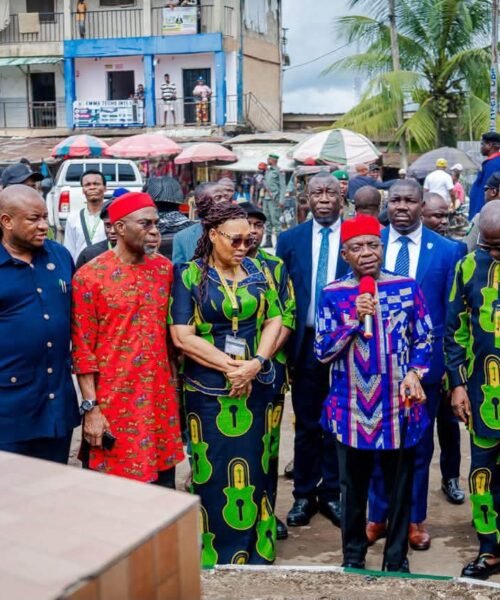
On 8 July 2026, Nigeria’s Minister of Education, Dr Maruf Tunji Alausa, commissioned the Ogbo Central Smart School at Ubakala, Umuahia South Local Government Area. The Federal Ministry of Information described it as a Smart School built by the Abia State Government under Governor Alex Otti.
The Ogbo Central facility has modern classrooms and digitally enabled educational infrastructure. Its commissioning by the Federal Minister of Education is physical and independently verifiable evidence that the programme is real, not an imaginary project existing only in government documents.
On 22 July 2026, another Smart School was commissioned at Umuomaiukwu Community Primary School in Isiala Ngwa North Local Government Area. The facility was reported to contain interactive smart boards, tablets, artificial intelligence-enabled learning tools and other digital teaching resources.
The construction firm was not “unknown.” The Managing Director of Blue Giraffe, Mrs Orieji Okwara Emele, publicly identified the company as one of the firms building and equipping the Smart Schools. She stated that the company had completed four Smart School projects and that additional schools were under construction in Umuahia-Ibeku, Bende and other locations.
These verifiable developments directly contradict the claim that no contractor can be identified and that no Smart School project is visible anywhere in Abia State.
It is fair to ask how many schools have been completed and when the remaining projects will be delivered. It is not fair to claim that no schools or contractors exist when completed facilities have been commissioned publicly and ongoing locations have been identified.
PROJECT DELIVERY DOES NOT ALWAYS FOLLOW THE CALENDAR YEAR
Another weakness in the accusation is the assumption that expenditure reported during a particular financial year must produce completed buildings within the same quarter.
Public infrastructure projects normally pass through several stages:
- needs assessment;
- architectural and engineering design;
- procurement;
- site preparation;
- mobilisation;
- structural rehabilitation;
- installation of electrical and digital systems;
- procurement of equipment;
- teacher training;
- testing;
- certification; and
- commissioning.
Budget recognition, contract commitments and physical completion do not always occur simultaneously.
A government may incur or recognise an obligation during one reporting period while construction, equipment delivery and commissioning continue into subsequent periods. A delay may justify questions about implementation, but it does not automatically prove that funds were stolen.
To establish corruption, a critic must show that money was unlawfully diverted, that payments were made for nonexistent work, that contract values were fraudulently inflated, or that officials personally benefited from the transaction.
The mere fact that every school was not immediately commissioned after the expenditure appeared in a quarterly report does not satisfy that evidentiary burden.
THERE IS A DIFFERENCE BETWEEN SCRUTINY AND DEFAMATION
Governor Otti’s administration should continue to publish:
- the list of beneficiary schools;
- project locations;
- names of contractors;
- contract amounts;
- procurement methods;
- completion percentages;
- certificates issued; and
- implementation timelines.
Such disclosure would strengthen public confidence and make deliberate misinformation easier to defeat.
Nevertheless, a demand for more detailed disclosure must not be converted into a declaration that the Governor stole public funds.
Words such as “sleaze,” “fraud,” “scandal,” “deceit” and “corruption” carry serious legal and moral implications. They should be supported by verifiable evidence, not merely by political disagreement, incomplete information or a misunderstanding of a budget performance report.
No audit finding, judicial decision, anti-corruption agency report or documentary evidence cited in the original article establishes that Governor Otti personally diverted the ₦54 billion or committed a procurement offence.
Until such evidence exists, presenting political suspicion as an “established fact” is irresponsible.
OTTI’S EDUCATION POLICY IS BROADER THAN SMART SCHOOLS
The Smart School programme must also be situated within the administration’s wider education policy.
The government has embarked on the reconstruction and rehabilitation of conventional public schools while developing specialised Smart Schools. The two programmes are complementary, not contradictory.
A state cannot abandon hundreds of deteriorated schools merely because it wants to construct a smaller number of technologically advanced institutions. It must improve ordinary schools, expand access, equip teachers and simultaneously introduce new digital-learning models.
The Smart Schools are intended to serve as centres of technology-driven education, while the wider rehabilitation programme addresses the physical condition of public schools across Abia.
The administration has also stated that teachers assigned to the Smart Schools have undergone training and refresher programmes. This is important because digital education cannot be achieved merely by installing computers and smart boards; teachers must possess the capacity to use them effectively.
THE REAL QUESTIONS THAT SHOULD BE ASKED
A responsible assessment should ask:
Are the rehabilitated schools physically identifiable?
Do the quantities and quality of work correspond with the contract values?
Were the contracts awarded according to applicable procurement requirements?
Were payments supported by appropriate certificates and guarantees?
Are the Smart Schools properly equipped and operational?
Are trained teachers and maintenance arrangements available?
Will the government publish a comprehensive project-by-project implementation schedule?
These are legitimate accountability questions. They can be answered through records, inspections and professional audits.
But the original article does not undertake such an investigation. It begins with a conclusion of corruption and then rearranges unrelated figures to support it.
That is propaganda masquerading as accountability.
GOVERNOR OTTI DID NOTHING WRONG BY RENOVATING AND DIGITISING EXISTING SCHOOLS
There is nothing inherently unlawful or deceptive about renovating an existing public school and transforming it into a Smart School.
There is nothing wrong with implementing a large-scale rehabilitation programme alongside a smaller number of specialised Smart Schools.
There is nothing wrong with recognising expenditure while projects remain under construction, provided the expenditure is properly authorised, documented and matched by deliverables.
There is nothing wrong with engaging contractors to build, retrofit and equip schools according to an approved government programme.
Most importantly, the available evidence does not establish that Governor Otti stole the education funds, awarded 51 fictitious Smart School contracts or committed the procurement violations alleged against him.
What the evidence presently shows is a continuing education infrastructure programme, completed Smart School facilities, identified contractors, trained teachers and additional projects under construction.
CONCLUSION
Democracy requires vigilance, but it also requires truth.
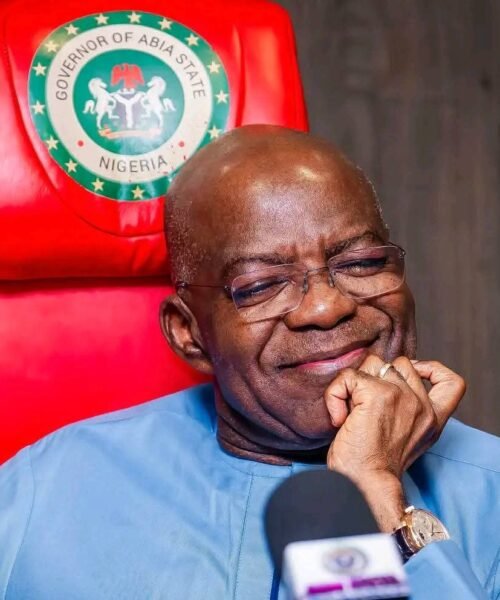
Governor Alex Otti should be held accountable for every naira entrusted to his administration. However, accountability cannot be achieved through the fabrication of 51 Smart Schools, the conflation of Smart Schools with the rehabilitation of 221 public schools, or the description of every unfinished project as stolen money.
The ₦54 billion controversy deserves transparent documentation and continuous public scrutiny. It does not justify an automatic verdict of corruption.
Completed Smart Schools now exist. Contractors have been identified. Other schools are reportedly under construction. The programme has been publicly acknowledged and commissioned by Nigeria’s Federal Minister of Education.
These facts do not place the administration beyond scrutiny. They simply demonstrate that the assertion that nothing was done and that the entire programme was fictitious is false.
The burden remains on anyone alleging corruption to produce credible proof of diversion, fraudulent payment, inflated valuation or personal enrichment.
Until that evidence is produced, the honest conclusion is clear:
Governor Alex Otti has not been shown to have committed any wrongdoing in the implementation of the Abia school reconstruction and Smart School programmes. What has been established is an ambitious education programme whose implementation should be monitored, documented and judged by verifiable results—not by politically manufactured whispers of corruption.
LINKS FOR INDEPENDENT VERIFICATION
Abia State 2024 Fourth-Quarter Budget Performance Report:
“Budgetpedia – Abia State Implementation Reports” (https://budgetpedia.ng/implementation-report/)
Federal Ministry of Information report on the commissioning of Ogbo Central Smart School:
“FG Sets New Benchmark for Education as Minister Commissions Abia Smart School” (https://fmino.gov.ng/fg-sets-new-benchmark-for-education-as-minister-commissions-abia-smart-school/)
Report on the commissioning of the Umuomaiukwu Smart School and the 20-school programme:
“Abia Commissions Second Smart School and Expands Technology-Driven Learning” (https://nationalambassadorngr.com/abia-commissions-second-smart-school-expands-technology-driven-learning-across-state/)
Official Abia State Government website:
“Abia State Government” (https://abiastate.gov.ng/)