
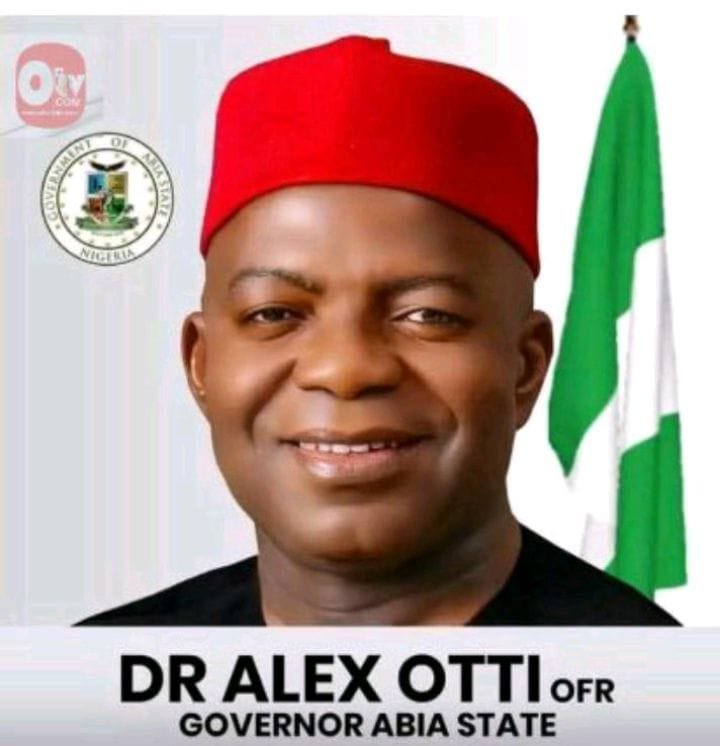
OTTI, CORRUPTION AND THE DANGEROUS POLITICS OF INVENTED CERTAINTY
I have read Moses A. Orji’s latest piece, “Otti’s Government and the Whispers of Corruption (III).” What strikes me is not the strength of the evidence presented, but the extraordinary distance between the evidence actually established and the conclusions so confidently pronounced.
There is a fundamental difference between asking questions about public expenditure and declaring expenditure to be theft. The first is legitimate democratic scrutiny. The second requires evidence.
You cannot simply locate an expenditure entry in a Budget Performance Report, announce that you personally have not seen the corresponding project, and then leap majestically to “looting”, “siphoning” and “procurement fraud”. That is not an audit. It is not forensic accounting. It is not even serious financial analysis. It is accusation by arithmetic.
And this distinction matters.
Take the famous ₦1.5 billion Hilux controversy. The author tells his readers that Governor Alex Otti “lied publicly” about the matter. Where is the evidence establishing the lie?
The publicly reported explanation from Otti was specific: the ₦1.5 billion entry was erroneous, the intended figure was ₦150 million for two vehicles at ₦75 million each, and the erroneous ₦1.5 billion did not flow into the overall budget total. That explanation was widely reported at the time.
You may reject that explanation. You may interrogate it. You may demand the original worksheets, procurement documents, payment vouchers and contract records. But you cannot convert your disbelief into proof of theft.
Even more troubling is the treatment of the resignations of former Commissioners Chima Oriaku and Professor Monica Ironkwe.
The article presents elaborate stories about what supposedly happened behind closed doors: Oriaku allegedly could not explain ICT expenditure; Ironkwe allegedly could not find seedlings; both supposedly confronted the Governor and consequently left.
Where are their resignation letters saying these things?
Where are their interviews confirming them?
Where are the memos they allegedly wrote?
Where is the documentary evidence?
Contemporaneous reports confirm that both commissioners left the government in July 2024, but the official announcement gave no reasons for their resignations. Other reporting explicitly described the circumstances surrounding their exits as disputed.
That distinction is devastatingly important.
You cannot take an unexplained resignation, fill the evidentiary vacuum with an attractive political story, and subsequently present that story as established history.
Indeed, there is another inconvenient fact. Before Professor Ironkwe left office, she was publicly participating in the Otti administration’s agricultural programme, including a May 2024 initiative to train 300 Abians in agricultural value chains. That does not prove that every agricultural expenditure was proper. But it certainly demonstrates why serious people must investigate evidence rather than manufacture convenient narratives.
The same principle applies to recreational facilities, ICT infrastructure, boundary projects and every other expenditure questioned in the article.
Ask the questions.
Demand contract numbers.
Demand procurement records.
Demand names of contractors.
Demand certificates of completion.
Demand payment vouchers.
Demand locations.
Demand Bills of Quantities.
Demand physical verification.
Demand explanations for every kobo.
I will join anybody demanding those things because Alex Otti is not above accountability. No governor is.
But here is where I part company with this article: a question mark is not evidence of corruption. An accounting entry is not proof of embezzlement. An allegation repeated ten times does not mature into a fact on the eleventh repetition.
Yes, some of the expenditure figures being circulated have previously appeared in political controversy. For example, opposition figures have publicly questioned a reported ₦6.5 billion expenditure on recreational facilities and other expenditure lines drawn from Abia’s budget-performance reports.
Fine.
Then investigate them.
But notice the enormous intellectual jump from “₦6.5 billion was reported under this expenditure heading” to “₦6.5 billion was stolen.”
Where is the bridge between those two propositions?
That bridge must be evidence.
And there is something almost comical about describing Abia today as though its entire treasury disappears into an invisible black hole while simultaneously driving on roads, seeing reconstructed public infrastructure and watching projects being delivered across the state.
Criticise Otti.
Interrogate Otti.
Audit Otti.
Challenge every suspicious figure.
But please spare us this emerging political methodology in which every budget line one does not understand becomes “fraud”, every project one has personally not visited becomes “non-existent”, every resignation becomes evidence of a conspiracy, and every unanswered question automatically becomes a conviction.
Opposition is not a licence to abandon the burden of proof.
If Moses A. Orji possesses documentary evidence establishing that Alex Otti or officials of his government stole Abia’s money, he should publish it. Name the transaction. Identify the account. Produce the procurement record. Show the fraudulent invoice. Identify the beneficiary. Establish the diversion.
That would be explosive.
That would deserve investigation.
That would serve Abia.
But until then, there is a world of difference between “I am asking where this money went” and “this money was looted.”
The first statement is accountability.
The second is an allegation requiring proof.
Abians should refuse the false choice between sycophancy and propaganda. We must neither worship Alex Otti nor manufacture offences against him.
And perhaps the greatest irony in the entire article is its title: “Whispers of Corruption.”
Exactly.
Whispers.
When the whisperers acquire evidence, let them bring it into the sunlight.
Until then, let us scrutinise government with facts, documents and intellectual honesty—not pronounce a man guilty first and then begin searching for evidence afterwards.
Accountability must be brutal. But truth must be even more brutal.