
Iran Defence Minister, Guards Commander Killed In Israeli Attacks
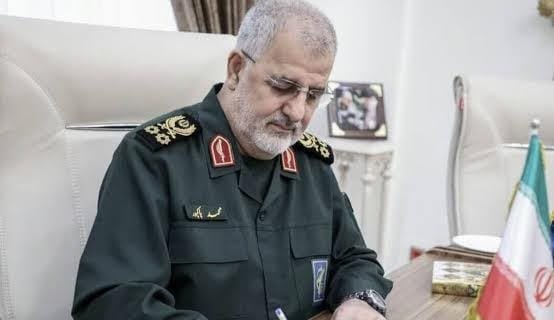
The commander of Iran’s Islamic Revolutionary Guard Corps (IRGC), Gen. Mohammad Pakpour, was killed in Saturday morning’s strikes that marked the opening wave of coordinated U.S.-Israeli strikes, according to Israeli officials.
Pakpour had been appointed to the position after his predecessor, Hossein Salami, was killed by Israel in the opening strike of last year’s 12-day war.
Iranian authorities denied the report. A channel affiliated with the regime said that “all commanders of Iran’s armed forces are safe and sound” and urged the public to disregard what it described as rumors spread by hostile media.
Earlier, Reuters reported, citing an Iranian source close to the establishment, that several senior IRGC commanders and high-ranking political officials were killed in the strikes.
An Israeli official told Reuters that Israel attempted during the opening phase of the attack to target Supreme Leader Ayatollah Ali Khamenei and President Masoud Pezeshkian, though the outcome of those strikes was not immediately known.
Additional Israeli sources familiar with the operation told CNN that other potential targets included Ali Shamkhani, secretary of Iran’s newly formed Defense Council, and Ali Larijani, secretary of Iran’s Supreme National Security Council.
The reported deaths follow the joint operation launched earlier in the day, in which Israel and the United States targeted Iranian military infrastructure and regime-linked sites in what Israeli officials have described as a preemptive effort to neutralize missile launch capabilities and degrade air defenses.
Iranian media reported strikes in Tehran, Tabriz, Isfahan, Kermanshah, Qom and Karaj, including sites linked to the Intelligence Ministry, the Defense Ministry, the Atomic Energy Organization of Iran and the Parchin military complex.
Israeli officials said earlier they were optimistic that senior figures targeted in the initial strike had been killed. “We are cautiously optimistic regarding the results of the opening blow,” one Israeli official said. Another Israeli source said the status of Supreme Leader Ayatollah Ali Khamenei remains unclear. “At this stage, Khamenei’s condition is unknown,” the official said.
Reuters reported earlier, citing official sources, that Khamenei had been moved to a secure location before or during the strikes. Iranian state media have not confirmed any harm to him.
The coordinated assault followed weeks of heightened tensions and warnings of possible military action. Israeli officials have said the operation was aimed at neutralizing what they described as an imminent missile barrage prepared on above- and below-ground launchers, as well as targeting regime assets and command structures.
After hours of heightened tension and repeated missile barrages, the Home Front Command said around noon that civilians could leave protected spaces but should remain nearby. “It is now permitted to exit protected areas, but remain in close proximity to them,” the military said, signaling a temporary easing of immediate shelter-in-place directives while warning that further attacks remain possible.
Shortly after the announcement, Israelis were again instructed to remain in protected areas following a renewed barrage of Iranian missiles targeting multiple parts of the country.