
FACT CHECK RESPONSE USING ABIA Q4 BUDGET PERFORMANCE FIGURES (OFFICIAL REPORT EXTRACTS)
By AProf. Chukwuemeka Ifegwu Eke
Let us move from emotion to evidence.
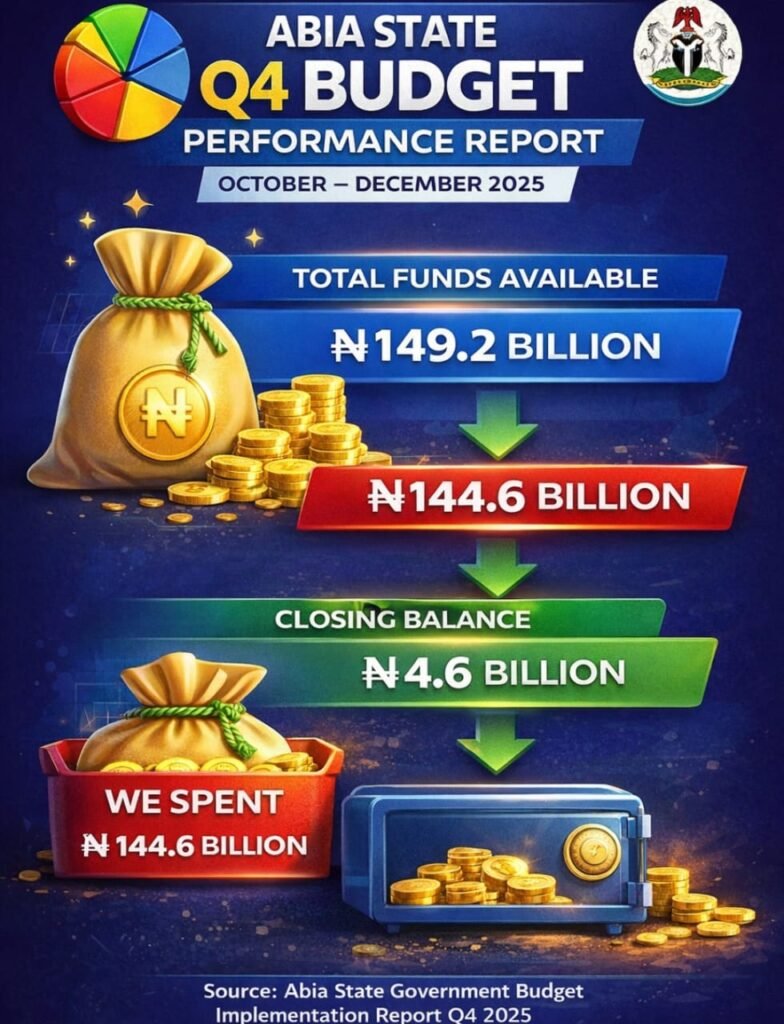
The Abia Q4 Budget Performance Report (Oct–Dec 2025) — as shown in the official performance tables and infographics — already answers the repeated claim that “nobody knows where the money went.”
The figures are not hidden. They are itemized.
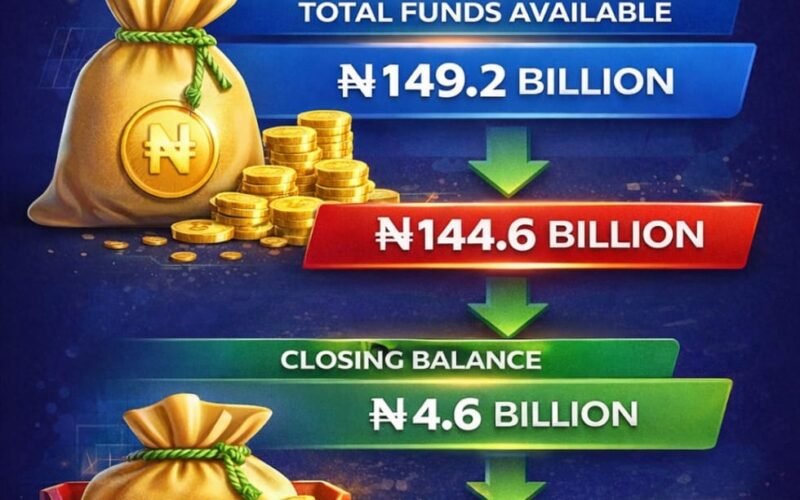
According to the published Q4 performance sheet:
TOTAL FUNDS AVAILABLE:
₦149.2 Billion
TOTAL SPENT:
₦144.6 Billion
BALANCE:
₦4.6 Billion
That is not opacity — that is disclosure with closing balance.
Now let us look at sectoral deployment — again from the same published report extract:
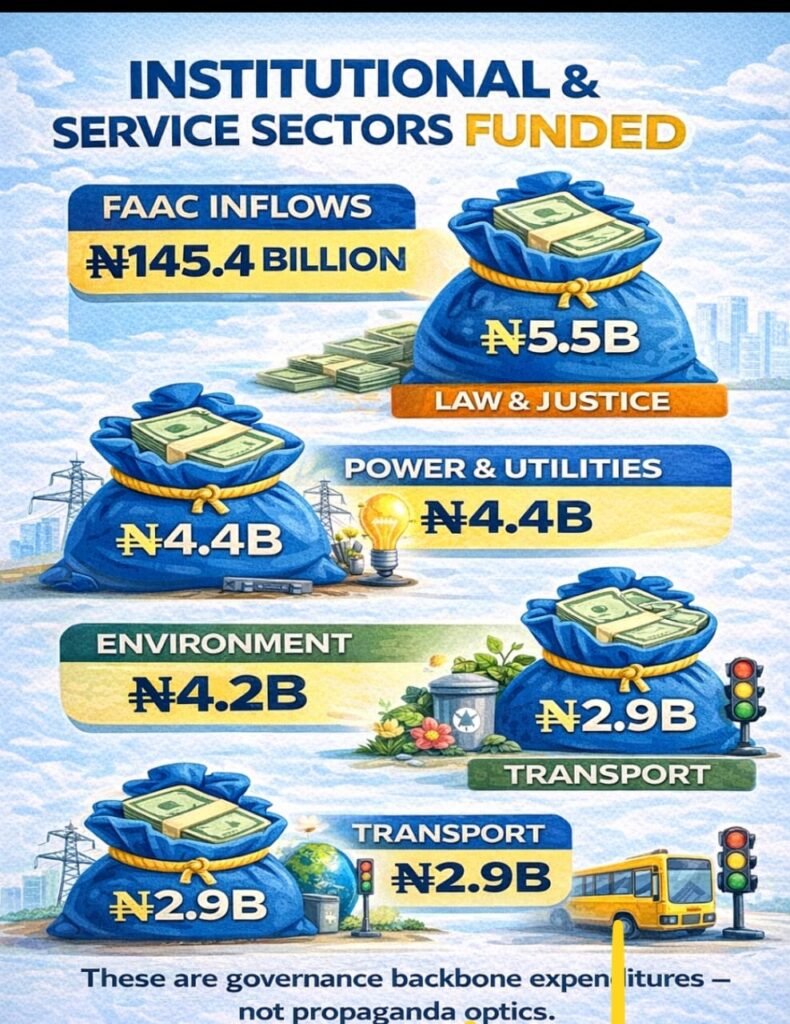
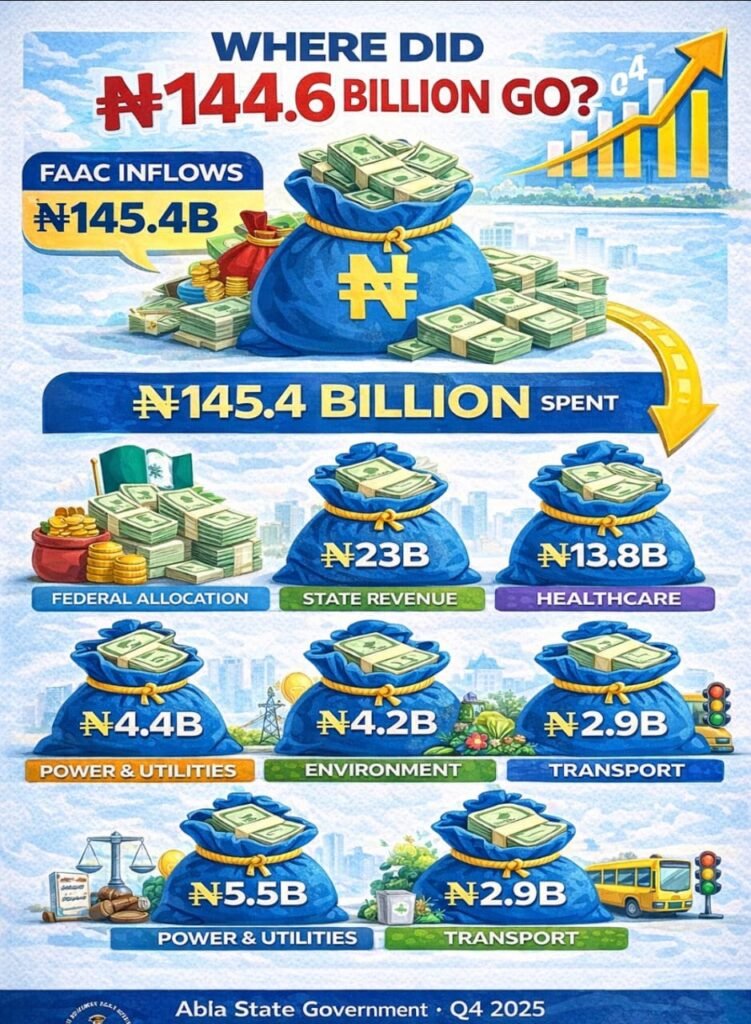
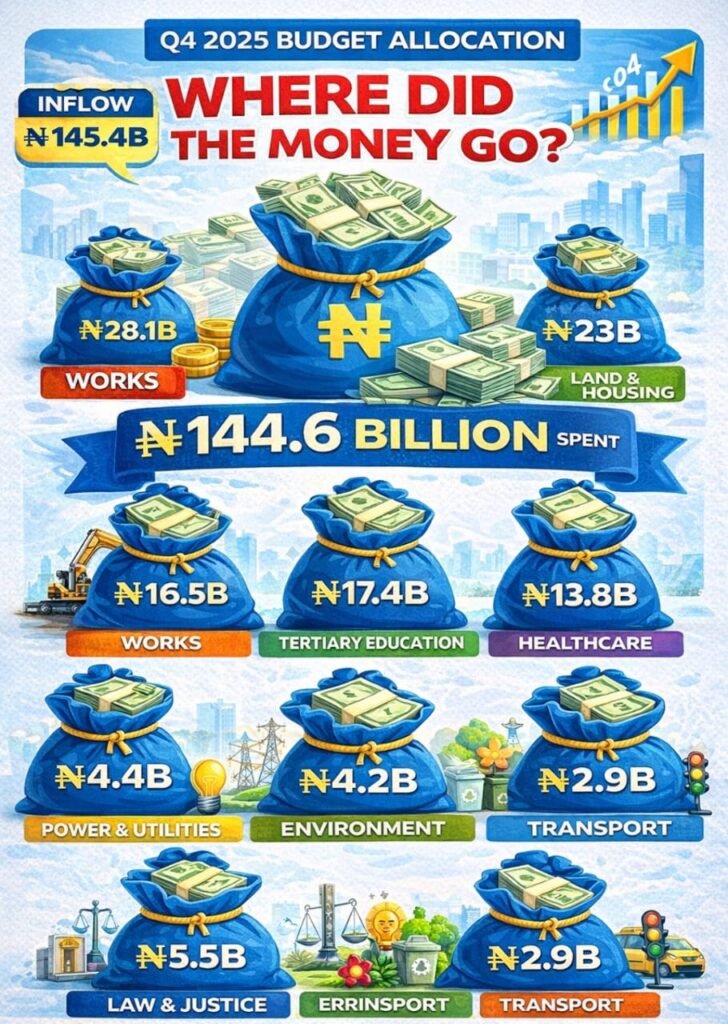
WORKS & INFRASTRUCTURE — ₦28.1B
Largest spending head — consistent with an infrastructure-first agenda.
LAND & HOUSING — ₦23B
Urban development, land systems, housing frameworks — clearly itemized.
TERTIARY EDUCATION — ₦17.4B
BASIC & SECONDARY EDUCATION — ₦16.5B
Combined education spending ≈ ₦33.9B — one of the largest social sector commitments in the quarter.
HEALTHCARE — ₦13.8B
Primary + tertiary health investments — aligns with reported sector reforms.
LAW & JUSTICE — ₦5.5B
Judicial and legal system funding — institutional governance spending.
POWER & PUBLIC UTILITIES — ₦4.4B
Directly supports electricity and utility restoration projects already reported in national media.
ENVIRONMENT — ₦4.2B
Waste and sanitation — visible in Aba & Umuahia operations.
TRANSPORT — ₦2.9B
Mobility and road support systems.
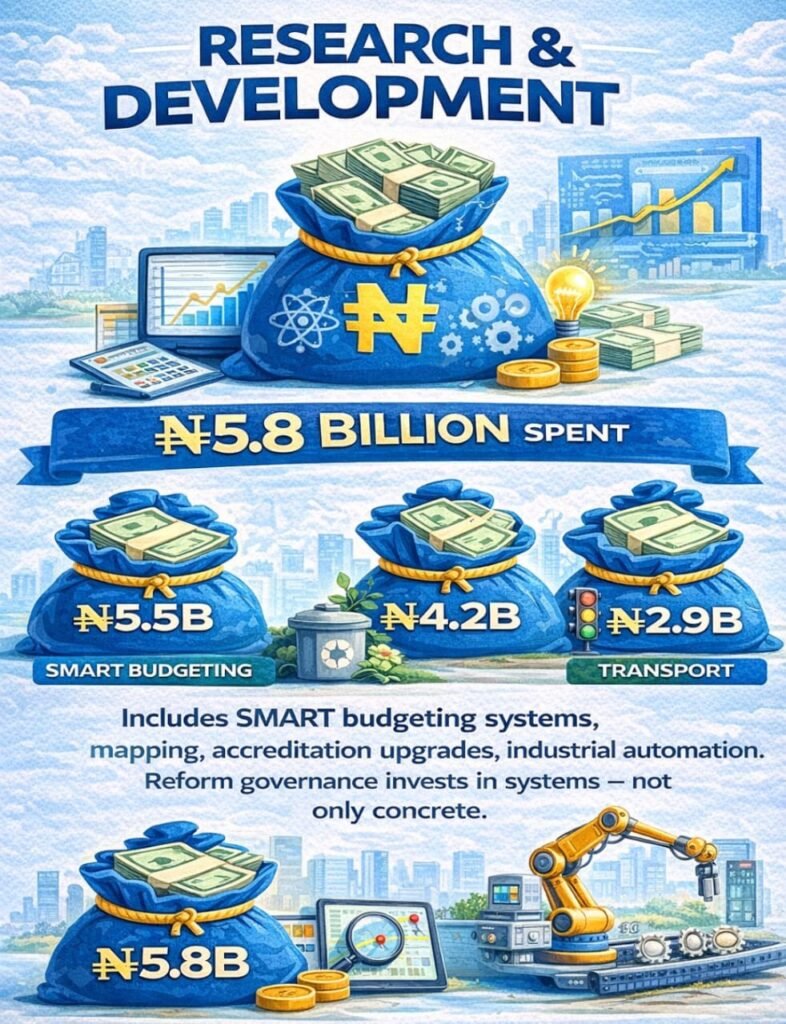
RESEARCH & DEVELOPMENT — ₦5.8B
Includes SMART budgeting systems, mapping, accreditation upgrades, industrial process automation.
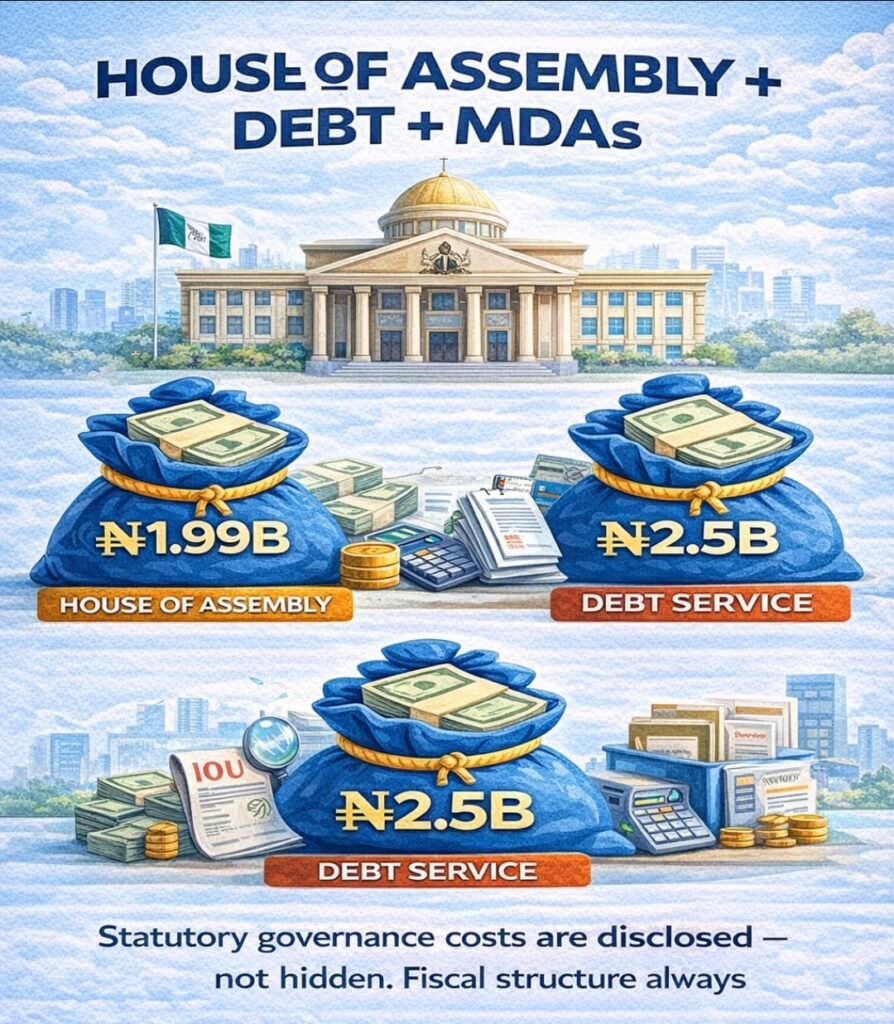
These are not guesses. These are line items already published in the Q4 performance report pages shown above.
So the claim that funds are “untraceable” collapses when:
- totals are shown
- sector heads are listed
- amounts are assigned
- closing balances are declared
That meets the first threshold of fiscal transparency: published classification.
Yes — project-level drill-downs can improve. Every reform government deepens reporting over time. But saying “nothing is disclosed” is not Prof-level fiscal analysis — it ignores the disclosed tables already in circulation.
Public finance is not judged by shouting contests. It is judged by published numbers, sector allocation, and traceable budget heads.
Records exist. Figures exist. Classifications exist.
That is where serious analysis must begin.