
IS ABIA BEING GOVERNED? YES — AND HERE IS THE EVIDENCE
Why the narrative of “loot” collapses under facts, fiscal rules, and visible reforms
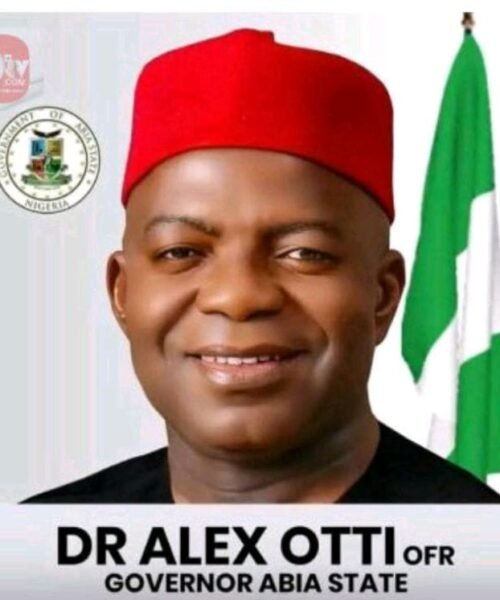
By any serious standard of public finance, governance is not measured by noise but by systems, rules, and outcomes. In Abia State under Governor Alex C. Otti, the evidence points in one direction: a government restoring order to public finance, not looting it.
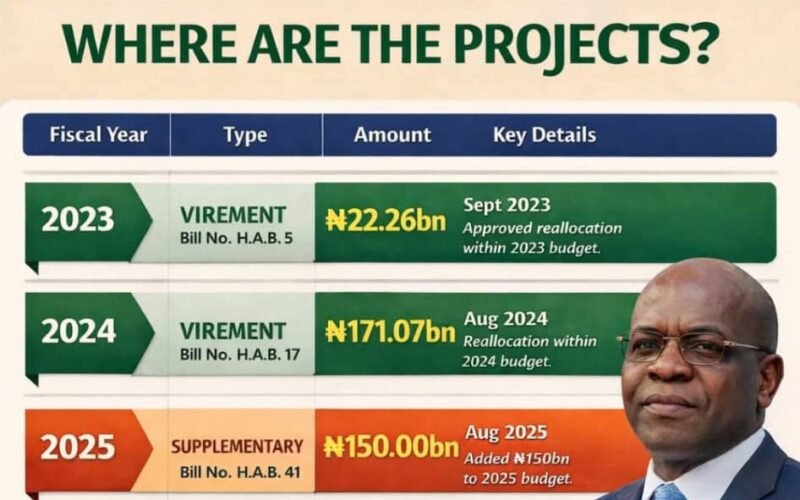
The controversy around virement and supplementary appropriations has been loudly framed as scandal. Yet, when examined with sobriety and knowledge of budget law, the claim collapses.
Virement is not theft. It is a legal fiscal instrument.
Across democracies—Nigeria included—virement exists to allow governments respond to revenue volatility, inflationary pressures, exchange-rate shocks, security exigencies, and urgent capital reprioritisation. Abia’s budget laws, like those of the Federation, explicitly permit virement with legislative approval. Every virement and supplementary appropriation cited was passed by the House of Assembly, the constitutionally empowered body. That is governance by law, not arbitrariness.
Supplementary budgets are not evidence of secrecy; they are evidence of realism.
Nigeria’s macroeconomic environment between 2023 and 2025 was anything but stable: fuel subsidy removal, FX liberalisation, and inflationary spikes reshaped project costs nationwide. States that refused to adjust budgets simply stalled projects or accumulated arrears. Abia chose a different path: revise legally, disclose formally, and spend within a revised framework.
The myth of “money spent only at year-end” ignores how capital execution works.
Capital projects are not executed on social media timelines. Roads, health facilities, schools, drainage systems, security infrastructure, and legacy urban renewal projects often peak in disbursement toward the end of the fiscal year—after designs, procurement, mobilisation, and milestones are cleared. End-year disbursements are therefore normal in capital-heavy reform governments.
Where are the projects? They are not hidden. They are visible.
From Aba’s long-abandoned road arteries now reconstructed, to urban renewal and sanitation reforms, to the rehabilitation of primary healthcare centres and public schools, Abians have witnessed tangible change. Aba’s economic revival did not happen by slogans; it required capital injection, infrastructure sequencing, and disciplined cash management. You cannot rebuild a collapsed state with applause alone—you rebuild it with money spent through systems.
Transparency is not an event; it is a process.
Under Governor Otti, Abia publishes budget implementation reports and operates a reformed treasury architecture. The state’s fiscal discipline—cutting waste, blocking leakages, prioritising capital over recurrent excess—has been repeatedly acknowledged by independent observers. The insistence that every naira must be tied to a single viral photograph misunderstands public finance and trivialises development.
The loudest accusation—“no one can point to ₦200bn of projects”—is intellectually dishonest.
Governments do not execute projects to satisfy partisan arithmetic. They execute programmes: road networks, health systems, education rehabilitation, security logistics, urban renewal, debt clean-up, and institutional reform. These are cumulative, not theatrical. Abia is transitioning from decay to order; that transition has costs, and those costs are being met legally.
Accountability is welcome. Propaganda is not.
Governor Alex C. Otti has not ruled by decree. He has gone to the legislature repeatedly, sought approval, complied with budget law, and reported within the framework of the state’s public finance rules. That is the opposite of looting. That is governance.
The truth remains simple: Abia is being governed, not plundered. The reforms are visible, the fiscal instruments are lawful, and the direction is clear. Those who truly want accountability should demand better documentation and continuous reporting—not peddle the dangerous fiction that every budget adjustment is a crime.
History will be unkind to noise.
It will be fair to results.
AProf Chukwuemeka Ifegwu Eke