
2027: Governor Otti Bombs Orji Kalu, Benjamin Kalu and Other Displaced Abia Politicians with Moral Truth
By Ebere Uzoukwa, PhD
As the 2027 electoral season gradually comes into view, Abia politics is shifting away from the familiar noise of elite conspiracies toward a more consequential contest between performance and desperation, truth and propaganda, legacy and failure. This transition is neither accidental nor cosmetic; it is the inevitable outcome of a state rediscovering the value of leadership anchored on competence, integrity, and results.
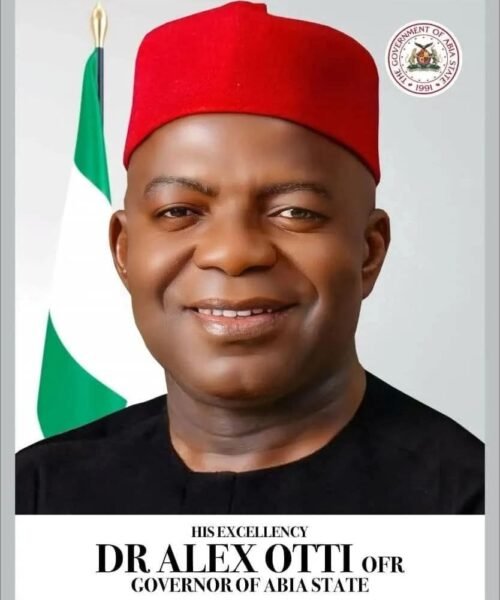
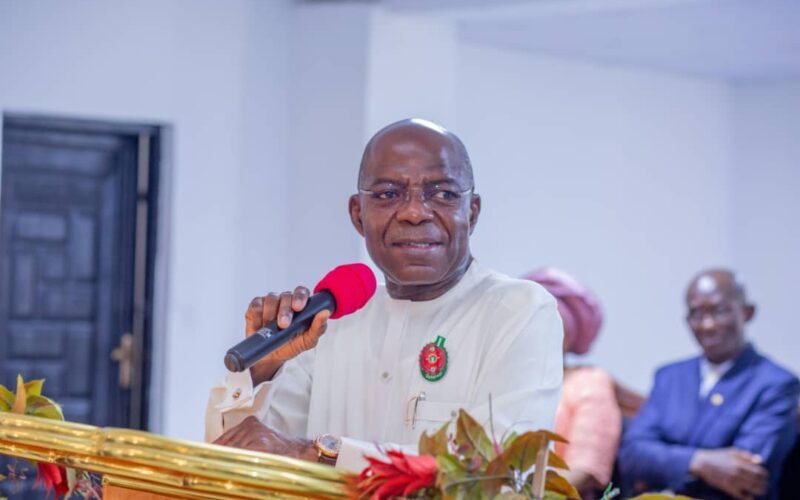
Governor Alex Chioma Otti’s remarks on Saturday, 10 January, at the Seventh Day Adventist Church, Umuoriehi, in Umuahia North Local Government Area, provide a compelling moral and political lens through which to interrogate the renewed agitation of former power holders, led in spirit and rhetoric by Senator Orji Uzor Kalu and his co travellers.
Significantly, Governor Otti’s intervention did not come from a partisan rally or a political podium but from a place of worship. That context is crucial. It stripped the message of theatrics and clothed it with moral authority. Rather than trading insults or descending into political mudslinging, the Governor confronted his opponents with truth anchored in scripture, historical records, and public conscience.
By urging Abians to disregard the so-called gatherings of opposition figures, Governor Otti framed their actions not as a genuine political threat but as a familiar pattern of failed actors regrouping for self preservation rather than public good. His message was clear. The gatherings are not about Abia or its people; they are about personal survival and recycled ambitions.
The Governor’s invocation of Isaiah chapter 54 verse 15 and Lamentations chapter 3 verse 37 was both deliberate and symbolic. It served as a reminder that not every gathering carries divine or popular legitimacy, and that political speech detached from truth, accountability, and moral authority ultimately collapses under its own weight. His reference to the empty barrel that makes the loudest noise aptly captures the current conduct of those who once held power in Abia, had ample opportunity to build enduring legacies, yet left behind decay, unpaid salaries, abandoned projects, and institutional rot.
More importantly, Governor Otti refused to dignify the opposition with direct engagement. This restraint is itself a statement. It reflects a leadership style that prioritizes governance over noisemaking, delivery over distraction, and results over rhetoric. While his detractors obsess over meetings, alliances, and recycled political scripts, the Governor remains focused on changing the narrative of Abia State through visible and verifiable action.
Ironically, the more these opposition figures gather against Governor Otti, the more solidarity and support he attracts from Abians and well meaning Nigerians. Their relentless attacks only reinforce a growing public consensus that Abia has finally found a leader whose credibility, discipline, and transparency stand in sharp contrast to the past. Each attempt to undermine him merely reminds the people of what they endured before 2023 and what they are now beginning to enjoy.
This growing confidence in Governor Otti’s leadership is neither accidental nor emotional. It is being institutionalized through deliberate policy choices, strategic planning, and bold investment decisions. The over one trillion naira budget signed for 2026 is not merely a fiscal document; it is a political and developmental statement. It signals an administration poised to accelerate development, deepen infrastructure renewal, strengthen human capital, and sustain the ongoing transformation across critical sectors. Roads, schools, health facilities, security architecture, and economic reforms are steadily redefining the Abia story.
For the opposition, this reality presents a profound dilemma. Development exposes failure. Results erase propaganda. As Governor Otti’s projects mature and his reforms take deeper root, the political space available for revisionism, nostalgia, and historical distortion continues to shrink.
By 2027, the cumulative outcomes of massive infrastructure delivery, fiscal discipline, institutional rebuilding, and people centered governance will have effectively closed whatever narrow path Senator Orji Kalu and his co-travellers imagine for a return.
The church event itself further reinforced the Governor’s credibility. His clarification that the renovation of the church building was carried out with personal funds, not government resources, underscores a clear and commendable boundary between public office and private conscience. In a polity long traumatized by the abuse of public funds, such transparency carries immense moral weight. It explains why religious leaders, civil society actors, professionals, and ordinary citizens increasingly view Governor Otti not just as a political leader, but as a trustworthy steward.
Ultimately, the 2027 contest in Abia will not be settled by conspiratorial gatherings or recycled declarations. It will be decided by records, outcomes, and moral clarity. Governor Otti has chosen to confront his opponents not with insults or threats, but with truth, scripture, performance, and confidence in the people.
That is a confrontation many from the old order are ill-prepared to survive. As Abia continues on its path of recovery and renewal, one fact that is increasingly clear is that the louder the noise of the past, the stronger the resolve of the present. And by 2027, Abians will not need persuasion. The evidence will be all around them.
Dr Ebere Uzoukwa is the Senior Special Assistant to the Governor of Abia State on Public Affairs.