

ABIA BETWEEN CHRISTMAS AND CONSEQUENCE: THE QUESTION EVERY INVESTOR WILL ASK IN 2026
As the Christmas season fades into year-end accounting, serious investors move from sentiment to scrutiny. For Abia State, December 2025 is not just festive punctuation; it is a balance sheet moment. The decisive question for 2026 is no longer whether Governor Alex Chioma Otti announces reforms, but whether Abia now operates predictable systems that turn policy into bankable outcomes. Between Christmas optimism and economic consequence lies the real test of governance.

MACRO STABILITY AND THE REAL USE OF THE FAAC WINDfall
Investor confidence begins with macro stability. Following Nigeria’s fuel-subsidy removal, FAAC inflows to states increased significantly, creating fiscal space unseen in years. Reuters confirmed that states experienced a revenue windfall after mid-2023, improving liquidity and planning capacity (Reuters, Oct. 5, 2023: https://www.reuters.com/world/africa/nigerias-states-reap-windfall-after-fuel-subsidy-cut-2023-10-05/).
For Abia, the investor question is not whether money came in, but whether it was converted into durable assets. BudgIT’s state finance reviews consistently warn that large budgets without execution transparency weaken credibility (BudgIT State of States Report: https://yourbudgit.com). Under Otti, the visible shift has been towards road rehabilitation, transport reform, and health investment—sectors investors treat as enabling conditions rather than political trophies.
INFRASTRUCTURE SEQUENCING: ROADS THAT CONNECT, NOT JUST IMPRESS
Christmas travel revealed what investors notice daily: logistics reliability. Aba’s reconstructed corridors eased holiday traffic flows, reinforcing the role of roads in reducing transaction costs. Global evidence shows infrastructure must be network-complete to unlock growth. The World Bank’s place-based development framework stresses that roads, drainage, maintenance, and traffic management must be sequenced together to attract private capital (World Bank, Place-Based Growth: https://www.worldbank.org/en/topic/urbandevelopment).
This is where Abia’s reforms are being judged—not by ribbon-cutting but by whether roads remain functional six rainy seasons from now.
TRANSPORT REFORM: FROM BUS BUYING TO SYSTEM BUILDING
Abia’s electric bus programme marks a structural break from decades of “buy-and-abandon” transport policy. Multiple outlets documented the shift from ad-hoc fleet purchases to an institutional mass-transit scheme with charging infrastructure and route planning. Punch reported the state’s transition to a system-driven electric bus network (https://punchng.com/abia-plans-state-owned-electric-bus-transport-scheme/), while EnviroNews highlighted its climate-aligned design and inclusion features (https://www.environewsnigeria.com/okonjo-iweala-hails-abia-electric-bus-scheme-as-climate-friendly-initiative/).
AfricaCheck and NDR clarified that while Abia is not Nigeria’s first EV experiment, it is among the few attempting system sustainability rather than symbolism (https://www.ndr.org.ng/no-abia-state-not-the-first-to-launch-an-electric-bus-transport-system/). Investors will now watch for audited operations, fare recovery, maintenance economics, and whether private operators can scale under regulation—benchmarks drawn from OECD transport governance standards (OECD Urban Transport Policy: https://www.oecd.org/transport).
HEALTH AND HUMAN CAPITAL: THE QUIET INVESTOR SIGNAL
Serious capital tracks workforce resilience. Abia’s emergence as South-East leader in the NGF Primary Healthcare Leadership Challenge sent a signal rarely noticed in political debates but deeply valued by employers (NGF PHC Challenge: https://ngf.org.ng). The SBM Intelligence Health Preparedness Index further ranked Abia high nationally, reinforcing health system credibility (https://sbmintelligence.com).
Amartya Sen’s thesis that development expands human capability rather than headline GDP is now mainstream among development financiers. Investors increasingly treat healthcare performance as a productivity hedge, not a social add-on.
INDUSTRIAL REVIVAL AND DE-RISKING LOGIC
The recovery of moribund assets and the insistence on de-risking before private takeover align with modern industrial policy thinking. OECD and World Economic Forum policy briefs emphasise that governments should repair institutions and reduce risk, not crowd out markets (OECD Industrial Policy: https://www.oecd.org/industry; WEF Place-Based Growth: https://www.weforum.org).
This approach mirrors the “learning state” framework advanced by Mariana Mazzucato, now widely discussed in global policy circles: governments that experiment, disclose, and iterate outperform those that merely announce. Investors will, however, demand published valuations, concession frameworks, and timelines—proof that policy intent translates into commercial clarity.
RULE OF LAW, DATA, AND NARRATIVE RISK
Capital avoids environments where disputes are settled in press conferences rather than institutions. Courts enforcing restraint on defamatory campaigns while preserving good-faith scrutiny are part of governance hygiene that investors quietly note. Media-freedom watchdogs stress that predictable legal frameworks—not intimidation—protect both officials and critics (Committee to Protect Journalists, Nigeria: https://cpj.org/africa/nigeria/).
Equally important is data integrity. GPS-tagged project sites, contract disclosures, and quarterly dashboards—recommended by the International Budget Partnership—reduce narrative risk more effectively than any publicity blitz (IBP Open Budget Survey: https://www.internationalbudget.org).
THE 2026 INVESTOR QUESTION
As Christmas optimism gives way to consequence, investors will ask one question in 2026: are Abia’s reforms now system-embedded? They will look for audited transport operations, maintenance-backed roads, stable power and logistics, credible health systems, and transparent project sites tied to budgets.
Markets do not invest in hope. They invest in evidence. If Abia sustains this institutional turn—moving from announcements to audited outcomes—the post-Christmas answer tilts decisively in its favour.
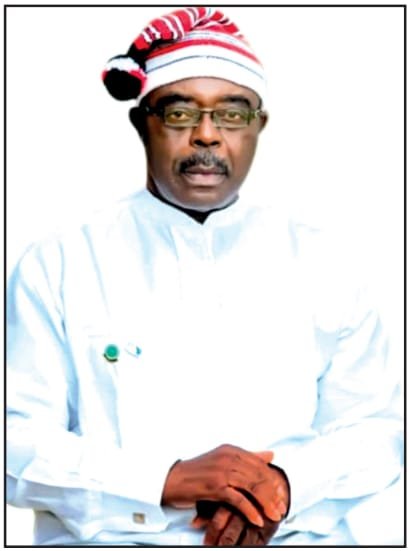
AProf Chukwuemeka Ifegwu Eke