

THE ENYIMBA ECONOMIC DISTRICT & THE RISE OF ABIA’S SME POWERHOUSE: A HISTORICAL AND DATA-DRIVEN ARGUMENT
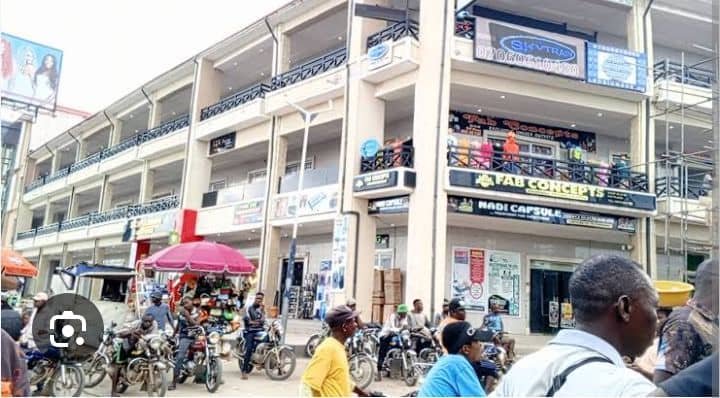
The story of Abia’s economic revival cannot be told without acknowledging the deep historical roots of enterprise in Aba. From the 1970s textile clusters to the legendary “Aba Made” boom of the 1980s and early 2000s, Abia has always been Nigeria’s grassroots innovation capital. Yet, despite its enormous informal productivity, successive administrations allowed the economic engine to decay—flooded roads, epileptic power, zero standards support, and no export architecture. By 2019, UNIDO and the National Bureau of Statistics classified the Aba industrial cluster as one of Nigeria’s most “potential-rich but infrastructure-poor” urban economies. The contradiction was glaring: one of West Africa’s largest SME ecosystems producing an estimated ₦2 trillion informal economic value annually trapped in physical, logistical and regulatory decay.
This is precisely why the Enyimba Economic District stands as one of the most consequential steps Abia has taken in decades. Instead of ad-hoc empowerment schemes or political tokenism, the government finally embraced an economic model consistent with Singapore’s Jurong Industrial District, Ethiopia’s Hawassa Industrial Park, and Vietnam’s SME-driven export enclaves. These global zones succeeded because they shifted economies from scattered informal production to structured, serviced, power-stable, and investment-friendly clusters. Abia is now attempting the same transition. The logic is simple: an industrial zone with dedicated power, drainage, security, logistics and standards will unleash productivity far more than any one-off government project.
The data aligns with this trajectory. When the federal government and AfreximBank signed the $500 million financing framework for the Enyimba Economic City years back, international analysts predicted it could create over 600,000 direct and indirect jobs within 15–20 years. What stalled the project was political lethargy, conflicting interests and lack of governance discipline. The difference today is that the current Abia administration has restored the enabling conditions that global investors require—financial transparency, quarterly reporting, a stable reform narrative, and clear signals that the state has finally abandoned the old patronage model of governance. The state’s improved Ease of Doing Business signals, digital revenue automation, land titling reforms and procurement sanitization have built credibility where none existed.
The broader SME transformation is visible across the city. Ariaria Power Project—which languished for years—has been revived, giving the first real pathway toward uninterrupted power for thousands of manufacturers whose generators swallowed profits for decades. Digital payment adoption has surged, with small manufacturers now leveraging POS, online banking, and QR systems after years of cash-only barriers. Export regulatory agencies are engaging Aba MSMEs at a level unseen before: NEPC’s new export training labs in Abia, SON’s SME standards drive, and BOI’s reactivated SME desks are early indicators that the industrial ecosystem is normalizing. In simple terms, Aba’s long-suppressed economic potential is finally entering the formal economy.
History confirms that cities rise when production ecosystems are stabilized. Guangzhou’s garment industrial zone transformed China’s southern economy in the late 1990s. Ethiopia’s Hawassa Textile Park lifted export earnings by hundreds of millions within five years. Vietnam’s cottage-industry districts led the country from poverty to becoming one of Asia’s most competitive exporters. Abia is following that same global logic. The Enyimba Economic District is not a luxury—it is the structural correction needed to convert Aba’s raw entrepreneurial fire into internationally competitive value chains.

Critics often ask where the results are, forgetting that industrial zones are not microwave projects. Singapore’s Jurong took five years before its first major outputs. Rwanda’s SEZ took three years to attract its first anchor tenants. What defines serious governments is their willingness to initiate systems whose benefits compound over time. Abia’s path is finally aligned with economic logic, global standards and historical precedent.
The truth is that the current industrial reforms represent the first time in decades that Abia is building an economy, not just awarding contracts. If the state sustains this trajectory—power stability, standards enforcement, financial transparency and industrial clustering—Abia will not merely revive “Aba Made”; it will rebirth a globally competitive production ecosystem that positions the state as Nigeria’s SME capital.
This is what economic transformation looks like—not in slogans, but in structure.
AProf Chukwuemeka Ifegwu Eke