
ABIA 300 GROW COMPACT EXAMINED HOW THE CBN’S 23% RATE AFFECTS SMALL BUSINESSES
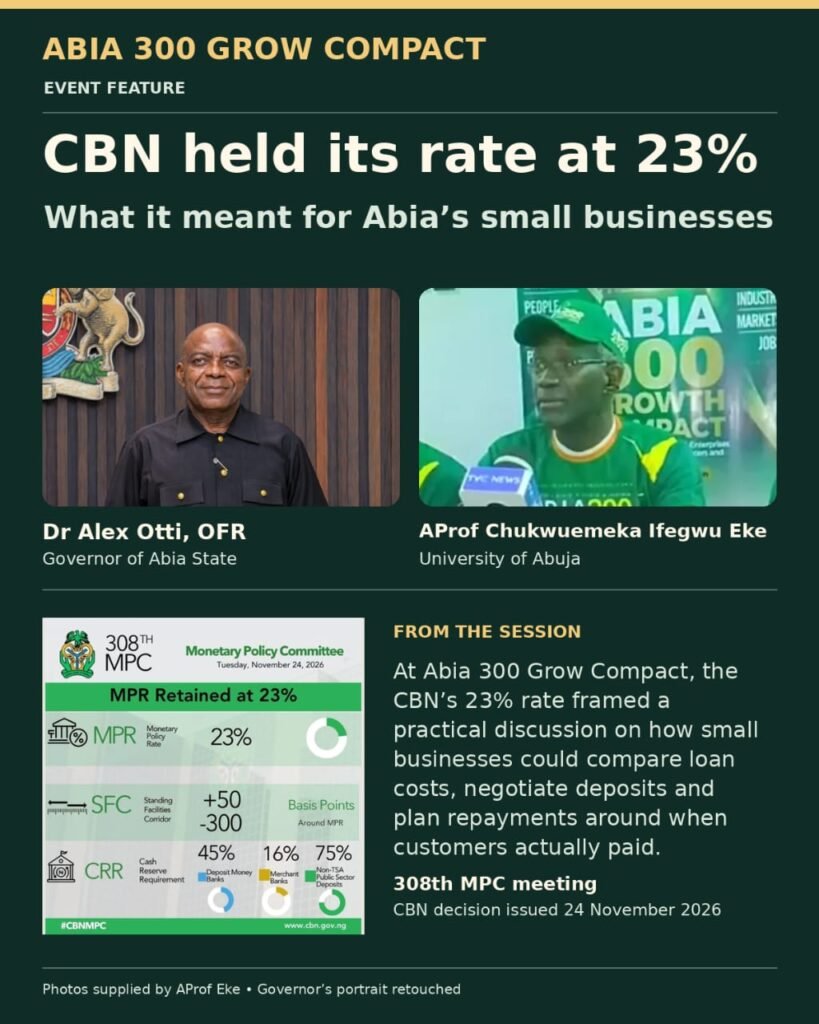
The just-concluded Abia 300 Grow Compact featured a session led by the convener on what the Central Bank of Nigeria’s decision to retain its benchmark interest rate at 23% meant for micro, small and medium enterprises in Abia State.
The session focused on a familiar problem for business owners. Materials and wages often have to be paid upfront, while customers may take weeks to settle their bills.
At its 308th meeting, which ended on 24 November 2026, the CBN’s Monetary Policy Committee retained the Monetary Policy Rate at 23% and the cash reserve requirement for deposit money banks at 45%. The committee said headline inflation had moderated for five consecutive months and that holding its policy stance would help sustain that progress.
THE QUESTIONS BEHIND THE 23% FIGURE
The questions, responses and proposals below are an illustrative reconstruction of the session.
1. Why could a bank quote a rate above 23%?
The response explained that lenders priced loans according to funding costs, repayment risk and the security available. Business owners were urged to compare the amount they would receive, the total they would repay and when the first instalment would fall due.
2. How could a producer finance a confirmed order when the buyer wanted 60 days to pay?
Using a footwear order from Aba as an example, the discussion explored asking for a deposit to cover leather and soles, arranging a second payment at an agreed stage of production, and considering invoice finance where the buyer had a reliable payment record.
3. What could a business with steady sales do if it had no landed property to pledge?
The response focused on what owners could bring to a lender: bank statements, invoices, sales records and a simple cash-flow forecast. Equipment and verified invoices were discussed as possible forms of security where a lender accepted them.
THREE STRATEGIES DISCUSSED
- Finance clinic. Entrepreneurs and lenders would review actual loan applications and identify what was holding them up.
- 90-day cash-flow pilot. Businesses would track expected receipts, supplier bills, wages and loan instalments each week to spot potential cash shortages early.
- Joint purchasing trial. Firms using the same raw materials would place a combined order and measure whether the savings reduced how much they needed to borrow.
The discussion brought the CBN decision down to three questions an Abia business owner could ask before taking a loan. How much cash did the next order require upfront? What would the financing cost in naira? Could the business still meet its obligations if the customer paid a month late?
Source — CBN Monetary Policy Communiqué No. 165
https://www.cbn.gov.ng/Out/2026/CCD/MPC%20Communique%20No%20165%20of%20November%202026.pdf