
Reform, Responsibility and the Burden of Renewal: A Historical and Philosophical Reading of the Otti Administration
History’s Lesson: Reformers Are Always Questioned
Political history shows that reform administrations almost always face intense scrutiny during their early years. From Lee Kuan Yew in Singapore to Rwanda’s post-1994 reconstruction, governments attempting structural reforms are often confronted with skepticism about cost, pace, and priorities.
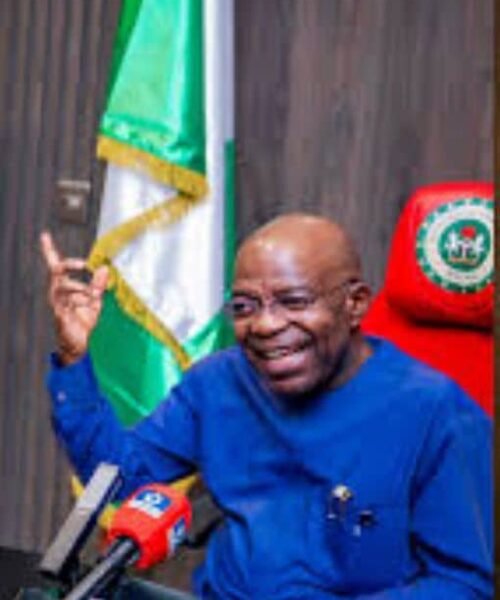
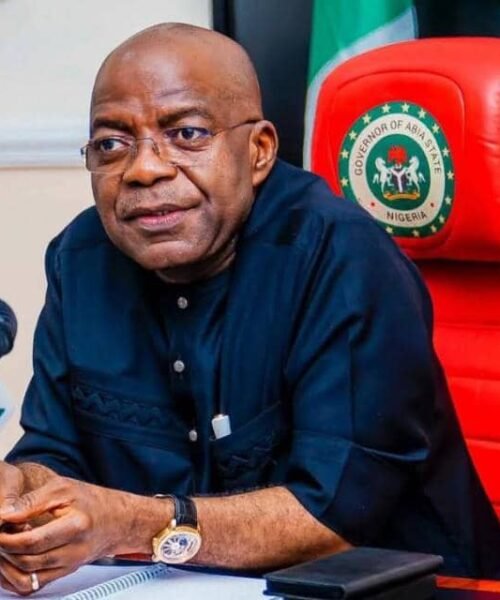
Abia State’s present trajectory under Governor Alex Chioma Otti reflects a similar historical pattern: a government attempting to reverse decades of institutional decay while navigating public impatience and political contestation.
The philosophical tension is simple: reform requires disruption, but disruption is rarely comfortable.
For more than two decades, Abia’s infrastructure backlog grew steadily. Roads collapsed, industries died, salaries were irregular, and public institutions weakened. When any administration attempts to repair this legacy, the immediate question inevitably becomes: “Why is it expensive?”
Yet history teaches that restoration always costs more than maintenance.

The Omenuko Bridge Debate: Context Matters
The Omenuko Bridge is not merely a civil engineering structure; it is part of the historic Aba–Ikot Ekpene corridor, a critical commercial artery linking Abia to Akwa Ibom and Cross River states.
The original bridge had deteriorated for years before intervention became unavoidable. Structural rehabilitation projects of such nature typically involve:
deep structural
reinforcement
foundation stabilization
hydrological corrections
road realignment
safety redesign
Infrastructure economics literature consistently shows that rehabilitating a failed structure is often far more complex than building a new one.
This is why across Nigeria and globally, cost revisions occur after engineering reassessments.
The relevant question therefore is not rhetorical outrage about numbers, but whether the bridge is functioning and restoring economic mobility.
Philosophy of Governance: Transparency vs Political Theatre
Philosophers of governance—from Aristotle to John Rawls—distinguish between politics as spectacle and politics as administration.
Modern public policy scholars call this the difference between:
performative politics
and
institutional governance
Governor Otti’s approach appears rooted in the latter tradition.
Examples frequently cited by supporters include:
- clearing salary arrears and stabilizing payroll systems
- restoring medical school accreditation
- reopening dormant industrial assets through private-sector partnerships
- reworking infrastructure corridors in Aba and Umuahia
These reforms are not dramatic spectacles; they are administrative corrections.
And administrative corrections rarely trend on social media.
The Economics of Abia’s Transition
Opposition critics frequently cite revenue figures and expenditure reports without acknowledging the fiscal transition Nigeria underwent after fuel subsidy removal in 2023.
Following the reform, FAAC allocations to many states rose significantly.
But increased allocation does not automatically translate into instant prosperity. In public finance theory, the first stage of fiscal recovery typically involves:
stabilizing payroll obligations
clearing legacy liabilities
repairing critical infrastructure
restoring investor confidence
Only afterward does economic expansion become visible.
Abia appears to be in that transitional stage.
Industrial Revival Strategy
One of the more consequential but less discussed initiatives is the government’s attempt to revive dormant industrial assets such as:
- Afro Beverages
- Star Paper Mill
- Ogwe Golden Chicken
- textile manufacturing facilities
The model proposed is private-sector-led revitalization, where the state facilitates acquisition and restructuring while investors modernize production.
This approach reflects classical economic development strategies used in East Asia and post-industrial Europe, where governments first restore assets before handing them to productive operators.
Democracy Requires Questions — But Also Evidence
Criticism is not only legitimate; it is essential in democratic systems.
However, serious policy debate must move beyond rhetorical accusations toward verifiable data and comparative analysis.
If a project cost is disputed, engineering documentation should be presented.
If salary levels are debated, official payroll structures should be cited.
If public spending is questioned, audited reports should be examined.
The alternative is a politics of permanent outrage without institutional clarity.
A State Relearning Governance
Abia’s political story is not merely about one governor or one bridge.
It is about a state attempting to transition from administrative collapse to institutional rebuilding.
That transition will inevitably produce:
- arguments about cost
- disagreements about priorities
- political contestation
But historically, societies that succeed in reform are those willing to judge governments not only by accusations, but by measurable outcomes over time.
Conclusion
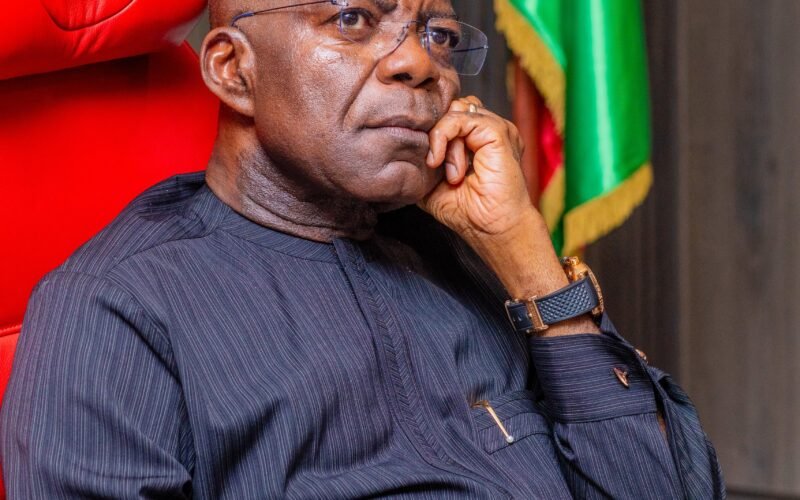
Governor Alex Otti’s administration will ultimately be judged not by the intensity of its critics or the enthusiasm of its supporters, but by whether Abia’s economy, infrastructure, and institutions are stronger at the end of the reform cycle.
History suggests that genuine reform rarely looks impressive in its earliest phase.
But it is often the only path out of long-standing decline.
AProf Chukwuemeka Ifegwu Eke