

Why Reform First Looks Slow: Reading Abia Through the Lens of Why Nations Fail
Institutions Before Optics, Systems Before Spectacle
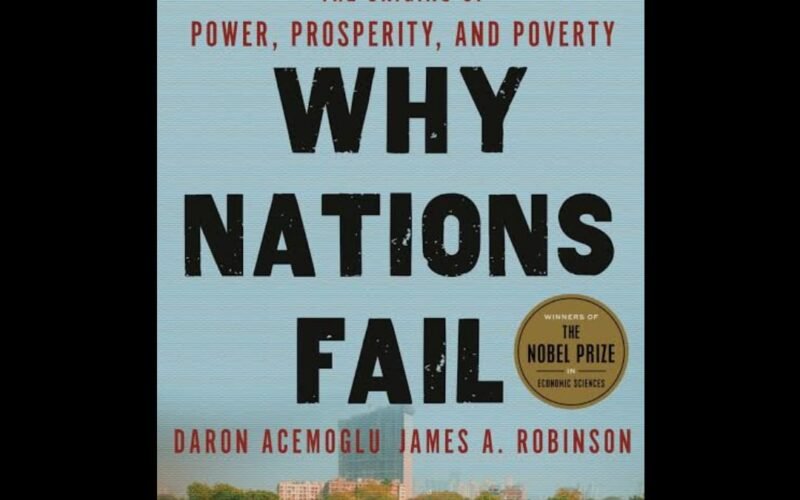
Serious governance is rarely loud at the beginning. It is structural before it is spectacular. That is one of the central lessons from Daron Acemoglu and James Robinson’s globally influential work, Why Nations Fail: The Origins of Power, Prosperity, and Poverty. Their thesis is simple but powerful: prosperity comes not from noise, personalities, or headline projects, but from institutions that work — institutions that pay workers, enforce rules, stabilize systems, and deliver services consistently.
Read through that lens, the current reform direction in Abia under Governor Alex Otti fits a classic institutional-repair pattern — and that explains both the criticism and the results.
Acemoglu and Robinson distinguish between extractive systems and inclusive systems.
Extractive systems reward a few, delay obligations, accumulate arrears, and substitute patronage for structure. Inclusive systems, by contrast, stabilize payroll, restore service delivery, rebuild administrative capacity, and enforce fiscal discipline — even when that produces fewer ribbon-cutting ceremonies in the short run.
That distinction matters in interpreting Abia’s current trajectory.
When a government prioritizes salary regularization, pension clearance, payroll verification, health workforce expansion, and power restoration to neglected communities, critics often say, “Where are the mega projects?” Institutional economists answer differently: those are the projects — system projects.
In Why Nations Fail, institutional strength — not project glamour — is the predictor of durable development. A state that can reliably pay teachers, nurses, civil servants, and retirees has crossed the first threshold of functional governance. A state that restores electricity to long-dark communities and strengthens primary healthcare capacity is rebuilding productive foundations, not chasing headlines.
The book also warns against a common analytical error now visible in online fiscal debates: confusing nominal resource size with institutional capacity. Big revenue numbers do not automatically produce big outcomes if institutions are weak. Conversely, reforming institutions often consumes early resources in arrears clearance, system cleanup, procurement reset, and administrative rebuilding — which reduces visible project density at first but increases long-term delivery reliability.
That pattern is not failure. It is textbook reform sequencing.
Another core insight from Acemoglu and Robinson is that institutional transitions are politically noisy. Those accustomed to older patronage flows often interpret rule-based restructuring as “opacity” or “slow performance.” But rule-based systems are quieter than patronage systems — because rules, unlike patronage, do not advertise themselves daily.
Seen through this global institutional framework, the Abia reform story is not about spectacle versus silence. It is about systems versus shortcuts.
This is why governance must be judged by records, standards, payroll stability, service restoration, audit discipline, and independently verifiable sector outcomes — not by livestream arithmetic or viral outrage.
Institutions first. Optics later.
That is not just a defense of a governor. It is a defense of how development actually works.
AProf Chukwuemeka Ifegwu Eke