


Aba Commercial Smart City (ACSC) MoU Signing: Gov. Otii Set to Redefine Abia’s Economic Future,
For decades, Aba has stood as the commercial engine of the Southeast—an industrial city powered by indigenous ingenuity, craftsmanship, and trade. From leatherworks and garments to metal fabrication and wholesale commerce, Aba’s entrepreneurial energy has remained resilient despite years of infrastructural neglect. Today, that resilience is being deliberately matched with planning, technology, and investment through the proposed Aba Commercial Smart City, strategically located at Arongwa in Aba–Osisioma Local Government Area.
Conceived as one of the flagship economic legacy projects of Governor Alex Chioma Otti, OFR, the Aba Commercial Smart City (ACSC)seeks to transform Aba’s largely informal industrial strength into a structured, technology-driven, and globally competitive commercial ecosystem.

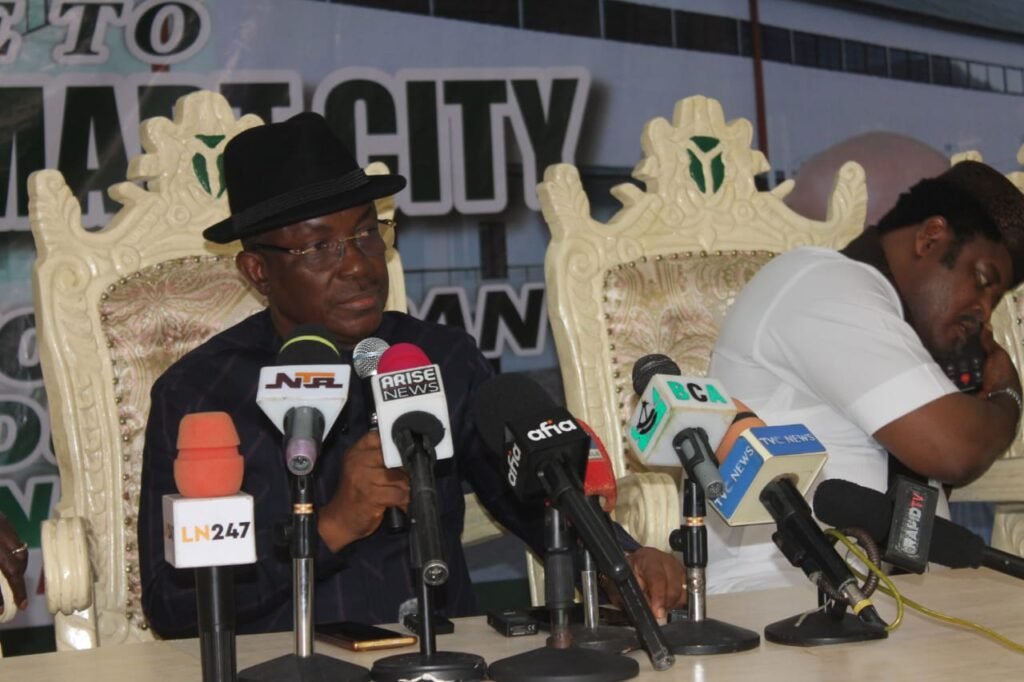
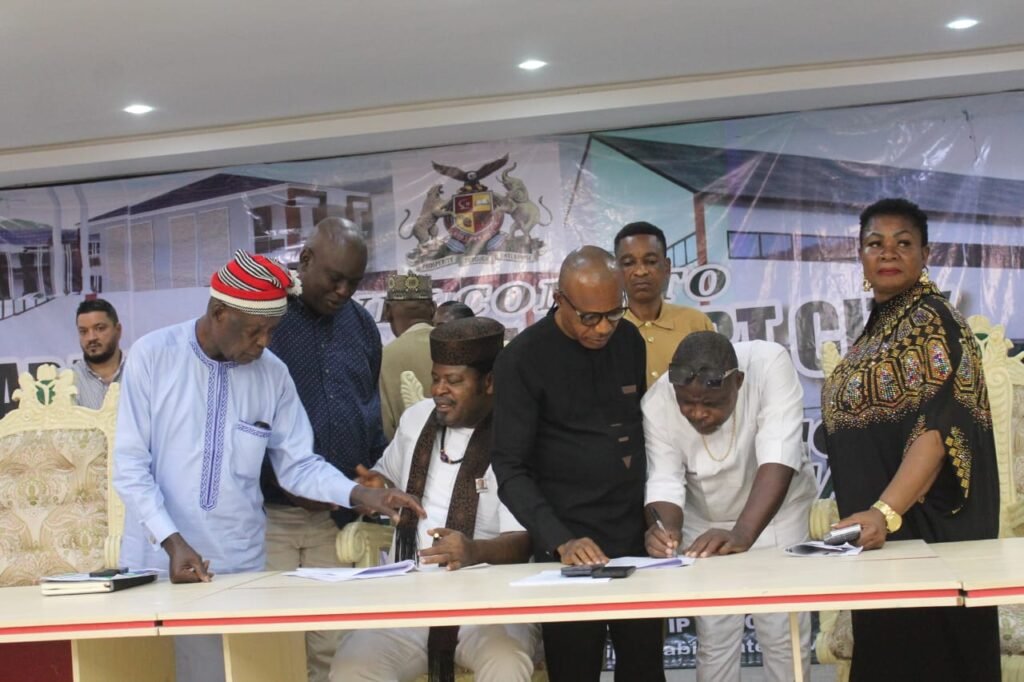

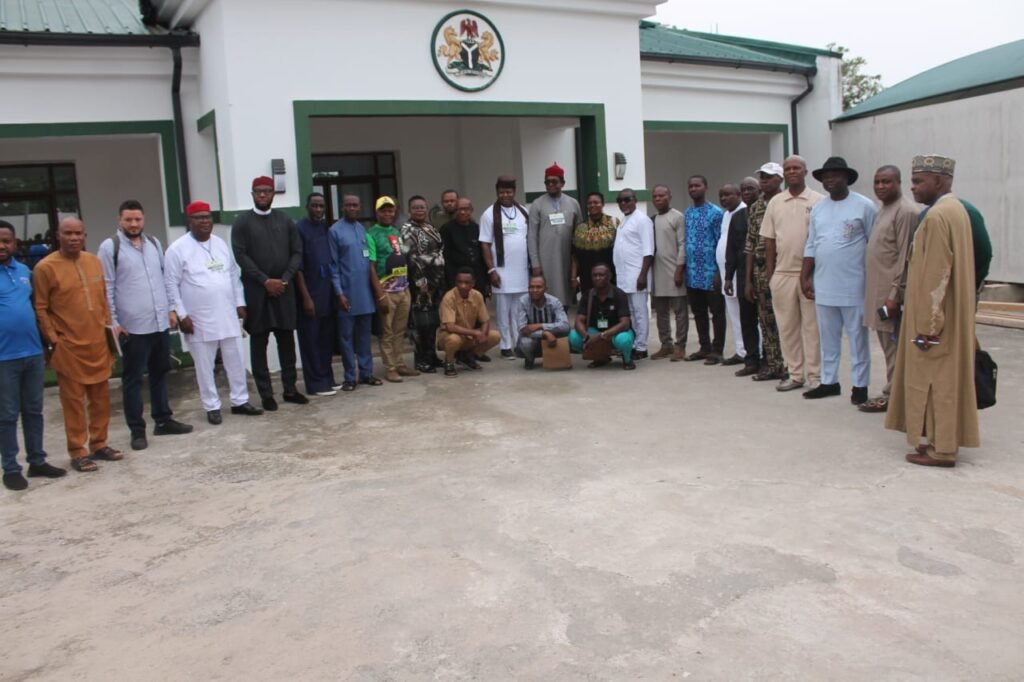
Urban development experts note that Osisioma has long functioned as Aba’s industrial and logistics gateway, hosting major transport corridors linking Aba to Port Harcourt, Owerri, and the wider South–South. Arongwa, in particular, offers the scale and spatial flexibility required for purpose-built industrial clusters, logistics parks, smart housing, and modern business districts—relieving pressure on inner Aba while expanding its economic footprint.
“This project is not about relocating Aba’s soul,” Governor Otti is quoted as saying through his Chief of Staff Pastor Caleb Ajagba who represented him at the event, “It is about giving Aba the structure, infrastructure, and systems it needs to compete in today’s economy without losing its identity.”
Delivering a technical presentation on the project, the Manager of Technical Services, Aba Commercial Smart City ((ACSC) , Mr. David Okoro, explained that the development is anchored on four core pillars of innovation. According to him, these include automated manufacturing, advanced medical and commercial services, hospitality, smart housing, logistics efficiency, and smart energy systems designed to power a modern industrial city.
Unlike conventional smart city developments driven largely by luxury real estate, the Aba Commercial Smart City (ACSC)is deliberately structured as a production-and-trade ecosystem. The master plan prioritizes smart industrial clusters, SME manufacturing parks, warehousing and logistics hubs, wholesale and export-processing zones, alongside technology-enabled commercial services.
Central to the project’s viability is its Public–Private Partnership (PPP) framework, complemented by an Independent Power and Infrastructure (IP) model. This approach allows private capital to co-develop, finance, and operate critical infrastructure, while government provides policy direction, regulation, and an enabling business environment.
According to the Special Adviser to the Abia State Governor on Investment, Chief Nwaka Inem, the model is intentionally structured to avoid the pitfalls of abandoned government industrial estates. “The PPP and IP model ensures that this project is bankable, sustainable, and insulated from the funding failures that plagued past state-led initiatives,” he said.
Power supply—historically one of Aba’s biggest constraints—occupies a central place in the project’s design. Embedded and independent power solutions, combining gas, renewable energy, and smart grid technologies, are expected to significantly reduce reliance on diesel generators, cut production costs, and improve environmental sustainability.
Beyond infrastructure, the project also introduces a digital operating system for commerce and governance. Business registration, licensing, taxation, land administration, and utility management are to be digitized, while smart surveillance, traffic control, and emergency response systems will be centrally coordinated.
“The goal is predictability,” said Ambassador Dr. Osita Offor, ‘De Ultimate Commander,’ President of Aba Commercial Smart City (ACSC) “Investors and entrepreneurs must know the rules, trust the systems, and plan long-term.”
The project has drawn strong interest from key industrial stakeholders. President of the Leather Products Manufacturers Association of Abia State, Mr. Confidence Nwaobilor, described the initiative as timely, noting that it aligns with the association’s long-standing demand for a structured industrial cluster. He said such an environment would significantly boost leather production, improve quality control, and enhance export competitiveness.
In his remarks, the Group Vice Chairman of the project and former Inspector-General of Police, Dr. Mike Okiro, said the initiative represents a strategic effort by Governor Otti to restore Aba’s lost glory as Nigeria’s commercial and industrial hub, stressing that security, infrastructure, and order are essential foundations for sustainable commerce.
The employment implications are equally significant, with projections of over 150,000 direct and indirect jobs across construction, manufacturing, logistics, ICT services, facility management, healthcare, hospitality, and retail. Embedded vocational centres and innovation hubs are designed to integrate Aba’s youthful population into the emerging smart economy.
Equally important is the project’s role in urban decongestion. By relocating heavy logistics, warehousing, and large-scale industrial operations to Arongwa, inner Aba markets such as Ariaria and Ekeoha are expected to benefit from improved traffic flow, enhanced safety, and better urban management.
For the Otti administration, the Aba Commercial Smart City reflects a broader governance philosophy anchored on planning discipline, fiscal prudence, and private-sector partnership. It marks a shift from ad-hoc interventions to integrated, long-term economic infrastructure.
If delivered as envisioned, the Aba Commercial Smart City could redefine Aba’s role in Nigeria’s economy—preserving its historic entrepreneurial spirit while equipping it with the systems required for 21st-century commerce. In doing so, it may stand as one of the most enduring economic legacies of the current administration.
Written by: Comr. Amos Oge Kalu, Abuja