
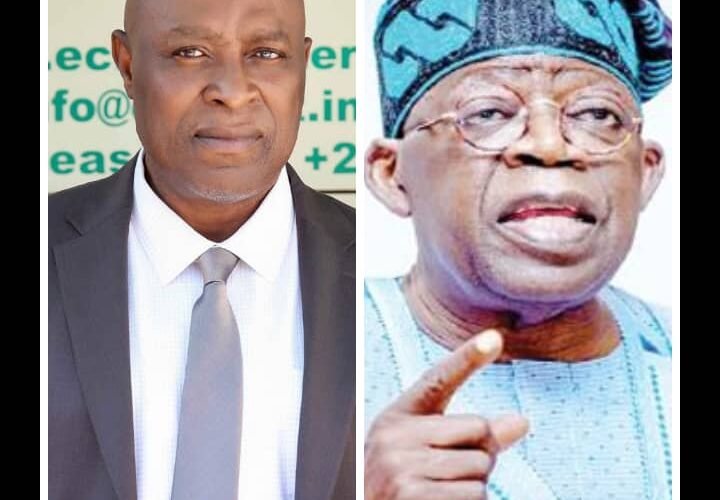
The Specter of Absence: Constitutional Breach and the Moral Erosion of the Nigerian Presidency
By Charles Ude, Esq.
Legal Practitioner, Author, and Social Critic
Email: Charlesude2014@gmail.com
The Nigerian polity, a complex tapestry of over 200 million souls, currently navigates a perilous paradox: a state that is heavily administered yet fundamentally unled. The prevailing “Silent Presidency” is often defended by apologists as a brand of “quiet diplomacy” or a stoic, technocratic style of governance. However, a rigorous legal and sociological interrogation reveals a far more unsettling reality.
This invisibility is not a stylistic choice; it is a profound abdication of the Duty of Care owed to the sovereign people and a direct subversion of the constitutional mechanics of the Federal Republic.
The Historical Ghost: Precedent as a Warning
The current vacuum of executive presence feels like a haunting refrain of the Muhammadu Buhari era. That administration’s legacy was defined largely by “medical absenteeism”, prolonged intervals where the machinery of state ground to a halt while the nation survived on a diet of rumors and speculation. The economic and security scars of that era are not merely historical footnotes; they remain suppurating wounds in our collective consciousness.
Today, we are witnessing a reproduction of this ghostly posture. Leadership is a performative act as much as it is an administrative one. When a President is absent from seminal events like Armed Forces Remembrance Day, or remains mute following catastrophic security failures, such as the recent tragic bombing in Sokoto, the psychological anchor of the nation is severed. In the absence of a “Consoler-in-Chief,” the civic void is invariably filled by panic, misinformation, and a pervasive sense of national abandonment.
The Constitutional Crisis: Beyond the “Spirit” of the Law
From a strict legalist perspective, the “Silent Presidency” transcends social grievance and enters the realm of constitutional breach. The 1999 Constitution (as amended) was specifically engineered to prevent the “orphaning” of power, a lesson learned bitterly during the Yar’Adua succession crisis.
a. The Section 145 Safeguard and the 21-Day Rule
The 2010 Alteration Act was a legislative firewall against executive silence. Section 145 mandates that whenever the President is unable to discharge his duties, a written declaration must be transmitted to the National Assembly. Prolonged absence without such communication, or the failure of the legislature to trigger the 21-day mandate for the Vice President to act, constitutes a subversion of the democratic order. Silence, in this legal context, is a procedural illegality.
b. Command-and-Control Paralysis
The implications for national security are even more dire. Under Section 305, the power to declare a State of Emergency is uniquely vested in the President. When the Commander-in-Chief is invisible during a crisis, the legal “trigger” for emergency response is effectively locked. This creates a state of “functional decapitation” where the security apparatus lacks the ultimate civilian authorization required in a constitutional democracy.
c. Gross Misconduct and the Oath of Office
The Seventh Schedule (the Oath of Office) is a binding covenant, not a mere formality. Section 14(2)(b) explicitly states that “the security and welfare of the people shall be the primary purpose of government.” If a leader fails to engage or direct the nation during moments of extreme duress, they are in prima facie violation of this primary purpose. Such negligence meets the threshold of “Gross Misconduct” under Section 143, providing legitimate, justiciable grounds for impeachment.
The Societal Toll: The Cost of the Void
The consequences of an invisible presidency are not abstract; they are measured in the steady erosion of the Nigerian state’s legitimacy.
d. Erosion of Institutional Trust
When the face of the state disappears, the citizenry ceases to believe in the state’s efficacy or existence.
e. Economic Volatility
Markets despise a vacuum. The uncertainty regarding who holds the actual reins of executive power drives away foreign investment and destabilizes the Naira.
f. National Despair
A nation without a voice is a nation without hope. The President’s presence serves as the primary bulwark against collective demoralization.
It is a tragic double standard that we tolerate at the federal level what we would find localized as a state of anarchy. If any of the 36 State Governors adopted this posture of total withdrawal, their states would be declared ungovernable within weeks.
g. The Complicit Silence of the Press and Other Stakeholders
Compounding this executive void is the deafening silence from key pillars of society, including the press, civil society organizations, opposition parties, and even religious and traditional leaders. The Nigerian media, once a vibrant watchdog during the military eras and early democratic transitions, has increasingly adopted a posture of self-censorship or selective outrage. In the face of presidential absenteeism, evident in unaddressed crises like the Sokoto bombing or economic hardships, major outlets often prioritize sensationalism over sustained investigative scrutiny, fearing reprisals such as regulatory clampdowns, advertiser boycotts, or outright intimidation.
This reticence extends to other stakeholders: opposition figures who might capitalize on such lapses for political gain instead engage in muted criticism, perhaps due to internal divisions or fears of destabilizing the fragile polity. Civil society, battered by funding shortages and legal restrictions under laws like the NGO Regulation Bill, has grown cautious, focusing on niche issues rather than confronting the core leadership deficit. Even influential voices in academia and the bar associations, who should champion constitutional accountability, often limit their interventions to occasional press releases rather than coordinated advocacy.
This collective silence normalizes the abnormality, eroding the checks and balances essential to democracy. It fosters a culture where accountability is outsourced to social media echo chambers, which, while vocal, lack the institutional weight to enforce change. Without active engagement from these stakeholders, the “Silent Presidency” thrives unchallenged, accelerating the moral and structural decay of the nation.
Conclusion: A Mandate for Visibility
Nigeria cannot afford to normalize a phantom executive. As legal practitioners and citizens, we must assert that silence in the face of national suffering is not a strategy; it is negligence. The Duty of Care is a foundational principle of our democracy; it requires a leader who is visible, audible, and accountable.
If the current administration continues to treat the presidency as a private sanctuary rather than a public trust, the ballot box remains our final, inescapable recourse. We must ensure that the “Silent Presidency” does not become the permanent epitaph of our democratic experiment.