
Noise vs Evidence: Why Abia’s 2027 Battle Won’t Be Won in the Theatre of Insults
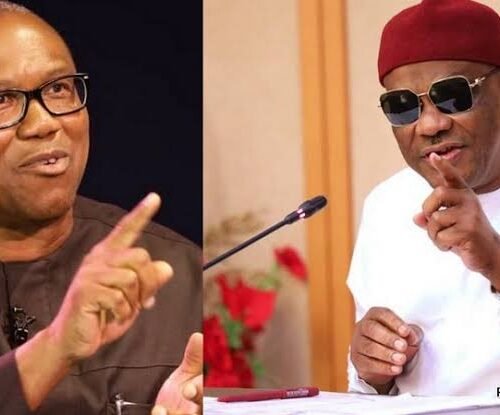
It seems to me that Rt. Hon. Benjamin Kalu and Senator Orji Uzor Kalu have lately taken turns in a familiar sport: provoking Governor Alex Chioma Otti, OFR, with maximal rhetoric and minimal documentation—then calling his replies “gutter politics” when he refuses to be intimidated by their theatre. The method is predictable: inflate claims, attach big numbers, provide no primary records, and hope the public confuses loudness for proof.
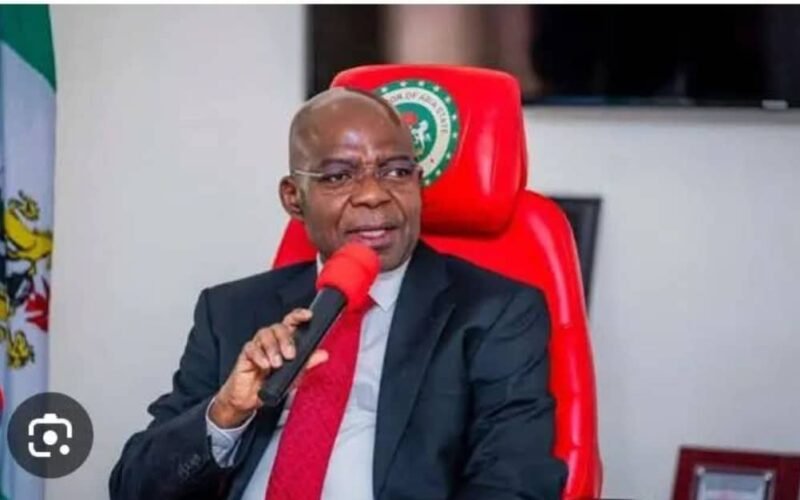
Start with the easiest lie to puncture: the insinuation that Abia under Otti is “all propaganda” and “no verifiable governance.” The very fact that Abia publishes budget performance records and official updates—documents that can be checked line-by-line—already contradicts the “nothing is tangible” posture. For instance, Abia’s official Budget Performance Report (Q2 2024) is publicly available here: https://abiastate.gov.ng/budget-performance-report-q2-2024/. A government hiding behind noise does not volunteer that level of paper trail.
Next, the claim that ₦82bn or “almost ₦100bn” went into schools yet “no single school can be seen” is not a serious argument unless the claimant is willing to cite the exact budget lines, the executing ministry/agency, the procurement lots, the contractor lists, and the locations. What the record shows is that Abia’s own 2024 Appropriation Law explicitly captures a structured education programme list across LGAs, including “rehabilitation of 3 public schools in each LGA,” alongside other line items and allocations: https://abiastate.gov.ng/abia-state-2024-appropriation-law-2023/. If someone insists “no school exists,” the honest civic method is to take these official LGA-linked commitments, visit communities, photograph sites, and then challenge discrepancies—not to wave a blanket denial as if governance is assessed by mood.
The second inflation is healthcare: the allegation that PHC upgrades are merely “repainting and changing tiles” cannot stand as a financial claim without tender documents, BOQs, and the scope of works—because PHC upgrades are not painting projects when done properly. A credible PHC upgrade typically includes water and sanitation systems, power solutions (often solar), maternal/child health equipment, cold-chain capacity for vaccines, staff quarters (where applicable), perimeter security, and basic diagnostic infrastructure; that is why serious PHC spending can look “invisible” to people who only search for a single ribbon-cutting monument. Abia’s PHC work has been widely reported as a multi-facility programme, including the government’s own framing and independent coverage such as Premium Times’ reporting on the renovation and equipping of PHCs: https://www.premiumtimesng.com/regional/ssouth-east/737303-abia-renovates-200-primary-health-centres.html, as well as Punch coverage around PHC upgrades and policy direction: https://punchng.com/abia-revamps-200-health-centres-launches-incentives-for-health-workers/.
Then comes the third rhetorical trick: “₦540 million monthly on social media propaganda.” This is exactly the kind of accusation that should be easy to prove if it is true—because it would appear as a recurring budget line, payment schedule, or procurement item. Yet these claims almost never come with the single thing that matters: the actual line item reference. Until any critic produces the specific budget head/subhead, MDA, payment vouchers, procurement notices, and beneficiaries, this remains insinuation dressed as arithmetic. In contrast, Abia’s official budget and performance documentation are at least open enough to interrogate; you can start from the government’s budget library and official publications here: https://abiastate.gov.ng/budget-library/.
Now to the “no original project” line and the attempt to rewrite history as if Abia was fine before 2023. Abia was not fine; Abia was a dungeon of collapsed public confidence after long years of governance that treated institutions as private property. That is why Otti’s central advantage is not merely pouring asphalt; it is rebuilding the credibility of state action by insisting that programmes be traceable, that budgeting be timely, and that commitments be capable of verification. Even the 2026 budget signing, which moved planning from talk to law, is documented widely; for example, Daily Post reports the 2026 appropriation signed into law at about ₦1.016 trillion: https://dailypost.ng/2025/12/29/otti-signs-n1trn-abia-2026-budget-into-law/. Whether one is a supporter or critic, that signed appropriation becomes the test instrument: it fixes priorities, releases procurement pipelines, and makes “evidence” the battlefield.
On infrastructure and the cheap “shoulder expansion” mockery, serious people should stop trading in per-kilometre outrage without scope. Road costs depend on drainage depth, soil stabilization, right-of-way compensation, bridges/culverts, utility relocation, street lighting, signage, asphalt thickness, and urban traffic management. A valid challenge is possible—but it must be built from contract scope and BOQ, not vibes. If Senator Kalu’s camp truly believes any road is overpriced, the mature path is to publish the tender references, contract sum, scope, and BOQ summaries, then invite independent quantity surveyors to assess—because that is how accountability survives propaganda from both sides.
Where Senator Kalu’s messaging becomes politically revealing is the hypocrisy of his own sermon on “gutter politics.” The same camp that issues broad claims—“₦82bn with no schools,” “₦65bn for repainting,” “₦540m monthly propaganda”—without presenting verifiable documents is not doing accountability; it is doing incitement. That is the real politics of the gutter: making allegations too big for the average reader to verify, then daring the government to respond with a full audit inside a WhatsApp broadcast. Otti’s finesse is that he has increasingly forced the argument back to systems—budgets, procurement trails, project lists, published updates—where propaganda loses oxygen.
And yes, Senator Orji Kalu should be reminded—calmly—that seats are not inherited property. Every seat is ultimately “doubtful” in a democracy until renewed by voters and protected by law; boasting does not replace legitimacy. If he wants to “play,” then let him meet the new Abia on the field that matters: evidence. Not war-talk, not APC loyalty performances, not recycled claims of “spent ₦X with nothing to show,” but auditable records and community-visible outcomes.
If Abia’s opposition wants to be taken seriously in 2026–2027, it must upgrade from insult-politics to inquiry-politics. Publish the documents, cite the budget heads, name the projects, name the locations, and let citizens verify. Governor Otti, for his part, should keep doing what separates reformers from performers: tightening documentation, publishing more facility-level lists, and making verification easier than rumour. That is how propaganda is defeated permanently—by making truth cheaper to access than lies.
AProf Chukwuemeka Ifegwu Eke