
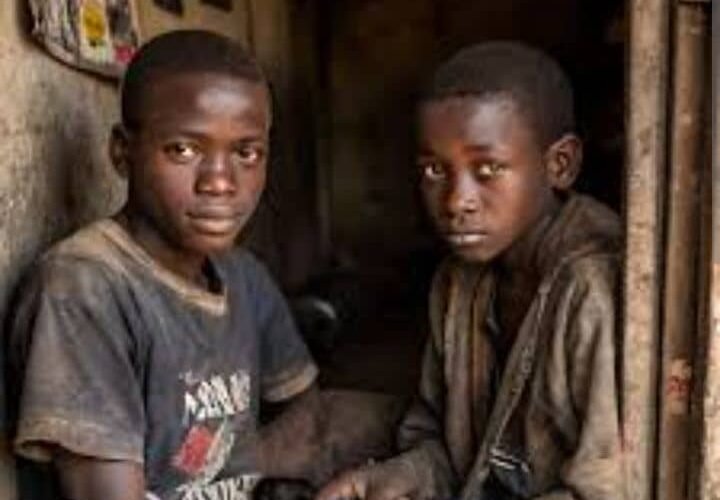
WILL LIFE BE EASIER FOR THE POOR IN ABIA IN 2026?
Using the 2026 Budget + Street Realities
The 2026 Abia Budget is ₦1.016 trillion. Out of this, ₦811.8bn (about 80%) is for capital projects. Only ₦204.4bn (20%) is for recurrent spending. These numbers tell us clearly that the government is chasing long-term reforms, not short-term welfare.

On the street today, the poor face the same pressures everywhere in Nigeria: transport is high, food is expensive, and small businesses are weak. Even when roads are being fixed, construction causes temporary suffering before relief comes.
But the capital-heavy structure of the budget means real changes will gradually touch the poor. If 600km of roads completed so far continue into 2026, transport prices in Aba, Umuahia, and rural markets will drop. Even a ₦100–₦150 reduction in daily transport is a major relief for poor households.
In health, the street story is brutal—people are paying out-of-pocket for drugs and emergencies. But the state says over 200 PHCs have been upgraded and 120,000 people have enrolled in the health insurance scheme. If this expands in 2026, the poor will save money on hospital bills that normally push families into debt.
IGR projections show another side of the picture. The government expects ₦223bn in IGR for 2026. This can only happen if markets are formalised, leakages blocked, and the economic environment becomes more active. If the economy expands, small traders, keke riders, mechanics, food vendors, and artisans will feel the effect directly.
Transport today from Aba to Umuahia can cost up to ₦1,200 – ₦1,500 depending on fuel prices. If ongoing corridor roads are completed, fares can drop by 20–30%. The poor feel that kind of reduction more than any budget speech.
Food prices in Ariaria and Ubani markets have doubled in two years. Capital spending won’t reduce them instantly, but better rural roads will reduce spoilage and transport cost for farmers. Over months, this can pull prices down.
The honest truth is this: 2026 will not suddenly make life “easy” for the poor. But it will make life steadily easier as completed roads, functioning hospitals, cleaner markets, and revived local economies begin to work. The budget lays the foundation; the street will feel the benefit gradually.
Slow improvement. Not sudden magic.
But real progress if the projects are completed.
Everything in the 2026 Appropriation Estimate points to a governor who is not only building infrastructure but also quietly engineering buffers to soften the economic weight on ordinary people. Alex Otti’s actions in the past year show that he prefers structural cushioning to political palliatives, and the emerging pattern suggests that 2026 will see those systems deepen.
His expansion of the Abia State Health Insurance Scheme is one of the clearest signs. By pushing enrolment past 120,000 people in less than a year—many of them low-income artisans, traders and rural residents—he has already set up a shield that protects the poor from hospital shocks that can wipe out a family’s savings overnight. The 2026 budget hints at further expansion, more PHC upgrades, and wider coverage for pregnant women and children. This is not charity; it is a deliberate poverty-cushioning system embedded into the health structure.
The same pattern is visible in transport. Otti’s emphasis on completing long-corridor roads such as Ossah, Port Harcourt Road, Umuahia–Onuimo axis, Faulks Road and the Aba inner-ring network is not accidental. He has repeatedly said that “transport cost is a tax on the poor,” and the choice to prioritise these roads shows he is attacking the problem at its roots. When travel time drops, fares drop. When fares drop, the poor breathe. This is a quiet cushioning mechanism masked as infrastructure.
Another subtle but powerful action is the ongoing clean-up of informal levies. Markets in Aba and Umuahia have already seen a reduction in tout-driven fees that used to swallow daily profits of traders. Otti’s digital revenue harmonisation is essentially a silent welfare policy for the poor. By eliminating “N50 here, N100 there, N300 gate fees,” he is restoring the dignity of small businesses. The 2026 budget allocates significant funds to revenue administration reforms, signalling that this protection will go deeper in the coming year.
The agricultural component also carries cushioning signals. By fixing rural access roads in Umunneochi, Ikwuano, Bende, Ohafia and Ukwa, the administration is setting up conditions for cheaper food prices in Aba and Umuahia. Farmers lose money when bad roads destroy produce; consumers pay more when transporters factor those losses into pricing. Otti’s approach aligns both ends—reduce road losses, reduce market prices. This is how a state quietly fights hunger without announcing “food palliatives.”
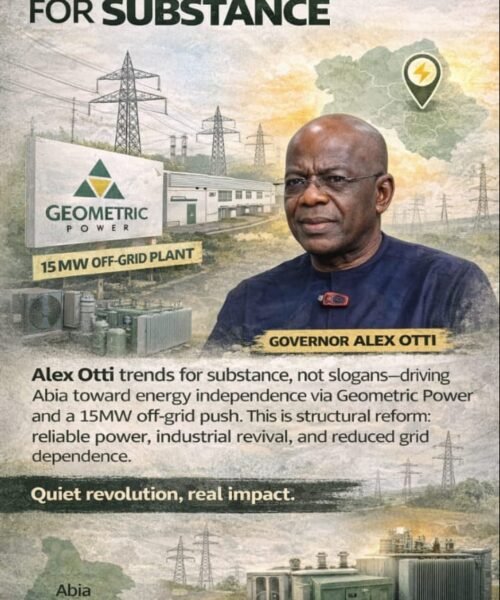
There is also the matter of the state’s power and energy direction. The push toward alternative power for public institutions—especially hospitals, water schemes and critical government offices—is part of a broader strategy to reduce operating costs and stabilise service delivery. When clinics stay open longer, water flows consistently, and public utilities function without shutting down due to diesel crises, the poor benefit directly. Stability is a cushion.
Furthermore, Otti’s insistence on cleaning the payroll system has reduced ghost workers and redirected those funds into actual service delivery. This may not make headlines, but it strengthens the salary ecosystem such that genuine workers—teachers, nurses, cleaners, junior clerks—get paid consistently and can support their dependents. A stable civil service is one of the oldest anti-poverty mechanisms in developing economies.
Even his urban renewal strategy carries a subconscious cushioning effect. Clearing blocked drainages in Aba, desilting canals, and enforcing sanitation laws reduce flood–related losses that usually hit the poor hardest. The poor do not have insurance. When their shops flood, they lose everything. Preventing the flood is a poverty intervention.
All these—health insurance expansion, corridor road completion, levy harmonisation, rural market linkages, payroll sanity, improved basic services, and urban sanitation—are not branded as “relief packages,” but they function exactly like economic cushions. They absorb shocks before they reach the poorest households. They prevent crises before they become headlines.
The signs are unmistakable: Otti is not depending on handouts to help the poor. He is building quiet shock-absorbers into the system—small levers, structural shifts, and administrative corrections that reduce daily suffering in ways the poor can feel in their pockets, their transport, their health, and their dignity.
If these actions continue with discipline, 2026 will not only bring development; it will bring breathing space. Not loud, dramatic, headline-grabbing relief—but real relief, the kind that shows up silently in the life of the ordinary Abian.
AProf Chukwuemeka Ifegwu Eke