
ALEX OTTI vs MASCOT UZOR KALU & BENJAMIN KALU: HISTORY, NOT HYPE, WILL DECIDE ABIA’S FUTURE
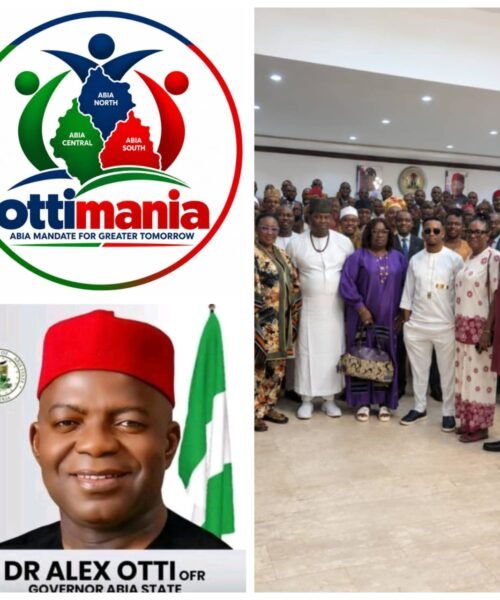
Let us move away from emotions and return to history and verifiable reality. Before politics, Alex Otti had already built a national reputation within Nigeria’s financial system—rising to Executive Director at First Bank and later Group Managing Director of Diamond Bank, managing complex financial institutions and large-scale capital systems. This is not opinion; it is documented professional history that reflects deep institutional competence and executive experience (https://en.wikipedia.org/wiki/Alex_Otti�).
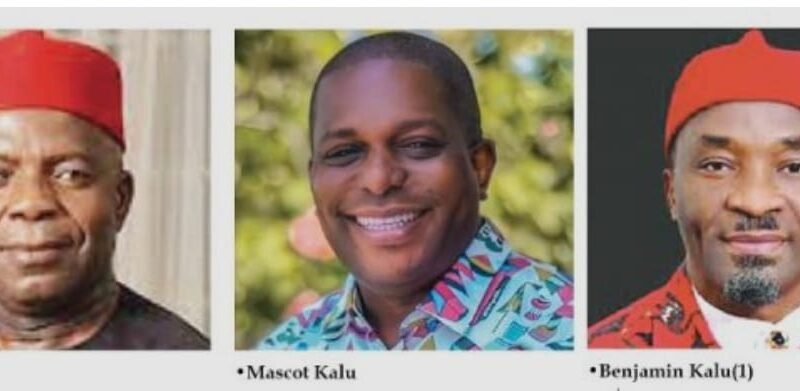
Now, the honest question must be asked without sentiment: what equivalent institutional trajectory did Mascot Uzor Kalu and Benjamin Kalu build before politics? Because history teaches us that leadership outcomes are often rooted in pre-political formation, not campaign rhetoric.
From a philosophical standpoint, the debate has long been settled. Thinkers like Aristotle and Machiavelli made it clear that governance is not about familiarity or popularity but about the capacity to deliver the common good through effective systems. Aristotle emphasized that the purpose of the state is structured well-being, not emotional satisfaction, while Machiavelli stressed that effectiveness—not mere acceptance—is what sustains power (https://plato.stanford.edu/entries/aristotle-politics/�)
When you strip away the slogans, the comparison becomes simple: are we choosing leadership based on who feels close to the people, or who has demonstrated the ability to manage complex systems?
The argument for Mascot Uzor Kalu leans heavily on “grassroots connection” and political networks, but this is where political science becomes brutally clear. Networks can mobilize votes, but they do not automatically produce development. In fact, where governance is driven primarily by networks and patronage, the result is often stagnation rather than transformation. Development literature consistently shows that institutions—not personalities—drive sustainable growth (https://www.worldbank.org/en/topic/governance�).
So the question is not whether Mascot knows the grassroots, but whether he can build systems that serve the grassroots at scale.
When it comes to Benjamin Kalu, the distinction is even more critical. His rise within the legislative arm of government, culminating in his role as Deputy Speaker, reflects political visibility and influence at the national level. However, governance at the state level is fundamentally different from legislative engagement. Running a state is not about motions, speeches, or parliamentary debate—it is about budgeting, execution, and continuous service delivery under fiscal constraints. The difference between legislative influence and executive competence is well documented in governance studies, where implementation—not advocacy—defines success (https://www.oecd.org/governance/�).
History is filled with strong legislators who struggled in executive roles because governance demands operational discipline, not just political articulation.
This brings us back to Alex Otti’s model, which is rooted in system-building rather than network preservation. His background reflects an understanding of fiscal discipline, institutional coordination, and structured execution—core elements required to run a modern state. In contemporary governance, especially in developing economies, the shift has been from personality-driven politics to institution-driven development, where systems outlast individuals (https://www.imf.org/en/Publications/fandd/issues/Series/Back-to-Basics/Institutions�). That is the difference between building for elections and building for sustainability.
Historically, regions that repeatedly choose leadership based on familiarity, legacy, or emotional connection tend to recycle the same developmental challenges. Political history across Africa and beyond shows that where competence is subordinated to comfort, progress slows and systems weaken. The lesson is consistent: transformation requires a break from old patterns, not a rebranding of them. This is why modern governance frameworks—from the United Nations to global development institutions—emphasize capacity, accountability, and institutional strength as the foundation of growth (https://www.un.org/development/desa/en/�).
In the final analysis, this is not simply a contest between Alex Otti, Mascot Uzor Kalu, and Benjamin Kalu as individuals. It is a deeper choice between two models of governance—one rooted in networks, familiarity, and political inheritance, and the other rooted in systems, competence, and structured delivery. History, philosophy, and global governance practice all point in one direction:
Sustainable progress is not built by those who are merely known.
It is built by those who understand how to build systems that outlive them.
And that is where the real distinction lies.
AProf Chukwuemeka Ifegwu Eke